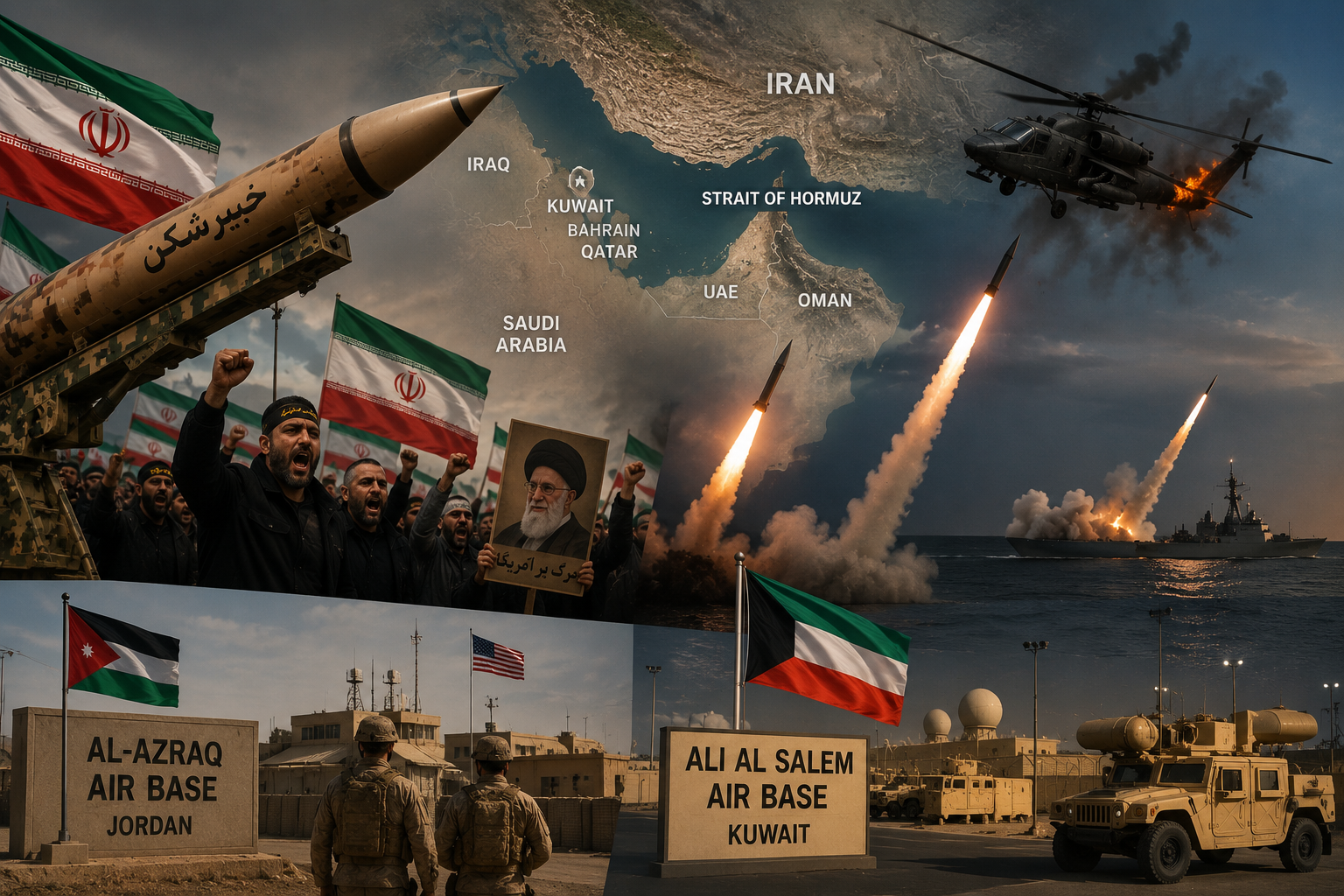

Tensions in the Middle East have escalated sharply after Iran launched attacks on US military facilities in Jordan and several Gulf countries following American strikes on Iranian targets near the Strait of Hormuz. The latest developments represent one of the most serious confrontations between the two countries since a ceasefire was announced earlier this year.
According to Iranian media, the Islamic Revolutionary Guard Corps (IRGC) carried out missile and drone attacks against multiple locations, including a US military base in Jordan and other sites in Kuwait and Bahrain. Iranian officials described the strikes as retaliation for recent American military operations targeting air defence systems, radar installations, and military infrastructure near the strategically important Strait of Hormuz.
The confrontation intensified after a US Apache helicopter went down near the Strait of Hormuz. While US officials reported that both crew members were rescued safely, Washington blamed an Iranian drone attack for the incident. Tehran denied conducting offensive military operations in the area and rejected accusations regarding the helicopter’s downing.
Iranian authorities claimed that missiles targeted facilities at the Al Azraq Air Base in Jordan, while drones were reportedly directed toward US military assets in Kuwait and Bahrain. Regional governments stated that air defence systems intercepted most incoming threats and prevented significant damage.
The United States responded by confirming that military operations had been conducted against Iranian positions near the Strait of Hormuz. American officials stated that the strikes were aimed at military infrastructure considered a threat to regional security and international shipping routes.
The growing conflict has raised concerns about the future of the fragile ceasefire established in April. Security analysts warn that continued military exchanges could further destabilize the region and threaten global energy markets, as the Strait of Hormuz remains one of the world’s most important oil and gas transit routes.
Oil prices moved higher following reports of the attacks, reflecting investor concerns over potential disruptions to energy supplies. Meanwhile, diplomatic efforts to secure a lasting peace agreement face increasing challenges as both sides exchange warnings and military responses.
The situation remains highly fluid, with governments across the region closely monitoring developments and urging restraint to prevent a broader conflict.