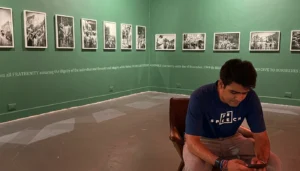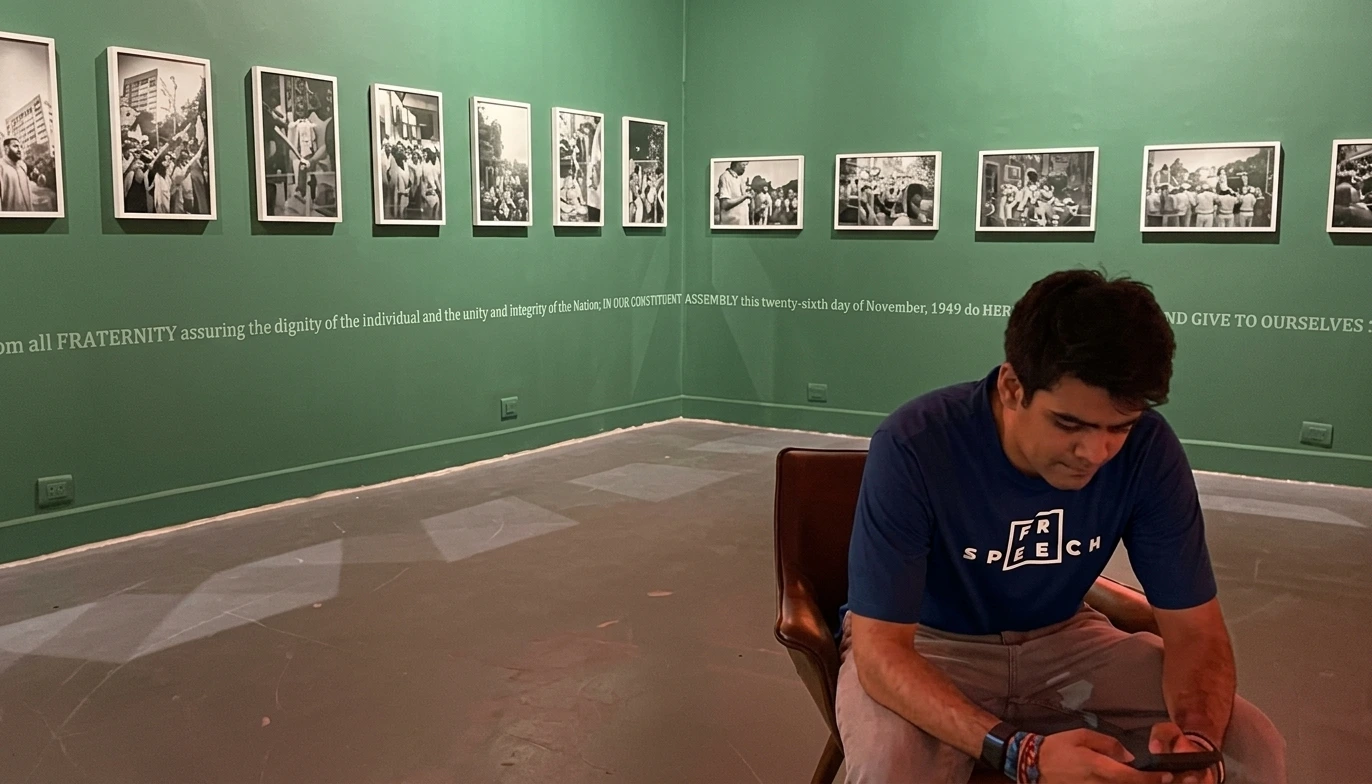

Raihan Vadra, the 26-year-old nephew of Indian opposition leader Rahul Gandhi, has said he was forced to remove several pieces of art from his exhibition at a government-run cultural centre in New Delhi. The works documented recent youth protests and were labelled “objectionable” by the venue management.
Vadra, son of lawmaker Priyanka Gandhi Vadra, explained that the management at Bikaner House asked him to take down the photographs just hours before the exhibition opened on Wednesday. The images showed youth protests in Delhi led by groups such as the Cockroach Janta Party.
These protests have become a significant challenge for Prime Minister Narendra Modi’s government. A weeks-long sit-in earlier forced the resignation of the education minister over exam paper leaks. Fresh demonstrations this month, backed by opposition leaders including Gandhi, have demanded the resignation of the Chief Election Commissioner over changes to voter lists.
In a social media post Vadra wrote that the photos captured the youth protests in Delhi and were apparently considered objectionable. He was also told to remove two photographs of the Indian flag but refused to do so.
The Bikaner House Management Society confirmed it had requested the removal of certain photographs that it said were inconsistent with its policies. The centre is owned by the western state of Rajasthan, which is governed by Modi’s Bharatiya Janata Party.
Vadra’s exhibition, titled “No Idea is Final,” appears on the Bikaner House website as a display of photographs, multimedia works and installations. The official description focuses on themes such as nature, wildlife, abstract art, portraits and sculptures.
Priyanka Gandhi Vadra responded on social media, stating that when those in power become afraid of another person’s expression, they have already lost the power they seek to protect.
The episode comes amid wider criticism of the government’s handling of recent protests. Thousands of people were detained and parts of central Delhi faced repeated lockdowns. Opposition voices argue that restrictions on artistic expression raise concerns about freedom of speech in the capital.
Vadra’s decision to share the incident publicly has drawn attention to the tension between political messaging and cultural spaces. The remaining works in the exhibition continue to be displayed, but the removed protest images remain a point of discussion among visitors and online audiences.
The controversy highlights how documentation of public demonstrations can quickly become sensitive when shown in official venues. For many young artists the incident serves as a reminder of the boundaries that still exist around political expression in government-supported cultural centres.