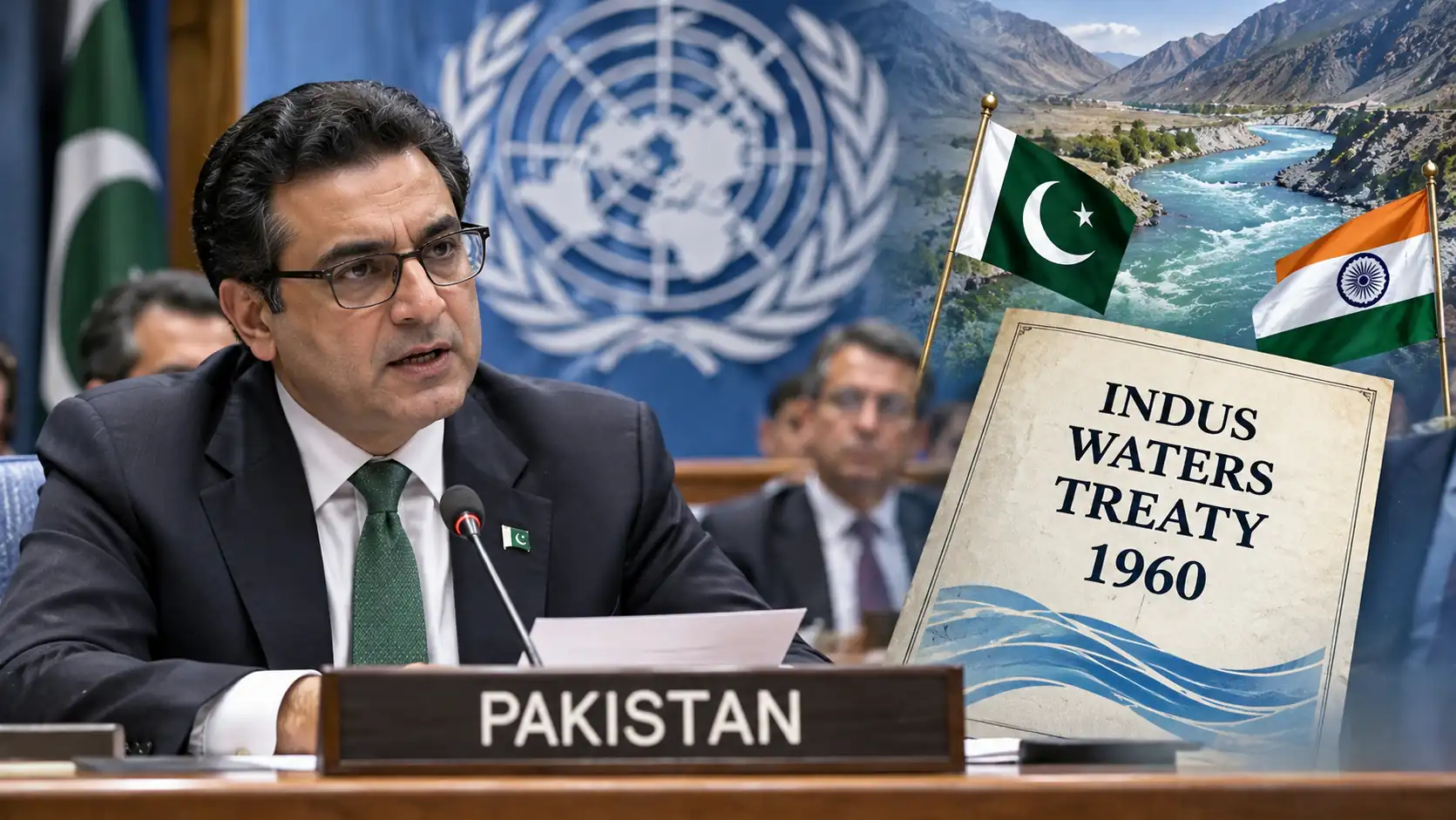

Pakistan has strongly rejected India’s decision to place the Indus Waters Treaty in abeyance, warning that turning shared rivers into a political weapon puts more than 240 million people at risk. Speaking at a United Nations Security Council meeting in New York, Pakistan’s Deputy Permanent Representative Ambassador Usman Jadoon made it clear that no country has the right to hold an entire population hostage by controlling water flows.
Jadoon told the meeting that India had unilaterally suspended the 1960 treaty and threatened to stop water releases. He called this move a dangerous attempt to use natural resources for political pressure. According to him, such actions threaten the daily lives, farming, and basic needs of millions living in Pakistan. He stressed that the Permanent Court of Arbitration’s award on 31 August 2026 confirmed the treaty is still fully valid and that India remains bound by its legal duties.
The dispute began after India announced the suspension in April 2025 following an attack in Indian-occupied Jammu and Kashmir that killed 26 people. New Delhi blamed Pakistan, which rejected the accusation. The Indus Waters Treaty, arranged with World Bank support, gives India control of the eastern rivers Ravi, Beas and Sutlej while allocating the western rivers Indus, Jhelum and Chenab mainly to Pakistan. Importantly, the agreement contains no clause that allows either side to suspend or cancel it alone.
Jadoon reminded the council that peaceful cooperation and respect for international law are essential for regional stability. He pointed to UN Security Council Resolution 2788 and Article 33 of the UN Charter, urging both countries to settle differences through established legal channels rather than unilateral steps. The ambassador was speaking at an Arria-formula meeting on natural resources and conflict prevention, organised by Liberia. The discussion focused on stopping resource-related tensions and ensuring that shared wealth benefits local communities instead of becoming a source of conflict.
Pakistan maintains that weaponising water violates binding treaty obligations and endangers peace between the two neighbours. Officials insist that only dialogue and adherence to international rules can protect the livelihoods of the millions who depend on these rivers every day.