
Hormuz fertiliser crisis threatens global food supplies as a senior UN official warns that failure to activate a special passage plan could spark serious shortages in Asia and Africa.
United Nations Under-Secretary-General Jorge Moreira da Silva stressed that the United States and Iran must reach an agreement within the next few weeks. Without it, the planting season will be missed and agricultural productivity will drop sharply. The UN task force created a mechanism months ago to move fertiliser safely through the Strait of Hormuz. Officials say it can start operating within 7 to 10 days once both sides give the green light.
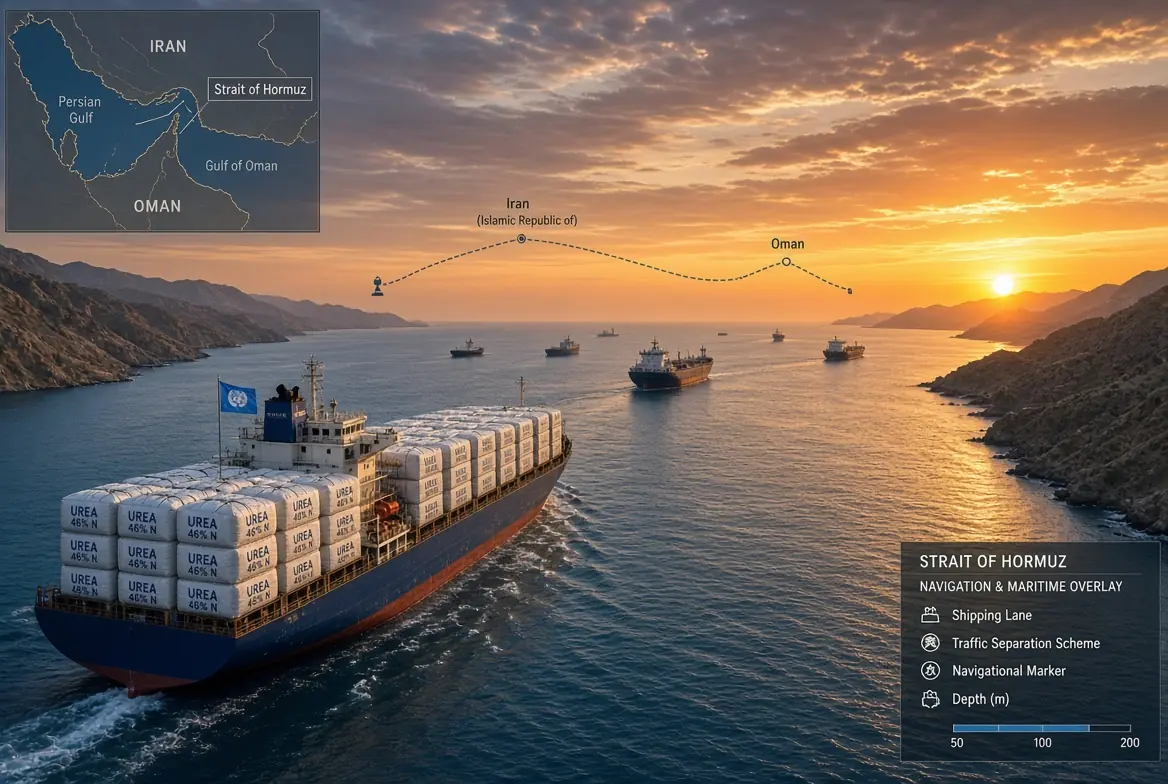
Before the conflict, the waterway carried roughly one third of the world’s traded urea, the most widely used fertiliser, and nearly half of seaborne sulphur. Shipments from the Gulf have stayed largely halted for more than six months. Even during a brief ceasefire earlier this year, fertiliser cargoes formed only a tiny share of the vessels that resumed sailing.
Experts calculate that prolonged disruption could push cereal prices up by as much as 81 percent, oil crops by 66 percent and animal products by 30 percent. Moreira da Silva explained that just five vessels a day would be enough to keep critical supplies moving to countries that need them most. A coordination centre in Oman would register ships, track their transit and allow extra checks if any nation raised concerns.
The official also pointed to wider risks. Attacks in the Black Sea and Houthi actions in the Red Sea already strain shipping routes. Combined with the Hormuz fertiliser crisis, these pressures create a dangerous mix for global food security. Climate stress adds another layer of difficulty.
Iran has used its position at the strait to increase pressure, while the United States continues to protect commercial shipping and reject any attempt to hold the world economy hostage. Both sides have exchanged proposals through intermediaries, yet progress remains slow. The UN mechanism is designed to run alongside wider talks so fertiliser can flow even while larger political issues stay under discussion.
Time is running short. Missing the current planting window would cut harvests and drive food prices higher for millions of people who already face tight supplies. Quick action on the UN plan remains the clearest path to limit the damage.