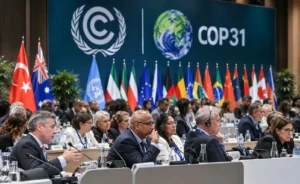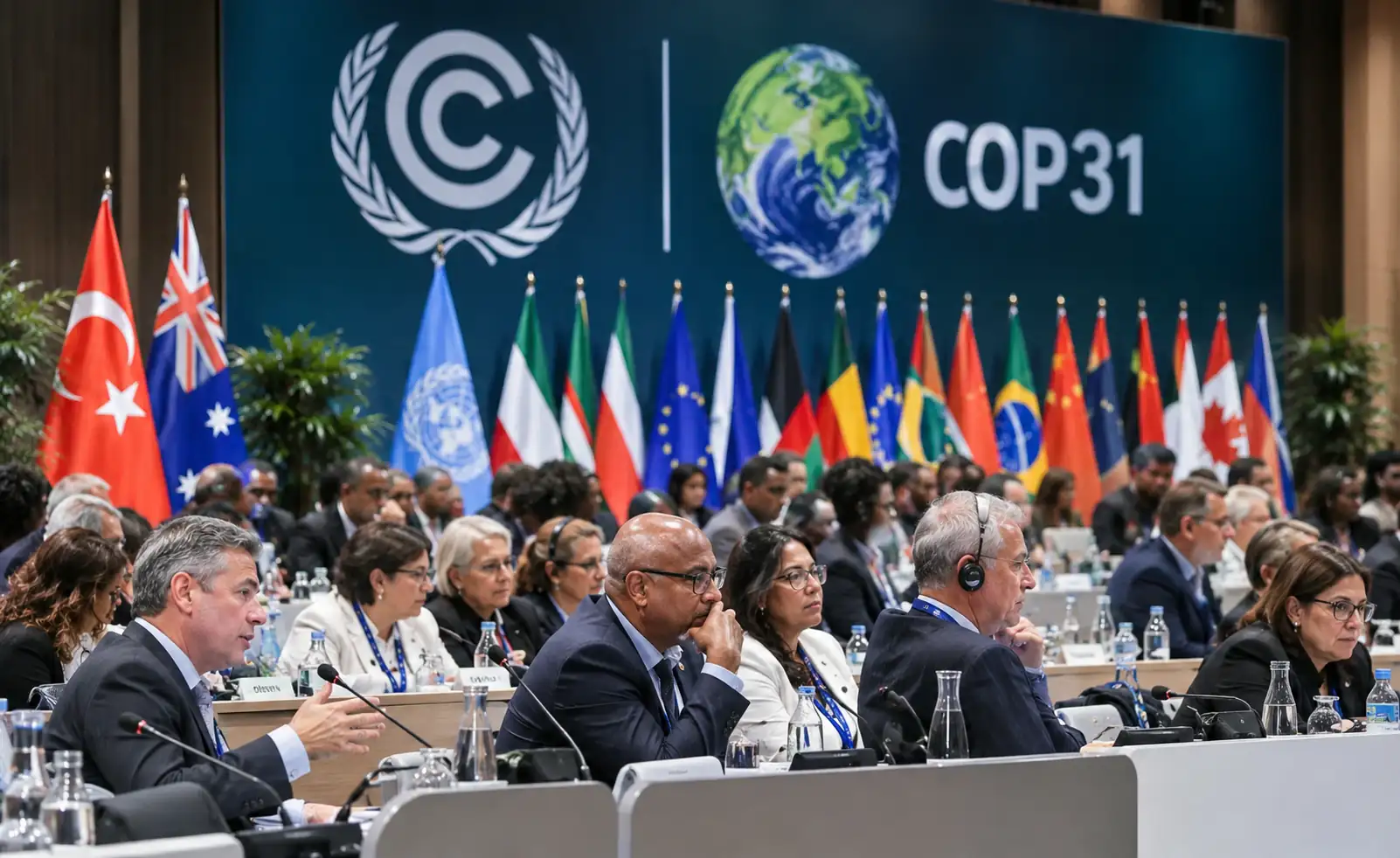

COP31 ended in failure after marathon negotiations in Turkiye collapsed without any agreement. Countries remained deadlocked on key issues including the phase-out of fossil fuels, climate finance, scientific assessments, and carbon-removing technologies. The talks ran two days over schedule and closed on Sunday with no final deal.
The dual presidency shared by Australia and Turkiye could not bridge the deep divides. Australia’s climate minister Chris Bowen, who chaired the negotiations, called the outcome “very disappointing.” Many observers said the result was predictable because the process still requires full consensus. Any single country or small group can block progress.
Critics argue that this consensus rule is no longer suitable for a climate emergency. Former US vice president Al Gore said the COP process needs significant reform so it can reflect the latest science and the will of the majority. Yet changing the rules themselves would also require consensus, creating a difficult circular problem.
The main flashpoints were clear. Several nations insisted the final decision must mention a fossil fuel phase-out. Others, including Saudi Arabia, strongly opposed any such language. Developing countries left frustrated after seeing no meaningful progress on the finance they need to shift energy systems and adapt to worsening climate impacts. Disagreements also arose over the timing of IPCC scientific work and the role of carbon capture technology.
Despite the setback, most experts still see value in the COP framework because it brings nearly every country to the same table with equal standing. Few call for abandoning it. Instead, attention is turning to parallel paths. Legal action is already advancing, including the recent International Court of Justice opinion that confirmed states have a binding duty to fight climate change.
Side agreements among willing countries are also gaining momentum. The Santa Marta initiative, launched after COP30, focuses on fossil fuel phase-out and has already formed an expert panel to map practical pathways. Officials describe these smaller coalitions as useful complements rather than replacements for the larger process.
The collapse of COP31 has left the world with urgent questions about how to keep climate action moving when global consensus keeps breaking down.