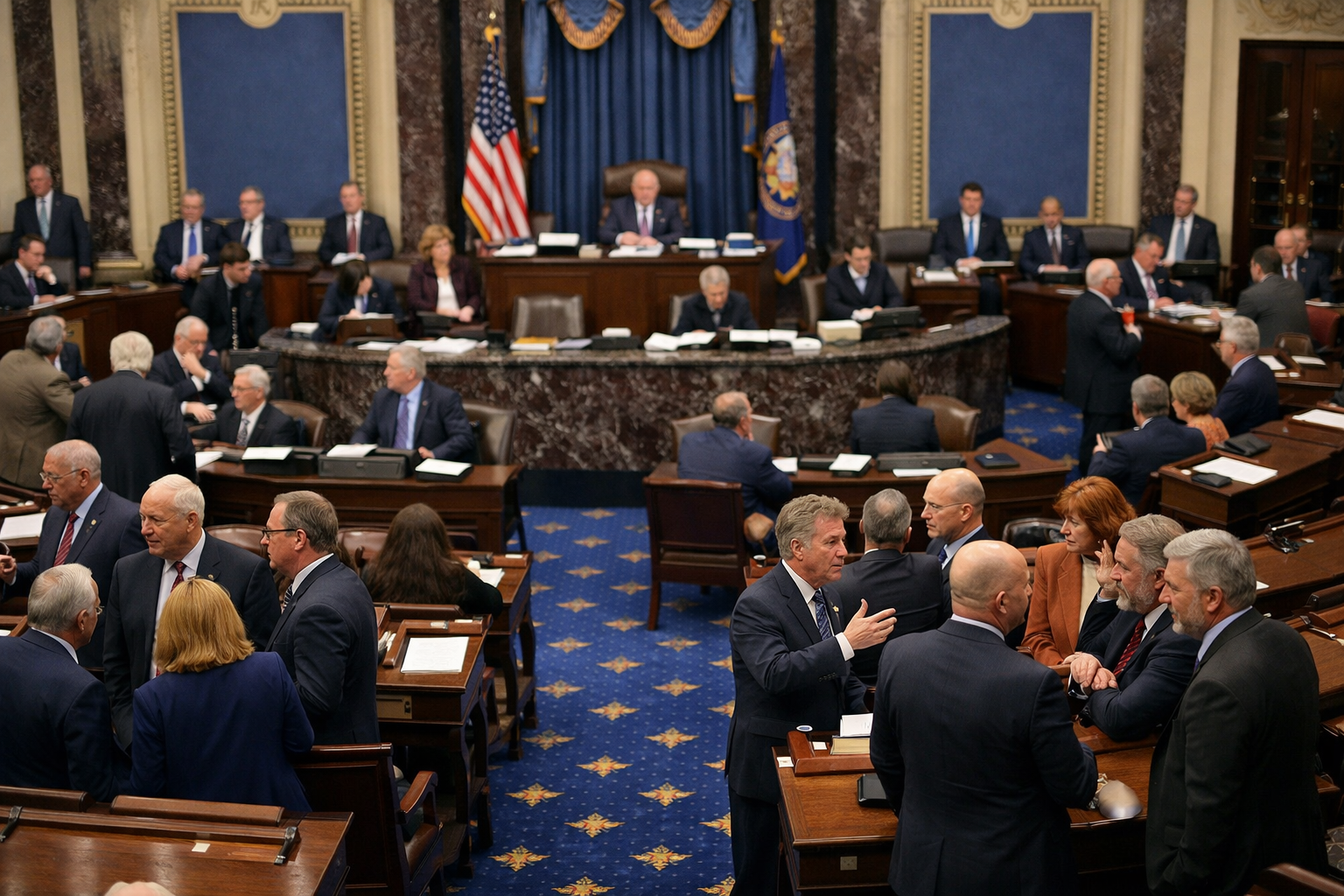

The US Senate has once again demonstrated its strong backing for President Donald Trump’s military campaign against Iran, rejecting a Democratic-led resolution that sought to halt the conflict until Congress formally authorised it. In a 52-47 vote, senators blocked the war powers measure, highlighting the Republican Party’s continued support for Trump’s approach more than six weeks after joint US and Israeli airstrikes began.
This marks the fourth attempt by Democrats to push war powers legislation since the fighting started, but each effort has failed due to near-unanimous Republican opposition. The only exception was Senator Rand Paul, a libertarian from Kentucky, who consistently argues against excessive military spending and insists on a strict reading of the US Constitution. On the Democratic side, Senator John Fetterman of Pennsylvania broke ranks by voting against the resolution, while Republican Senator Jim Justice abstained.
Although the Constitution grants Congress the sole authority to declare war, presidents from both parties have long claimed that this restriction does not apply to short-term military operations or situations involving immediate threats. The White House and Trump’s allies argue that his actions are legal and fall within his powers as commander-in-chief to protect national security.
Public opinion, however, remains sharply divided. A Reuters/Ipsos poll revealed that 60% of Americans oppose military strikes on Iran, while 74% of Republicans support them compared to just 7% of Democrats. This partisan split underscores the broader political tension surrounding the conflict.
Republican Senator Jim Risch accused supporters of the resolution of siding with Iran, while Democratic leaders urged colleagues to reclaim Congress’s constitutional authority and prevent the war from escalating into a prolonged conflict. Senator Jack Reed of Rhode Island warned that Trump’s war could become “irreversible” without decisive action.
Despite repeated setbacks, Democrats have vowed to continue introducing war powers resolutions until either the fighting ends or Congress formally authorises continued military engagement. Meanwhile, the House of Representatives is expected to debate a similar measure later this week, keeping the issue firmly at the centre of Washington’s political battles.