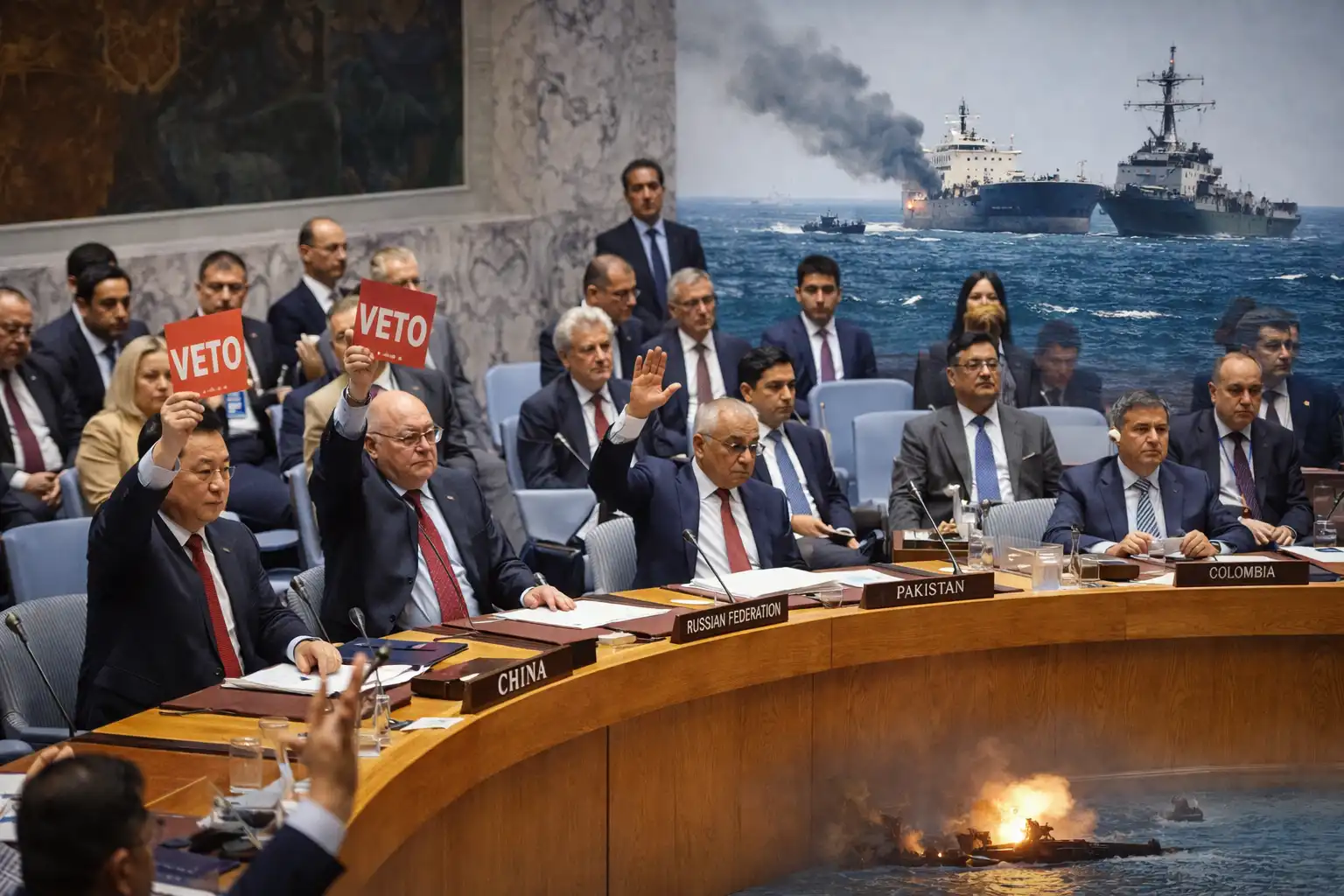

Tensions at the United Nations Security Council intensified after China and Russia vetoed a key resolution aimed at protecting commercial shipping in the Strait of Hormuz. The proposal, introduced by Bahrain, sought to encourage international cooperation to ensure safe navigation through one of the world’s most critical oil routes.
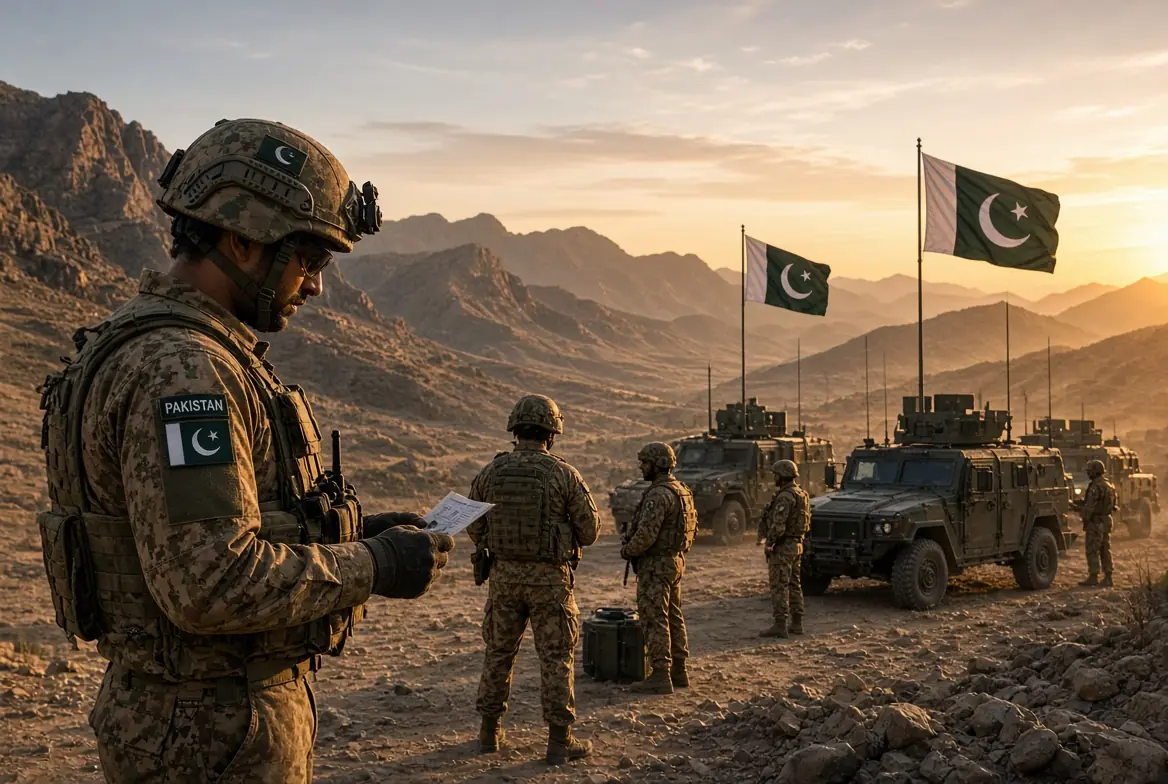
During the vote, 11 members supported the resolution, while China and Russia opposed it, effectively blocking its adoption. Meanwhile, Pakistan and Colombia abstained, reflecting a cautious diplomatic stance amid the ongoing regional conflict.
Bahrain’s Foreign Minister expressed strong disappointment over the outcome, stating that Gulf nations regret the rejection of the measure. He emphasized that the resolution was designed to promote maritime security and safeguard global trade routes without authorizing the use of force. Instead, it encouraged countries to coordinate defensive actions, including escorting commercial vessels to prevent disruptions.
The proposed draft also aimed to deter any attempts to block or interfere with international navigation, especially in light of rising tensions involving Iran. Bahrain urged Iran to comply with its international obligations and avoid actions that could escalate the situation further.
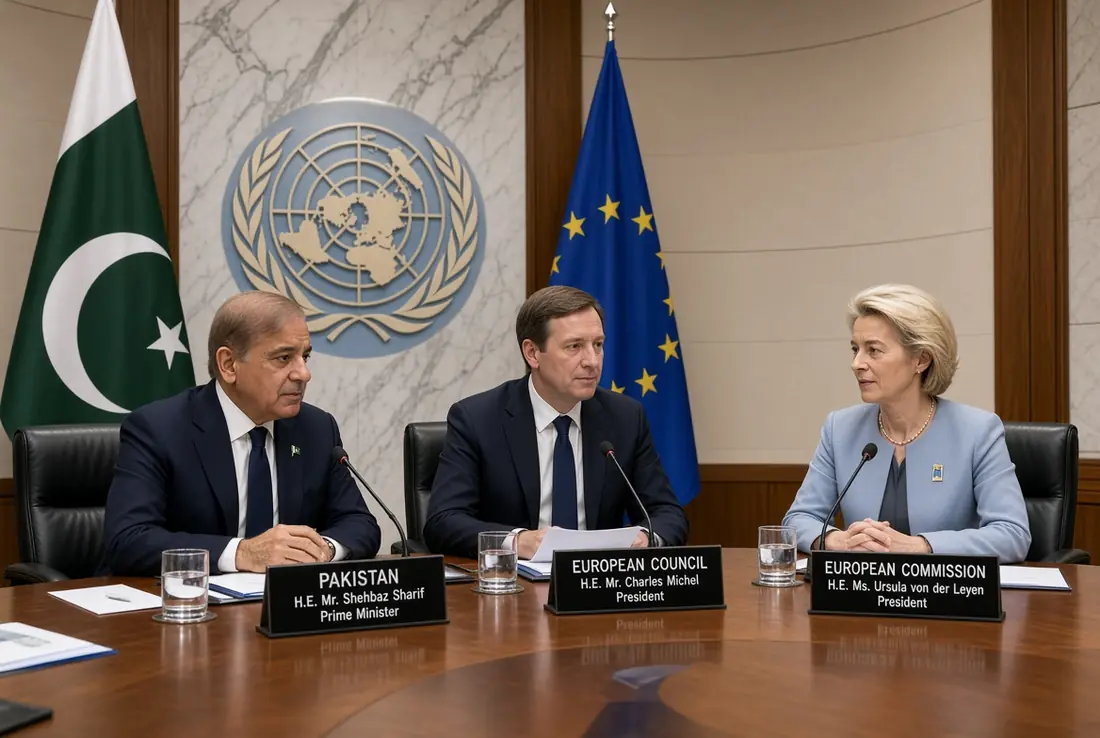
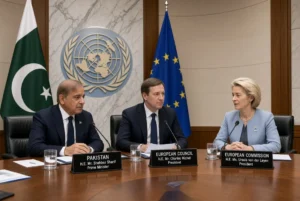
Pakistan’s Ambassador to the UN, Asim Iftikhar, reiterated the country’s commitment to peace and diplomacy. He stressed that Pakistan’s priority is to achieve a permanent ceasefire, prevent the expansion of conflict, and protect civilian lives and infrastructure.
Pakistan has been actively working with global partners, including China, to develop a five point peace initiative. This plan includes an immediate halt to hostilities, inclusive peace talks, protection of civilians, restoration of maritime security, and adherence to international law under the UN Charter.
China defended its decision by warning that adopting such a resolution during a volatile situation could send the wrong signal. The veto highlights deep divisions among global powers and raises concerns about the future of international cooperation in securing vital shipping routes.