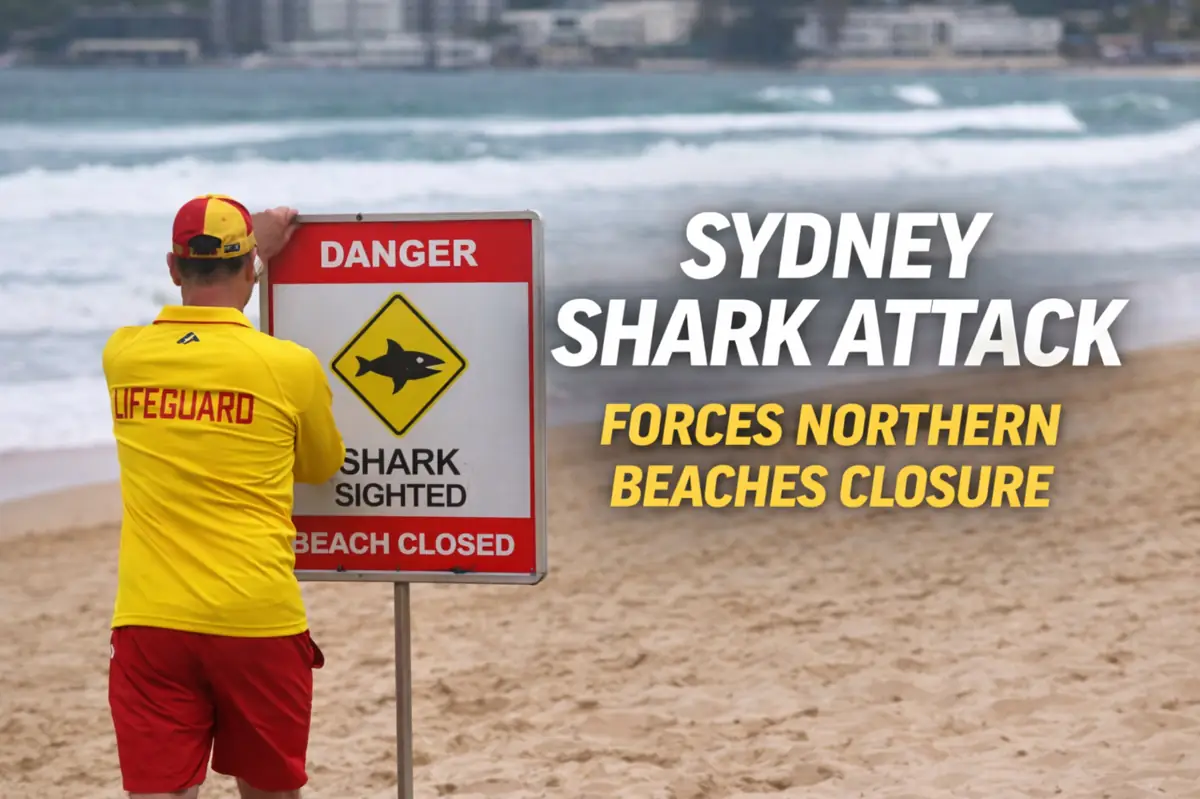

The Sydney shark attack situation has escalated after authorities ordered the closure of all beaches across the Northern Beaches region following another serious incident. This latest attack marks the third shark encounter in just two days, raising alarm among residents, surfers, and emergency officials.
On Monday evening, emergency services rushed to Manly Beach after reports that a shark had bitten a surfer in his 20s. According to New South Wales police, the man suffered severe leg injuries and was transported to the hospital in a critical condition. As a precaution, officials announced that all beaches in Sydney’s Northern Beaches council area would remain closed until further notice.
Earlier the same day, a 10-year-old boy narrowly escaped injury after a shark struck his surfboard, knocking him into the water and tearing a chunk out of the board. Just a day before that, another boy was left critically injured following a separate shark attack at a city beach. The rapid succession of incidents has prompted heightened safety measures and widespread concern.
Experts believe recent heavy rainfall may have played a key role in the spike in shark activity. Rainwater runoff flowing into Sydney Harbour and nearby beaches creates brackish water conditions, which are particularly attractive to bull sharks. This species is known for its ability to thrive in both saltwater and freshwater environments and has been linked to several attacks in Australian waters.
While shark attacks often generate intense public fear, experts note that they remain statistically rare. Australia records an average of around 20 shark attacks each year, with fewer than three resulting in fatalities, according to conservation data. By comparison, drownings at Australian beaches claim significantly more lives annually.
Authorities are urging beachgoers to follow safety warnings, respect closures, and remain vigilant once beaches reopen. For now, officials say the closures are necessary to ensure public safety as conditions continue to be monitored closely.