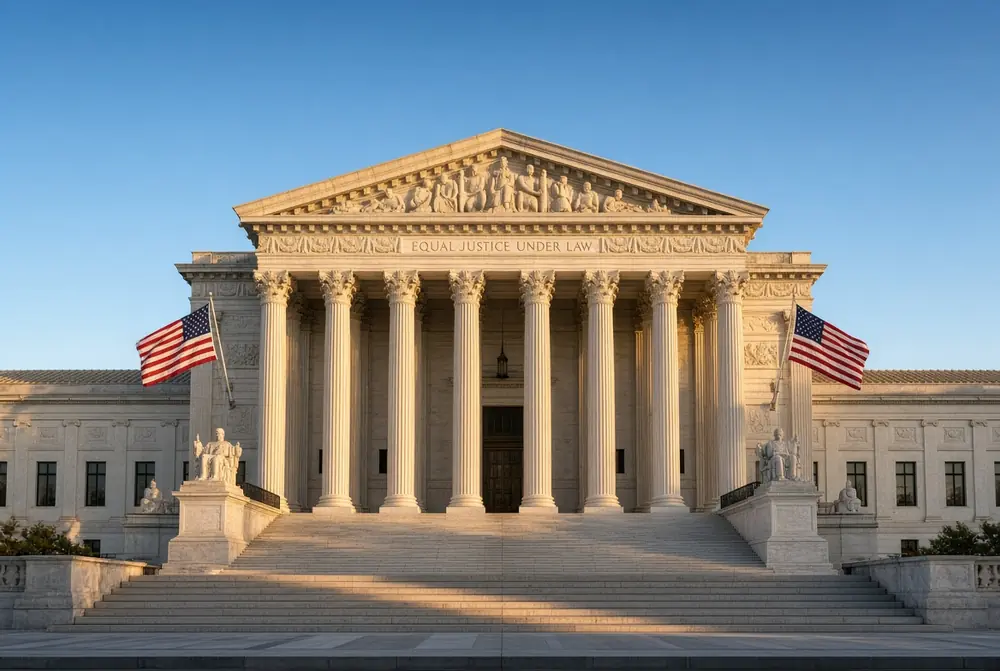

The US Supreme Court has rejected a last-minute request from the Trump administration to temporarily stop California from counting mail-in ballots from more than 20,000 registered voters. Federal officials claimed these voters were likely non-US citizens. The decision came just hours after the Justice Department filed its emergency appeal and only a day before the midterm elections.
The Supreme Court issued a brief one-sentence order with no explanation and no public dissent from any justice. It also did not ask California for a response, which often signals that the court does not see the request as serious enough for deeper review. This marks another legal setback for President Trump as Republicans work to hold control of Congress.
California is the largest state in the country and a strong Democratic base. The administration had intensified claims about noncitizen voting in the final days before the midterms. However, multiple studies and state audits continue to show that voting by ineligible people, including noncitizens, remains extremely rare.
California Governor Gavin Newsom welcomed the ruling. He described it as a positive moment for democracy after what he called dangerous attacks by the federal government. He assured residents that the state would conduct a free and fair election as it always has.
A federal appeals court had already rejected the same request on Friday. Earlier, a district judge in Los Angeles also denied the administration’s attempt to force California to separate the disputed ballots and delay counting them. The judge noted that never before had the federal government tried to force a state to change its election procedures on the eve of voting based on unproven claims.
The Justice Department argued that once the ballots were mixed with others, they could not be separated later. California responded that its safeguards against noncitizen voting are strong and that the federal list of 20,000 names was flawed and full of potential errors. Officials warned that the lawsuit risked blocking eligible voters from casting ballots.
The US Constitution gives states the main responsibility for running elections. The Trump administration’s lawsuit represented a rare and aggressive federal intervention in the process. Similar efforts by the administration to restrict mail-in voting had already been rejected by the Supreme Court in September.
With California holding 52 seats in the House of Representatives, the stakes remain high. Democrats need a net gain of four seats to take control of the chamber. The court’s decision allows the state to move forward with counting all valid ballots without further interference from the disputed list.