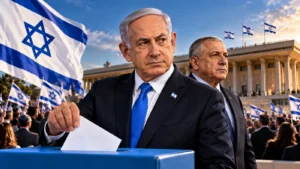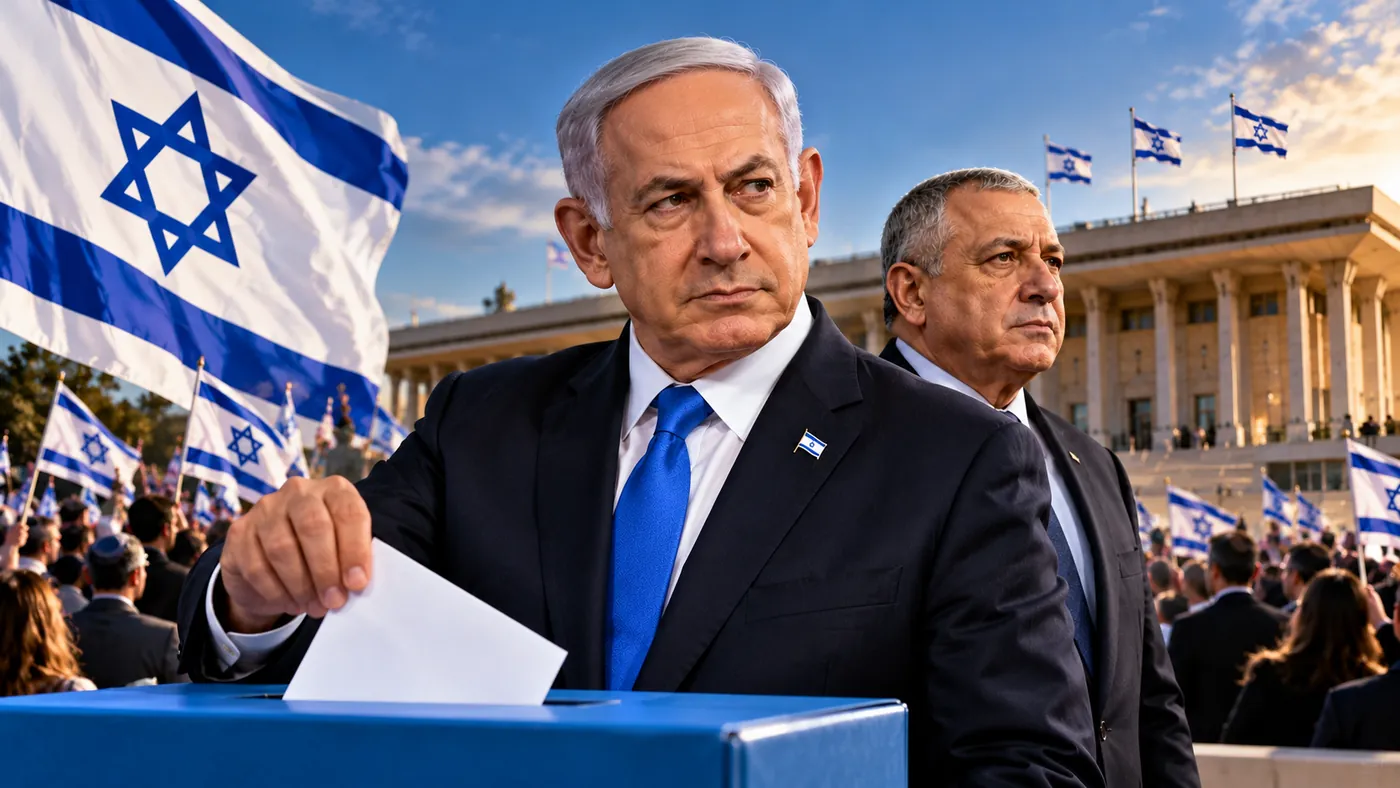

Israel Election 2026 has placed Prime Minister Benjamin Netanyahu’s political future under intense scrutiny as Israelis vote in a closely contested national election on October 27.
The election comes after years of conflict, political divisions, and growing public debate over Netanyahu’s leadership following the October 7, 2023, Hamas-led attacks.
Opinion polls indicate a competitive contest between Netanyahu’s Likud party and a rival alliance led by former military chief Gadi Eisenkot. Neither side has demonstrated a clear route to forming a government.
Netanyahu Highlights Wartime Leadership
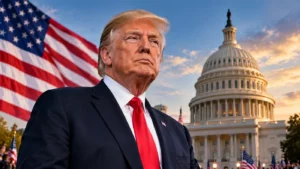
Netanyahu, Israel’s longest-serving prime minister, is emphasizing his national security record and close relationship with US President Donald Trump.
His campaign highlights military operations involving Gaza, Lebanon, and Iran, while supporters argue that his leadership has strengthened Israel’s security position.
Opposition figures, however, continue demanding accountability for the security failures surrounding the October 2023 attacks.
Gadi Eisenkot Challenges Netanyahu
Former Israeli military chief Gadi Eisenkot is leading a competing political alliance attracting support from centrist and right-leaning voters.
Eisenkot has criticized Netanyahu’s leadership and expressed opposition to partnerships with far-right politicians Itamar Ben-Gvir and Bezalel Smotrich.
Despite their political differences, both leaders maintain firm positions on preventing Iran from developing nuclear weapons.
Coalition Politics Could Shape Government Formation
Israel’s 120-seat parliament, known as the Knesset, requires a governing coalition supported by at least 61 lawmakers.
Netanyahu could seek renewed cooperation with right-wing allies, while Eisenkot faces challenges assembling support across opposition parties.
Turnout among Arab Israeli voters could also influence parliamentary representation and subsequent coalition negotiations.
Political uncertainty remains significant because national election results do not automatically determine who becomes prime minister.
If neither political bloc successfully establishes a governing coalition, Israel could face extended negotiations or another election.
The vote represents an important moment for Israeli politics, with national security, government accountability, and regional relations central to public debate.
The final political outcome will depend on parliamentary seat allocations and negotiations following the election.