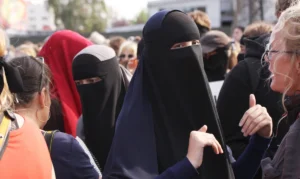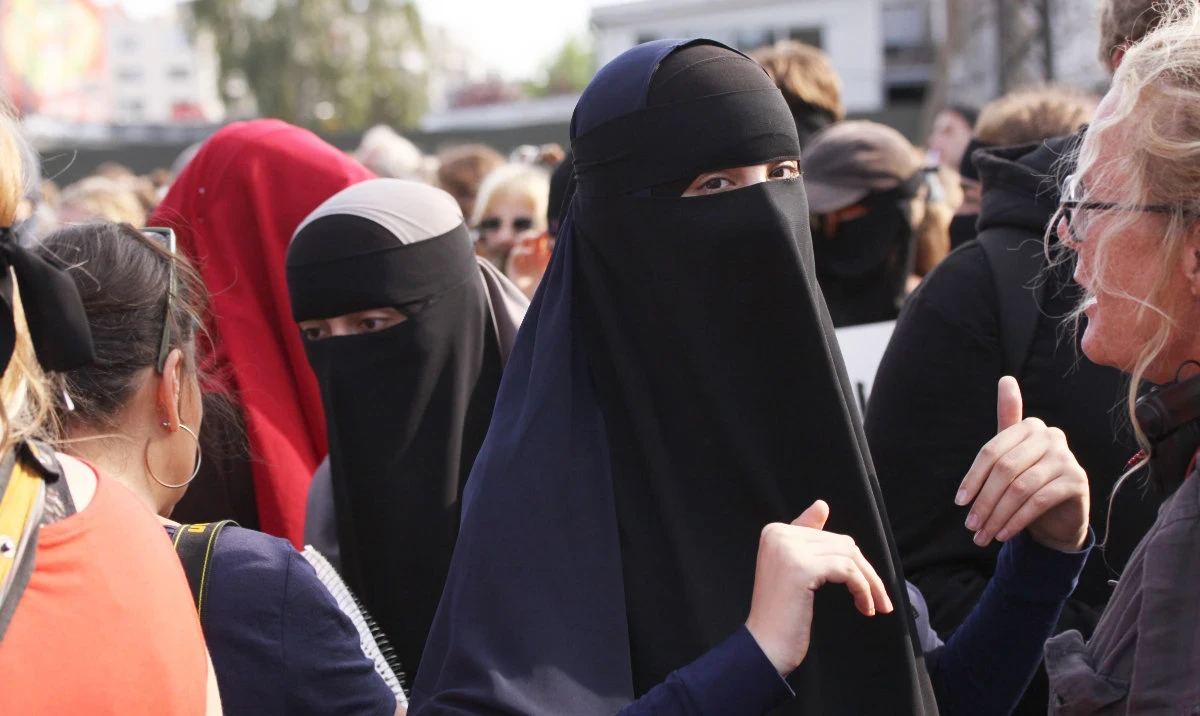

Italian Prime Minister Giorgia Meloni’s cabinet has approved a new decree law that bans the burqa and niqab in schools and limits the number of students with weak Italian language skills in each class. The measure was announced on Thursday and forms part of the government’s wider approach to migration and integration.
Meloni explained on social media that the law introduces a 30 percent cap on students who do not have an adequate command of Italian. It also provides more tools for language learning and places a clear ban on face covering garments such as the burqa and niqab inside school buildings. Failure to follow the rules can lead to a fine of up to 1,000 euros.
If a child struggles seriously to integrate, social services will step in. Parents will then be required to attend free Italian language classes. The government says parental involvement is essential for a child’s academic success.
Education Minister Giuseppe Valditara pointed out that there are currently 34,000 school classes in Italy where more than 30 percent of students are foreign. He stressed that the new rule mainly targets recent arrivals rather than children born in Italy or those who attended kindergarten. Inadequate language skills, he argued, slow down educational progress for everyone in the classroom.
Italy remains a frontline country for migration, and integration has become a major topic ahead of next year’s general election. Opposition leader Elly Schlein strongly criticised the decree. She called it a new witch hunt that targets children and creates first class and second class students. Save the Children also warned that moving children between schools solely because of nationality or language ability would harm their sense of belonging.
Meloni defended the burqa ban as a matter of security and fundamental rights. She said forcing a woman or young girl to cover her face denies them basic freedoms and works against true integration. The call for tighter rules on face coverings in schools had earlier come from the National Future party, a group further to the right of Meloni’s own coalition that has been rising in the polls.
The government insists the measures will help students learn Italian faster and create more balanced classrooms. Critics fear the rules could deepen social divisions. As the debate continues, the decree marks a clear shift toward stricter policies on language, culture and religious dress in Italian schools.