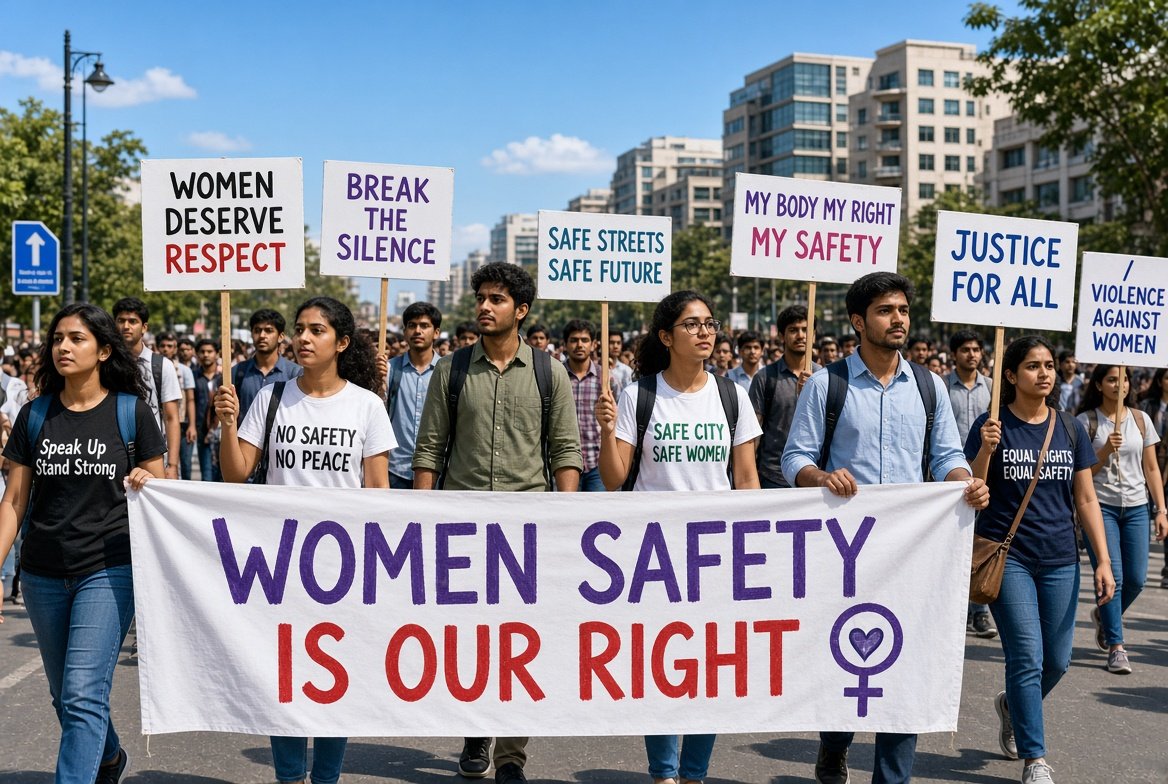

Recent rape cases in India have once again brought urgent attention to the issue of women safety across the country. A series of disturbing incidents has sparked fresh debates about why stronger laws and tougher punishments have not reduced sexual violence.
Hundreds of students took to the streets of New Delhi on Wednesday. They marched with placards and raised slogans calling for better protection measures. The latest case involved three men who posed as police officers and allegedly gang-raped a 17-year-old girl in a public park in the capital on Monday.
This incident reminds many of the 2012 gang rape and murder of a 23-year-old physiotherapy student on a bus. That case led to nationwide protests and major changes in the law. The definition of sexual offences was expanded and harsher punishments were introduced. Gang rape now carries a minimum of 20 years in prison and the death penalty can apply to repeat offenders.
Yet activists say these legal changes have not been enough. Yogita Bhayana, a women’s rights activist, explained that the real problem lies in the mindset of society. Many still blame women for being out late or for being seen with men. This attitude continues to put victims at risk.
Official data shows India recorded an average of 80 rape cases every day in 2024. That figure was around 68 per day in 2012 before the new laws. Experts believe the true number is much higher because many victims never report the crime due to fear of stigma in a patriarchal society.
Other recent cases add to the concern. A 16-year-old girl’s body was found in a decomposed state after she was raped and murdered. In another incident, a bus driver and conductor allegedly raped a 17-year-old girl who accepted a lift during heavy rain. A video from Bihar also showed a teenage girl being assaulted. Each case has led to arrests and public anger, but the pattern continues.
Criminal lawyer Shilpi Jain pointed out that the problem is not the law itself but poor enforcement. Police stations are overburdened and courts face huge backlogs. An average rape case takes seven to eight years to conclude. If it reaches the Supreme Court the wait can stretch to 20 years. As a result criminals lose fear of punishment and victims lose hope.
Conviction rates for rape have stayed around 25 percent since 2012. Less than 10 percent of the more than 200,000 pending rape cases were completed in 2024. Gender rights activist Poonam Muttreja stressed that legal reform alone cannot solve the issue. Prevention must start early in homes, schools, communities and digital spaces. Changing deep-rooted social attitudes remains the biggest challenge for true women safety in India.