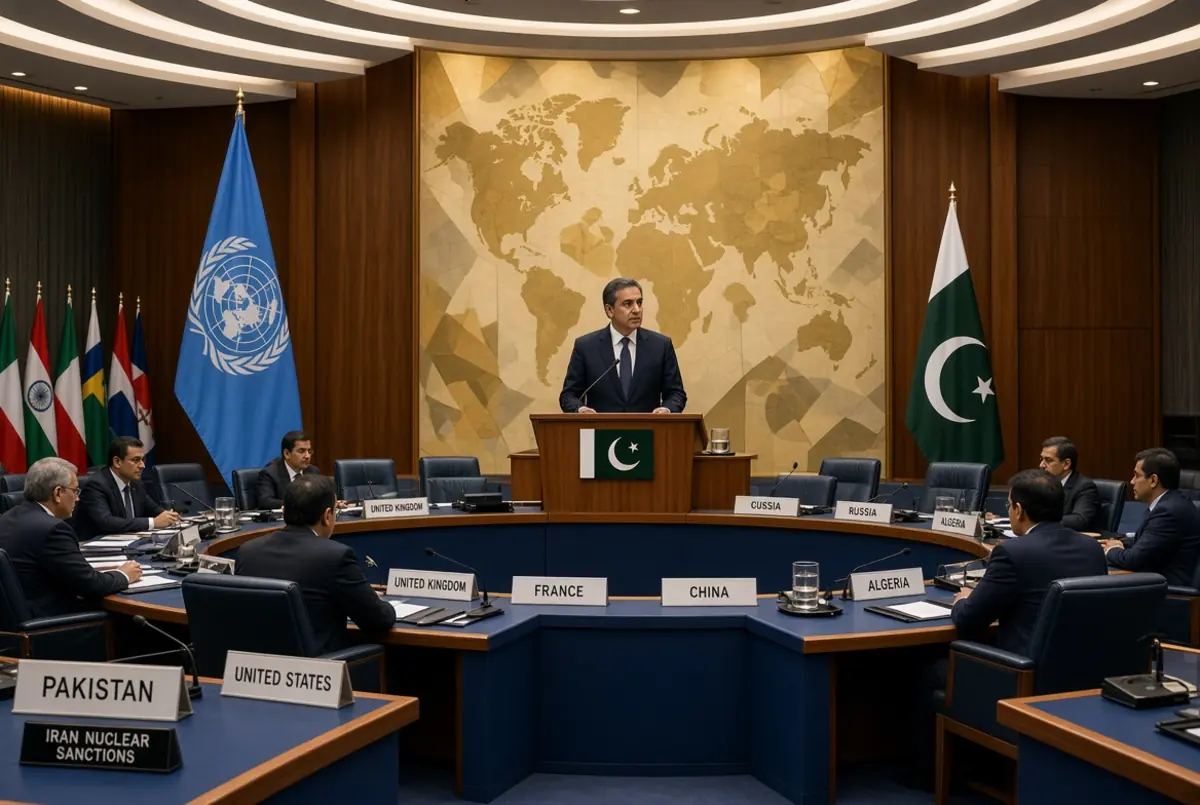

Pakistan on Thursday chose to abstain from a key United Nations Security Council vote on a US sponsored resolution. The resolution aimed to extend the mandate of an independent panel of experts that helps the council monitor Iran related sanctions. Russia and China used their veto power to end the panel’s work. They argued that all UN measures against Tehran had already been lifted under the earlier nuclear agreement with world powers.
Eleven members of the Security Council supported the resolution while Pakistan and Somalia decided to abstain. The panel had been meant to report violations and suggest further steps. For the past year the council could not agree on appointing new experts because consensus was required. All UN sanctions on Iran had been reimposed a year earlier after France, Britain and Germany said Tehran was not following the 2015 nuclear pact. Iran continues to deny any intention of building nuclear weapons.
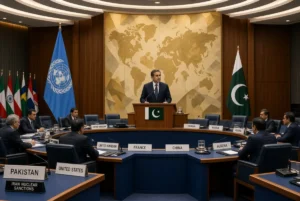
Pakistan’s Permanent Representative to the United Nations, Ambassador Asim Iftikhar Ahmad, spoke during the meeting. He expressed concern that the Iran nuclear issue has become more complicated over time. He noted that the spirit of cooperation seen when resolution 2231 was adopted more than a decade ago has faded. Ongoing regional tensions, strikes on nuclear facilities and deep differences among permanent members have made dialogue harder.
Ambassador Ahmad stressed that diplomacy and dialogue must remain the main path to settle questions about Iran’s nuclear programme. Pakistan has always called for peaceful engagement and for avoiding confrontation. He said the matter should be handled through peaceful means while respecting the rights and duties of all sides involved. He also strongly supported the independent role of the International Atomic Energy Agency as the technical body responsible for safeguards. The IAEA must carry out its work without political pressure.
Pakistan continues to work for peace and stability in the region. The ambassador urged every party to honour the commitments made in the Islamabad Memorandum of Understanding, return to talks and give diplomacy a real chance. Russia’s UN Ambassador Vassily Nebenzia also called on Western countries to stop actions that could worsen the situation in the Persian Gulf. He insisted that only political and diplomatic efforts can ease concerns about the Iranian nuclear programme.