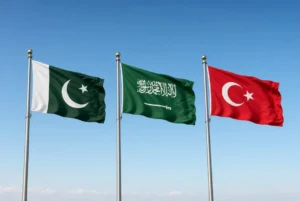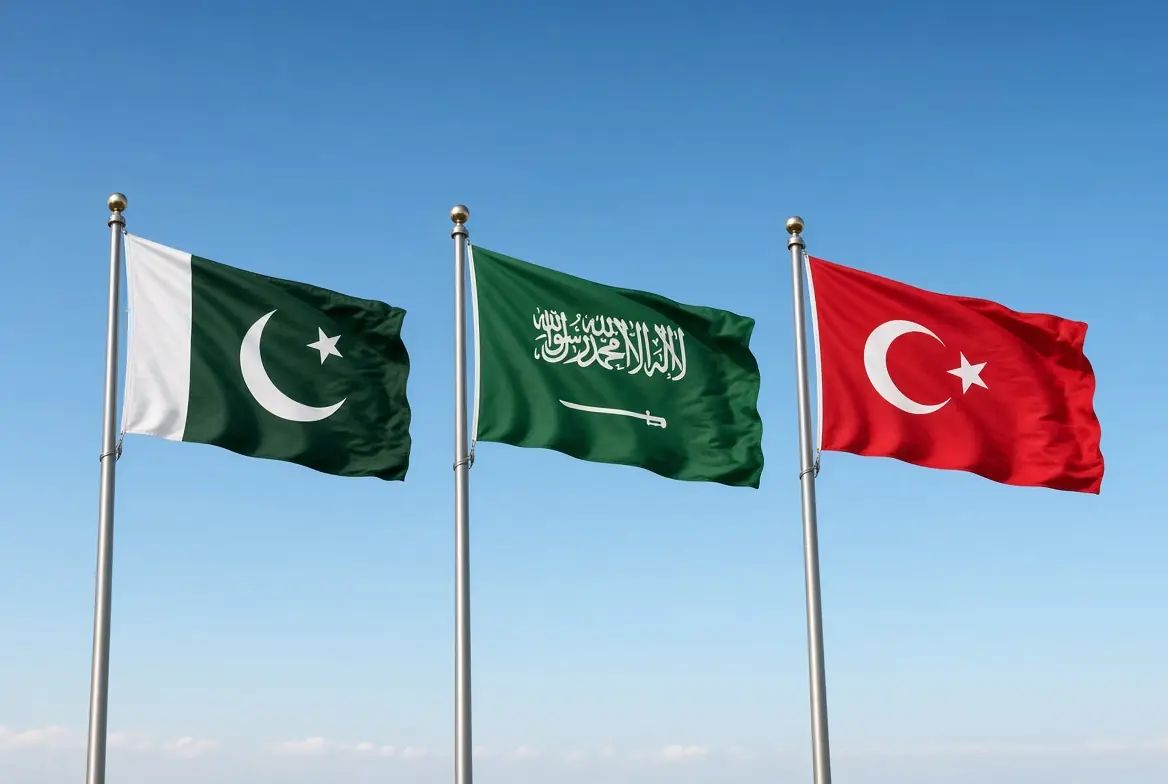

ISPR Director General Lieutenant General Ahmed Sharif Chaudhry has described the Makkah defence pact between Pakistan, Saudi Arabia and Turkiye as purely defensive. Speaking in an interview with Al-Arabiya English on Wednesday, he said the agreement carries no regional aspirations and serves only as collective deterrence.
The trilateral pact was signed on August 7 in Makkah. It aims to strengthen security and defence cooperation among the three countries. Lt Gen Chaudhry called the arrangement complementary, noting that each member still maintains its own independent relations with other nations and alliances. He stressed that the agreement does not compete with any existing partnerships.
When asked how Pakistan would respond if one of the partners came under attack, the ISPR chief explained that operational details remain classified. He said no country publicly shares the exact methods it would use to defend itself. Decisions on how to put the commitments into action will be made jointly by Islamabad, Riyadh and Ankara.
Turning to the May 2025 conflict with India, Lt Gen Chaudhry said Pakistan taught New Delhi a clear lesson that military confrontation between two nuclear-armed neighbours is simply not an option. He claimed Pakistan responded effectively across air, ground, cyber, sea, information and diplomatic domains. He added that India continues to treat external issues such as Kashmir as internal problems through repression, despite the matter remaining on the United Nations Security Council agenda.
The military spokesperson warned India against any future aggression or false flag operations. He said Pakistan has both the capability and the national will to control escalation, as shown during Marka-e-Haq. Any attempt to force a confrontation, he cautioned, would lead to mutually assured destruction. He also praised Pakistan’s political leadership for acting rationally during the crisis while describing India’s decision to take the military path as a strategic mistake.
Pakistan, he concluded, remains committed to peace on equal terms and continues to act as a rational player in the region.