
Iran on Thursday buried the victims of a reported US airstrike that hit a wedding gathering while Tehran launched missiles and drones at a US base in Kuwait. The exchange marked the biggest escalation in the conflict in more than a month.
Mourners gathered in the late afternoon outside the village of Kuhestak in Sirik County, near the Strait of Hormuz coast that came under heavy American airstrikes late Tuesday. Iranian state television reported that a 22-year-old woman died in hospital after the strike, raising the total death toll to five. Officials said nearly 70 people were wounded.
Vice President JD Vance told reporters the United States was investigating the incident. “We’re investigating it because obviously we care. We want to know,” he said. He added that when the American military makes mistakes it learns from them, calling that a key difference from Iran. The US military stated it was aware of the Iranian reports but never targets civilians.
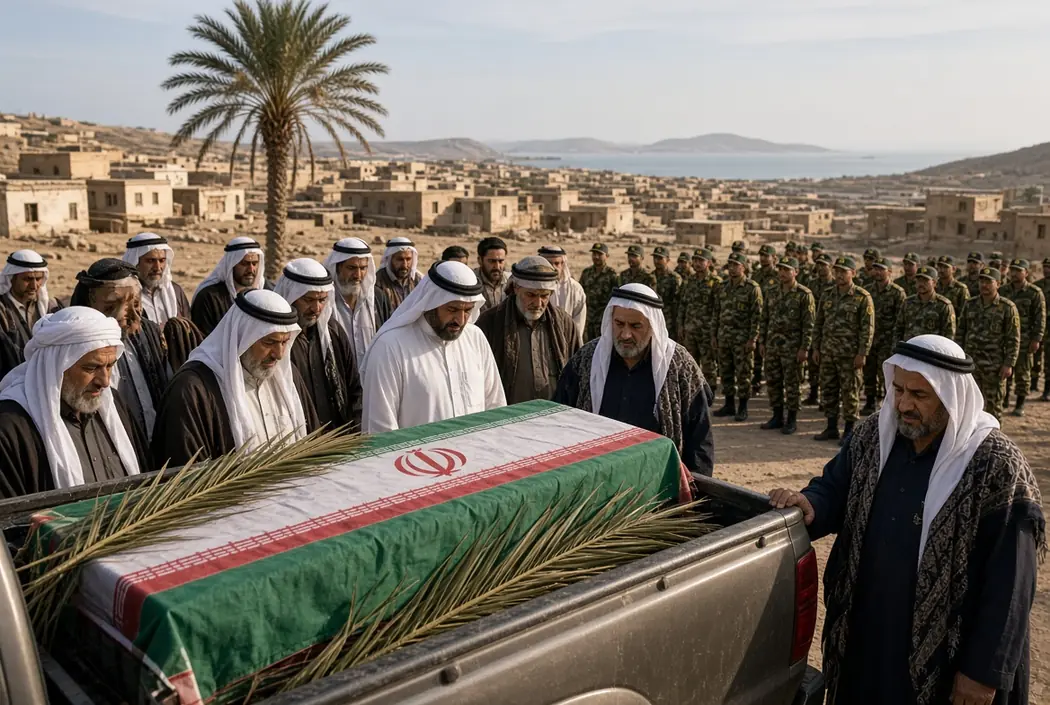
At the funeral for four of the victims, video from Iran’s Mehr news agency showed a pickup truck carrying a flag-draped coffin under palm fronds. A reporter identified the body of four-year-old Amir-Mohammad Karimi, describing him as a child martyred in the attack. Mourners threw flower petals into the air while somber music played. A casket passed rows of soldiers standing at attention with rifles.
One local man told the semi-official Tasnim news agency that the pain was especially deep because the target was a wedding ceremony rather than a military site. “They turned people’s joy into mourning,” he said.
Washington carried out the Tuesday airstrikes on what it described as military targets along the coast in response to Iranian attacks on shipping in the Strait of Hormuz. The sudden escalation pushed oil prices higher for a fourth straight day, with Brent crude climbing above 96 dollars a barrel.
Iran reported 18 dead from the latest US assault. It responded on Wednesday with attacks on American bases in Iraq, Jordan, Qatar, Kuwait and Bahrain, then struck again early Thursday at another base in Kuwait. Kuwait’s military said its air defenses intercepted the missiles and drones. By later Thursday the intense exchanges appeared to ease.
August had been largely quiet after President Donald Trump halted intensive airstrikes in July when military officials warned of low munitions stocks. The original aims of ending Iran’s nuclear program, stopping its regional attacks and creating conditions for leadership change remain unmet. Iran’s economy has suffered under the blockade, yet its leaders stay in power and seek to emerge stronger, demanding an end to sanctions and possible fees from ships using the strategic strait.