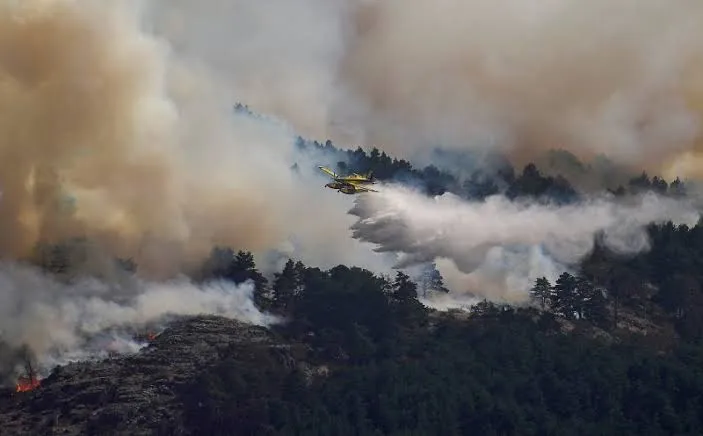

Spain and France are battling devastating wildfires as intense summer heat and dry weather continue to fuel dangerous fire conditions across Southern Europe. Authorities in both countries have warned that the risk of new fires remains extremely high despite progress in containing some of the largest blazes.
Spain’s biggest wildfire of the year has scorched around 32,000 hectares in the Guadalajara region. The blaze forced thousands of residents to evacuate, while several towns remained under restrictions for days. Emergency teams have managed to stabilize the fire, allowing people in some villages to return home. However, officials continue to monitor the area closely as strong winds and dry conditions could quickly reignite the flames.
Speaking during a visit to the affected region, Spanish Prime Minister Pedro Sanchez said the country has already experienced 22 major wildfires this year. More than 100,000 hectares have burned before the peak wildfire season has even arrived, matching the country’s average annual burned area over the last decade. Weather experts have warned that temperatures could climb as high as 44°C in parts of Spain before a brief cooldown later this week.
In France, firefighters are also struggling to contain multiple wildfires. A major fire in the Gironde region burned more than 100 hectares, forcing the evacuation of hundreds of residents and disrupting traffic near popular coastal destinations. Authorities have banned forestry work and activities involving combustion engines in high-risk areas to reduce the chance of new fires.
The country is mourning the loss of two firefighters who died while battling another wildfire earlier this week after their vehicle became trapped by fast-moving flames. Officials continue urging the public to avoid activities such as lighting barbecues, stressing that the majority of wildfires are caused by human actions.
Elsewhere in Southern Europe, countries including Greece and Cyprus are dealing with dangerous heat, while severe storms and hail have struck parts of the Western Balkans. Scientists continue to warn that climate change is making heatwaves, droughts, wildfires, and extreme weather events more frequent and more intense across Europe.