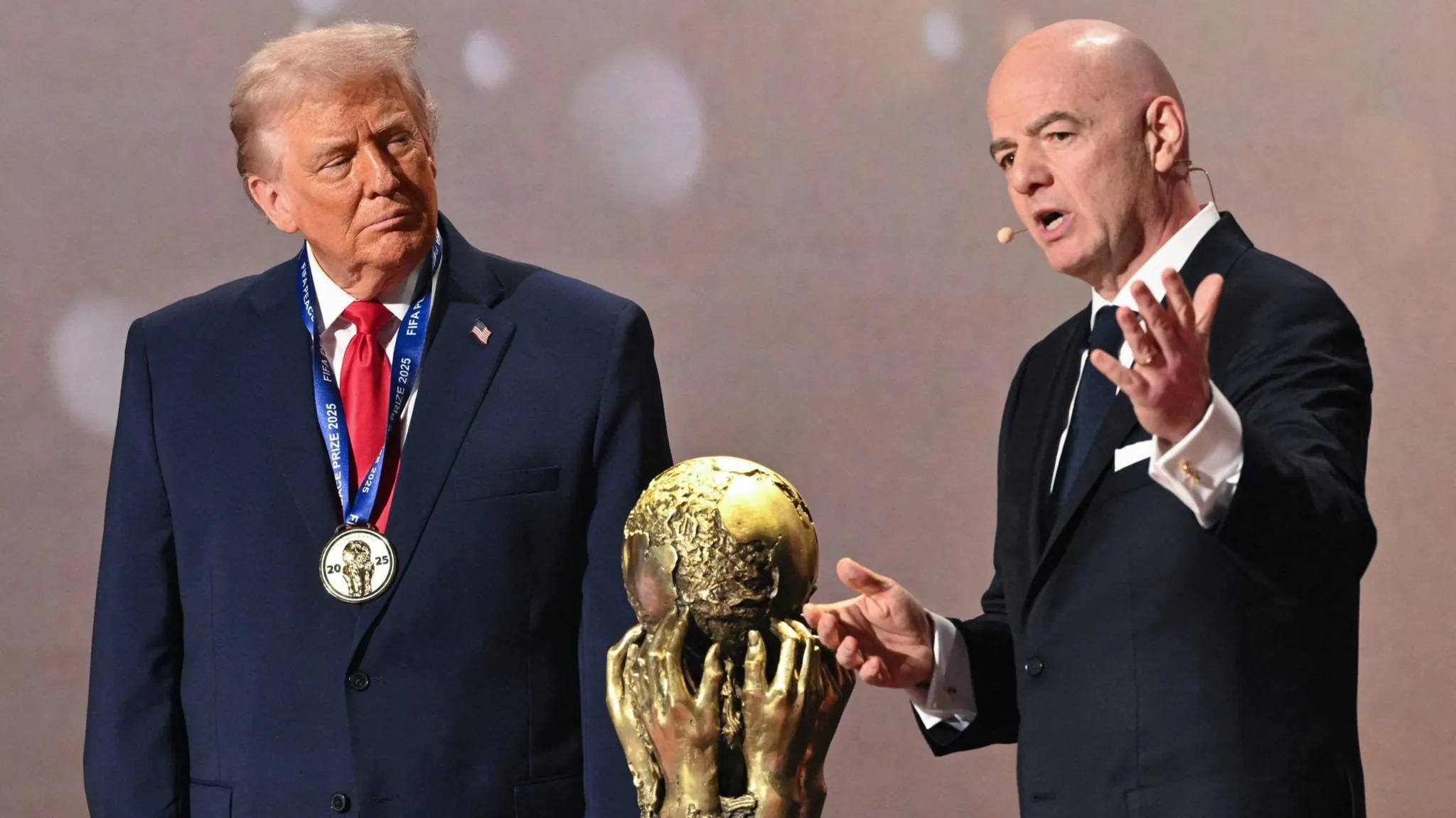

Politics and the FIFA World Cup have crossed paths many times throughout football history, despite the sport’s commitment to remaining independent from political influence. The latest controversy emerged after US President Donald Trump asked FIFA President Gianni Infantino to review the red card shown to Folarin Balogun, reigniting a global debate about political involvement in football’s biggest tournament.
FIFA later suspended Balogun’s ban, allowing the United States striker to feature against Belgium in the World Cup Round of 16. While the decision drew praise from some, it also triggered criticism from football officials and fans who questioned whether politics had influenced the disciplinary process.
Political interference in the World Cup is not new. During the 1934 FIFA World Cup, Italian dictator Benito Mussolini used the tournament to strengthen his regime’s image. Reports from that era suggested he frequently visited referees before matches, and Italy eventually lifted the trophy under controversial circumstances that raised doubts about officiating.
Four years later, the 1938 FIFA World Cup unfolded against the backdrop of rising tensions in Europe. Following Germany’s annexation of Austria, several Austrian players were forced into the German squad. Meanwhile, Mussolini reportedly sent Italy’s players a chilling message before the final, demanding victory at all costs. Italy successfully defended its World Cup title.
The 1978 FIFA World Cup in Argentina remains another controversial chapter. The tournament took place while the country was ruled by a military dictatorship during the Dirty War. Argentina’s convincing victory over Peru, which secured a place in the final, sparked allegations of political influence and match manipulation, although no conclusive evidence ever proved the claims.
Another unusual incident occurred at the 1982 FIFA World Cup, when a member of Kuwait’s royal family entered the pitch during a match against France to protest a goal. Surprisingly, the referee disallowed the goal before France eventually secured victory.
Trump’s involvement in the Balogun case has once again highlighted the ongoing challenge of keeping football governance separate from political influence, reminding fans that the relationship between sport and politics has shaped several memorable moments throughout World Cup history.