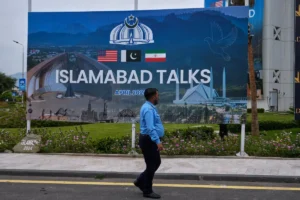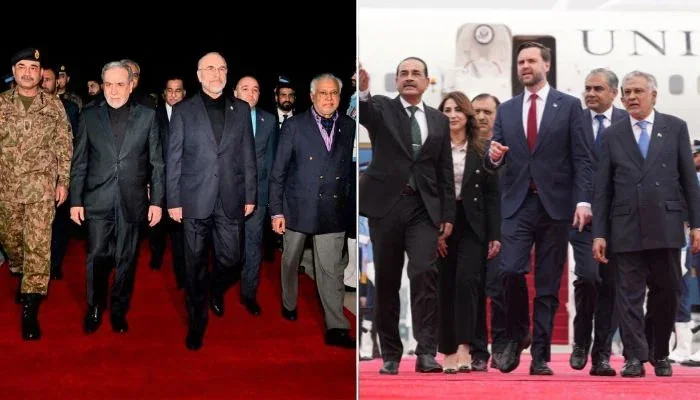

In a significant turn of events for global diplomacy, senior analyst Hamid Mir has revealed that US and Iranian delegations have agreed to pursue further discussions following their recent high-stakes meeting in Islamabad. Although a concrete resolution has not yet been reached, the dialogue is being viewed as a critical step toward de-escalation. Mir noted that such complex negotiations rarely conclude in a single session, but the willingness of both sides to continue shows a potential for a future consensus.
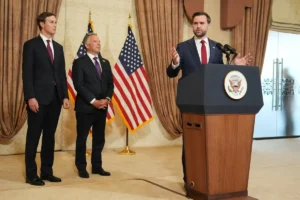
During the 21-hour marathon of negotiations, several key issues were put on the table. While President Donald Trump has publicly raised concerns regarding Iran’s uranium enrichment, insiders suggest that a middle ground on this technical issue is already within reach. Sources indicate that US Vice President JD Vance adopted a cautious but constructive approach, engaging in deep discussions regarding sanctions relief and maritime security in the Strait of Hormuz.
However, the most significant hurdle remains the situation in Lebanon. The Iranian delegation has maintained a firm stance, insisting that a permanent ceasefire in Lebanon is a non-negotiable priority. Iran aims to demonstrate that it will not abandon its regional allies, including Hezbollah and Hamas, in favor of a deal with Washington. Despite these tensions, Vance hinted at the possibility of hosting future Israel-Lebanon talks within the United States to bridge the gap.
As the current two-week ceasefire remains in place, international players like Turkiye and China are expected to join Pakistan in facilitating indirect contacts to extend the peace. While Trump’s social media rhetoric remains sharp for his domestic audience, Mir suggests that the actual negotiations reflect a much more pragmatic and flexible reality. The next round of talks, whose time and location are yet to be finalized, will be pivotal in determining the future of Middle East stability