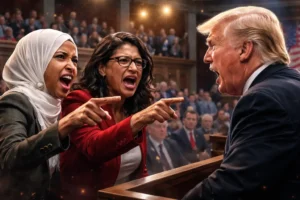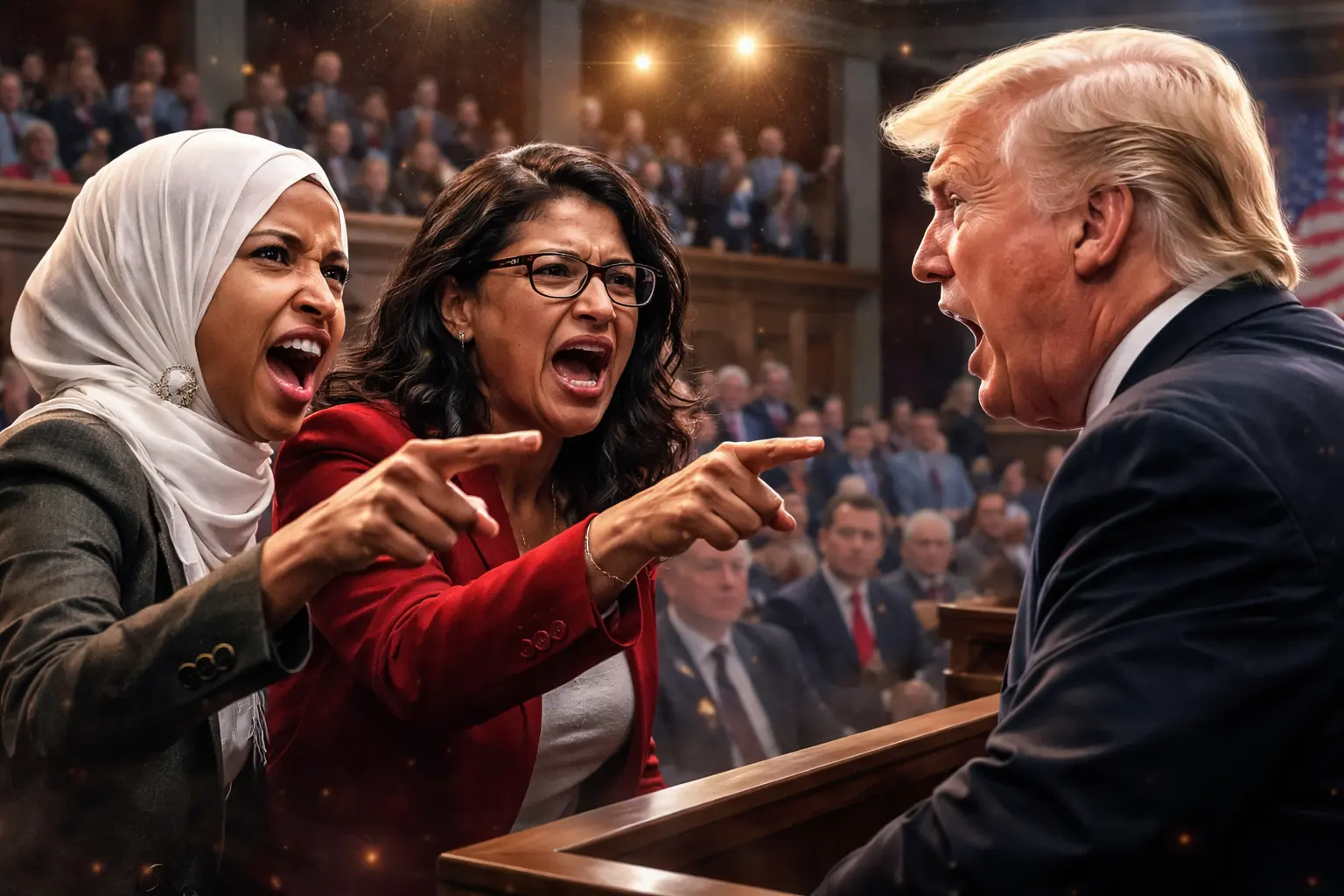

Tensions escalated in Washington after US President Donald Trump publicly attacked two Muslim Democratic lawmakers following a dramatic moment during his recent address to Congress. The controversy began during the State of the Union address, when Representatives Ilhan Omar of Minnesota and Rashida Tlaib of Michigan interrupted the president, shouting accusations including “you are killing Americans.” Omar also called Trump a “liar” during the exchange.
A day later, Trump responded on his social media platform, launching a harsh verbal attack. He described the two lawmakers as “mentally deranged” and suggested they should be institutionalized. He also said they should be sent back to “where they came from,” despite the fact that both Omar and Tlaib are US citizens. His remarks quickly triggered widespread backlash across political and civil rights circles.
House Minority Leader Hakeem Jeffries condemned Trump’s statements as xenophobic and disgraceful, while Tlaib dismissed the president’s comments online, saying he was “crashing out.” The Council on American Islamic Relations, a leading Muslim advocacy organization, also criticized the remarks, calling them racist and bigoted. The group argued that criticizing government immigration policies does not justify questioning lawmakers’ citizenship or loyalty.
The dispute comes amid growing controversy over Trump’s immigration enforcement policies. His administration has faced criticism following fatal shootings involving federal agents and reports of multiple deaths inside Immigration and Customs Enforcement detention centers. Rights groups claim these actions have created a climate of fear among immigrant communities.
During his speech, Trump also repeated allegations of fraud within Somali communities in Minnesota, claims that have previously been disputed. Critics argue that such rhetoric deepens division and targets minority groups. The White House has not issued an official clarification, while supporters maintain that Trump’s actions are aimed at strengthening domestic security.
The episode highlights deep political polarization and renewed debate over immigration, race, and political speech in the United States.