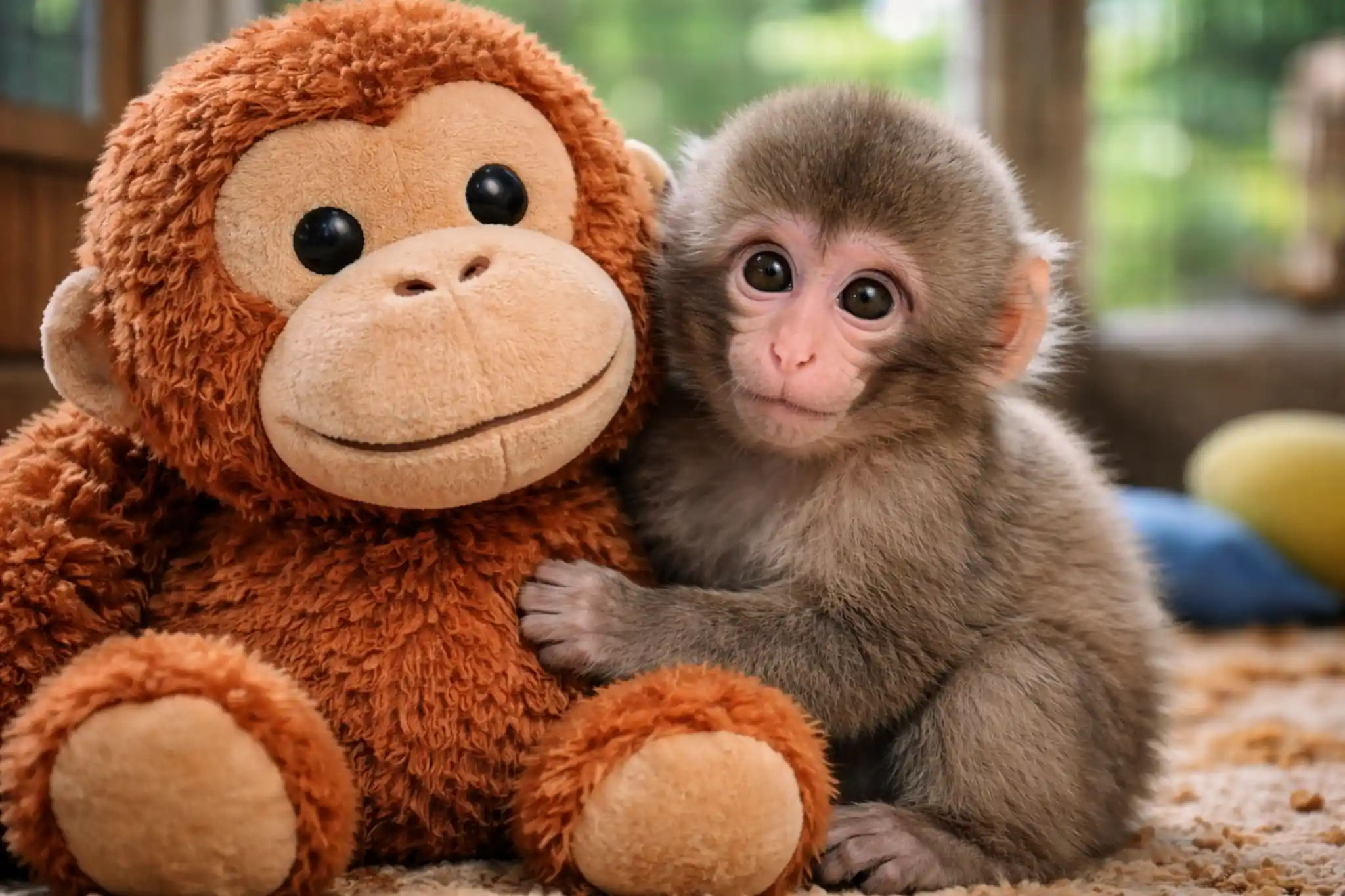

A baby Japanese snow monkey named Punch has captured the attention of people around the world after photos of the young macaque sitting beside a stuffed toy went viral online. The adorable animal, currently living at a zoo in Japan, has inspired memes, social media posts, and even admiration from international audiences.
However, while Punch the snow monkey is winning hearts globally, the reality for many Japanese macaques in the wild is very different. In rural areas of Japan, these monkeys are often considered agricultural pests because they frequently raid farms and damage crops.
According to Japan’s agriculture ministry, wild monkeys caused approximately 770 million yen in crop damage in 2024, which is roughly 4.8 million dollars. Because of these losses, authorities allow the capture and culling of thousands of macaques every year in an effort to reduce economic damage for farmers.
This policy has sparked debate between farmers, scientists, and wildlife advocates. Many farmers say they have little choice but to support population control measures because monkey raids threaten their livelihoods and reduce harvests.
At the same time, some experts argue that large scale culling may not be the most effective long term solution. Primatologist Takayo Soma from Kyoto University explained that killing a certain number of monkeys without careful research may not address the root causes of the problem.
Other researchers point out that when one troop of monkeys disappears, another group often moves into the same territory, creating a cycle that continues year after year.
As a result, many scientists recommend non lethal solutions to manage the conflict between humans and wildlife. Some proposed methods include installing electric fences, training specially trained “monkey dogs” that can chase animals away from farms, and improving land management near forests.
Meanwhile, some farmers have begun promoting coexistence with the animals. An apple farmer in Nagano Prefecture has gained popularity online by sharing photos and videos of snow monkeys living in nearby mountains.
Supporters hope that the popularity of Punch the snow monkey may encourage more people to appreciate Japanese macaques and inspire new approaches that balance wildlife conservation and agricultural protection.