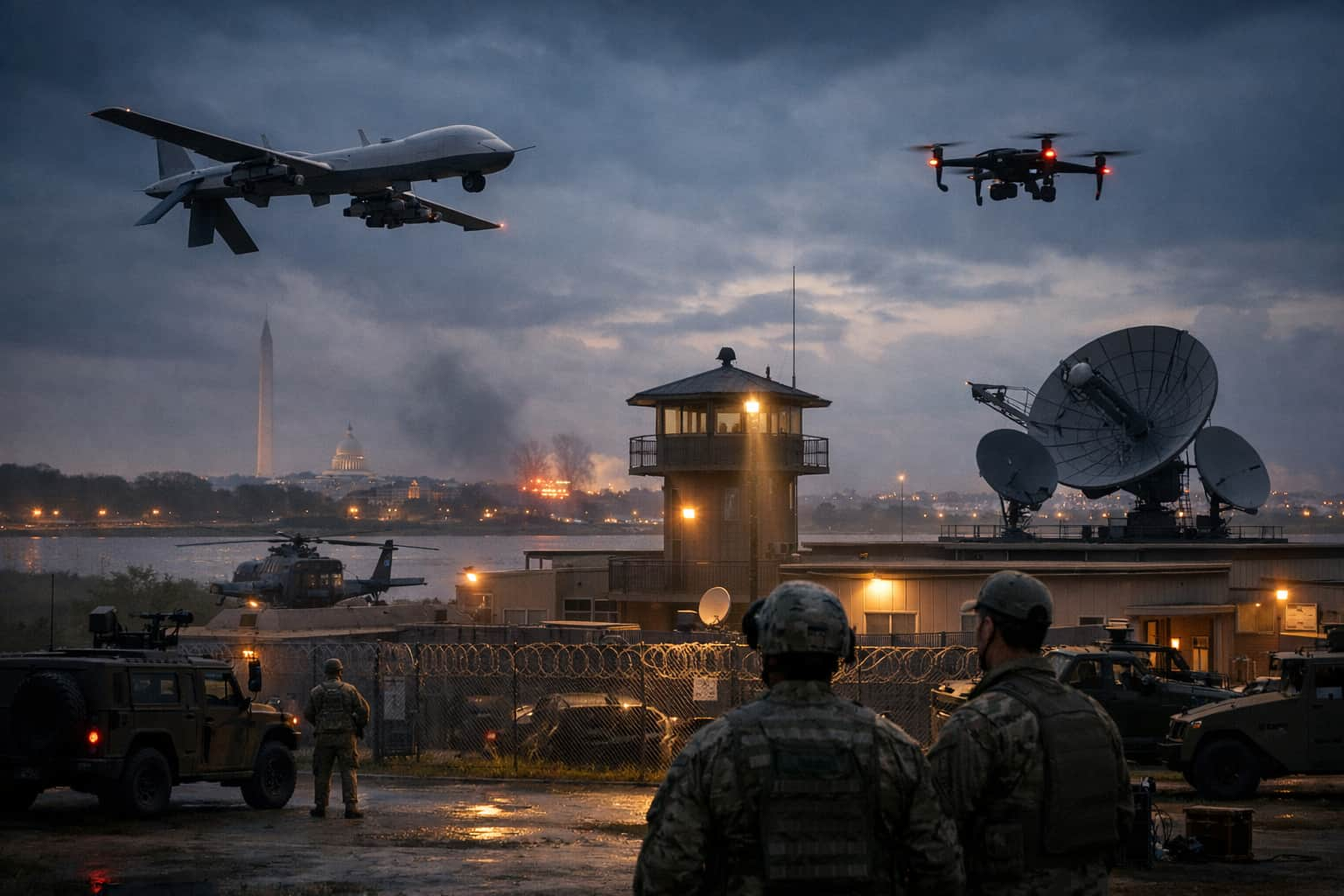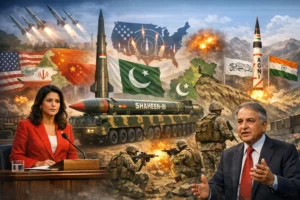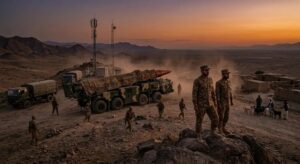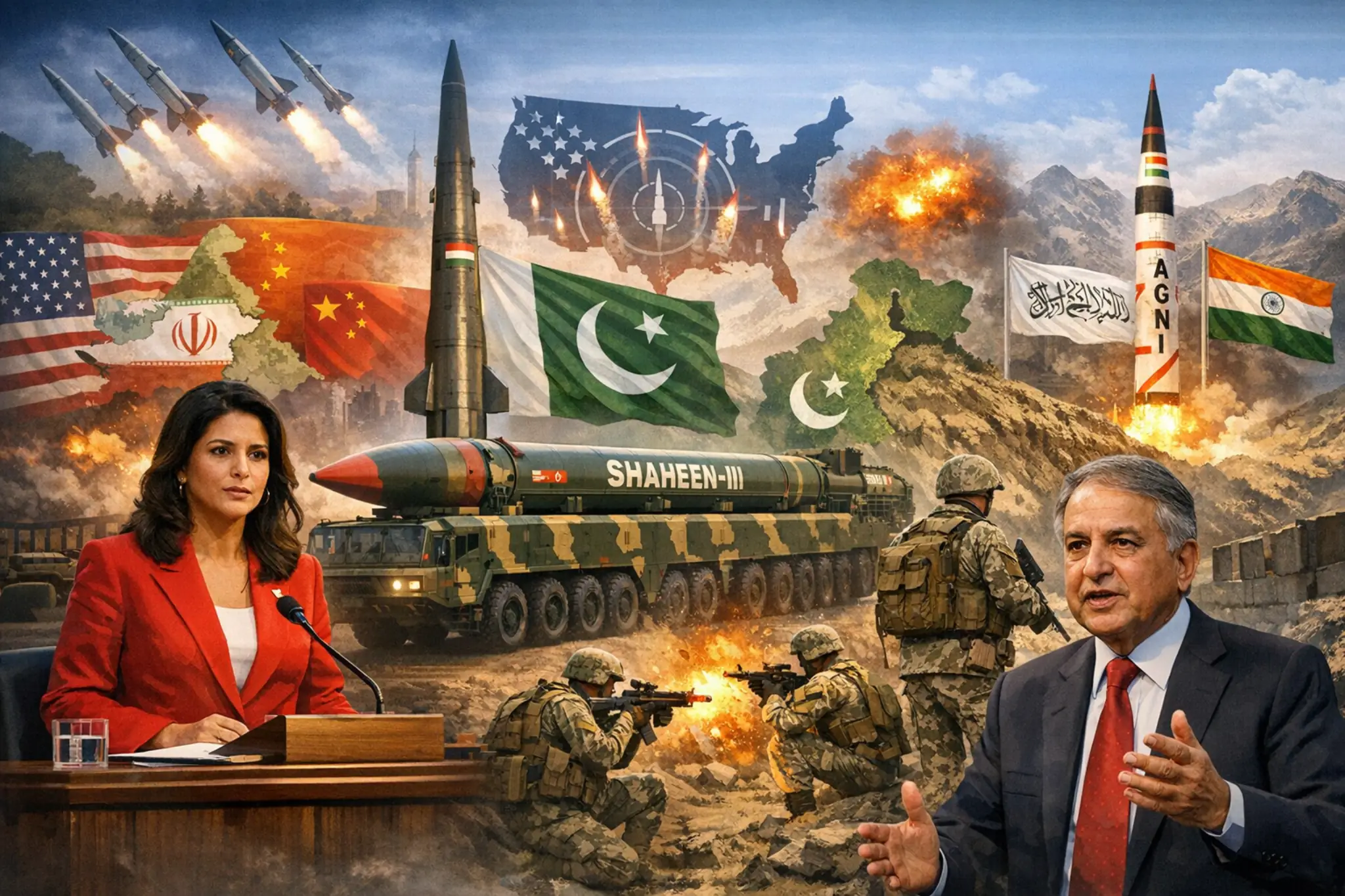

Washington: US Director of National Intelligence Tulsi Gabbard has listed Pakistan among countries seen as a growing strategic concern, cautioning that its advancing long-range missile capabilities could eventually put the US homeland within reach.
While presenting the 2026 Annual Threat Assessment before the Senate Intelligence Committee, she also identified Iran, China, Russia, and North Korea as nations developing advanced missile delivery systems, including both nuclear and conventional weapons.
Gabbard stated that although the US nuclear deterrent remains strong enough to ensure homeland security, these countries are actively working on modern and traditional missile technologies capable of targeting the United States. She added that Pakistan’s ballistic missile programme could potentially evolve to include intercontinental ballistic missiles (ICBMs).
She further warned that global missile threats are expected to increase significantly, with projections suggesting that missile inventories could rise from over 3,000 currently to more than 16,000 by 2035. According to her, these countries are also likely to study US missile defence systems to refine their own strategies.
In response, former Pakistani ambassador Jalil Abbas Jilani dismissed the claim, asserting that Pakistan does not pose a direct threat to the US. He emphasized that Pakistan’s nuclear doctrine is India-focused, aimed purely at deterrence and regional stability, not global reach.
Similarly, Turkish analyst Shaqeq-ud-Din questioned the assessment, arguing that Pakistan does not possess ICBMs. He also pointed out concerns over India’s expanding missile capabilities, suggesting that threat evaluations may not be applied equally across all countries.
The report also highlighted South Asia as a region of ongoing security risks, particularly due to tensions between Pakistan and India. It noted that despite neither country seeking open conflict, the risk of nuclear escalation remains due to past confrontations and potential triggers from terrorist activities.
Additionally, the assessment mentioned rising tensions along the Pakistan-Afghanistan border, citing cross-border clashes and Pakistan’s concerns over militant groups operating from Afghan territory. It noted that while Pakistan has urged the Taliban to cut ties with such groups, the Taliban continues to deny providing support, maintaining a public stance favoring dialogue.