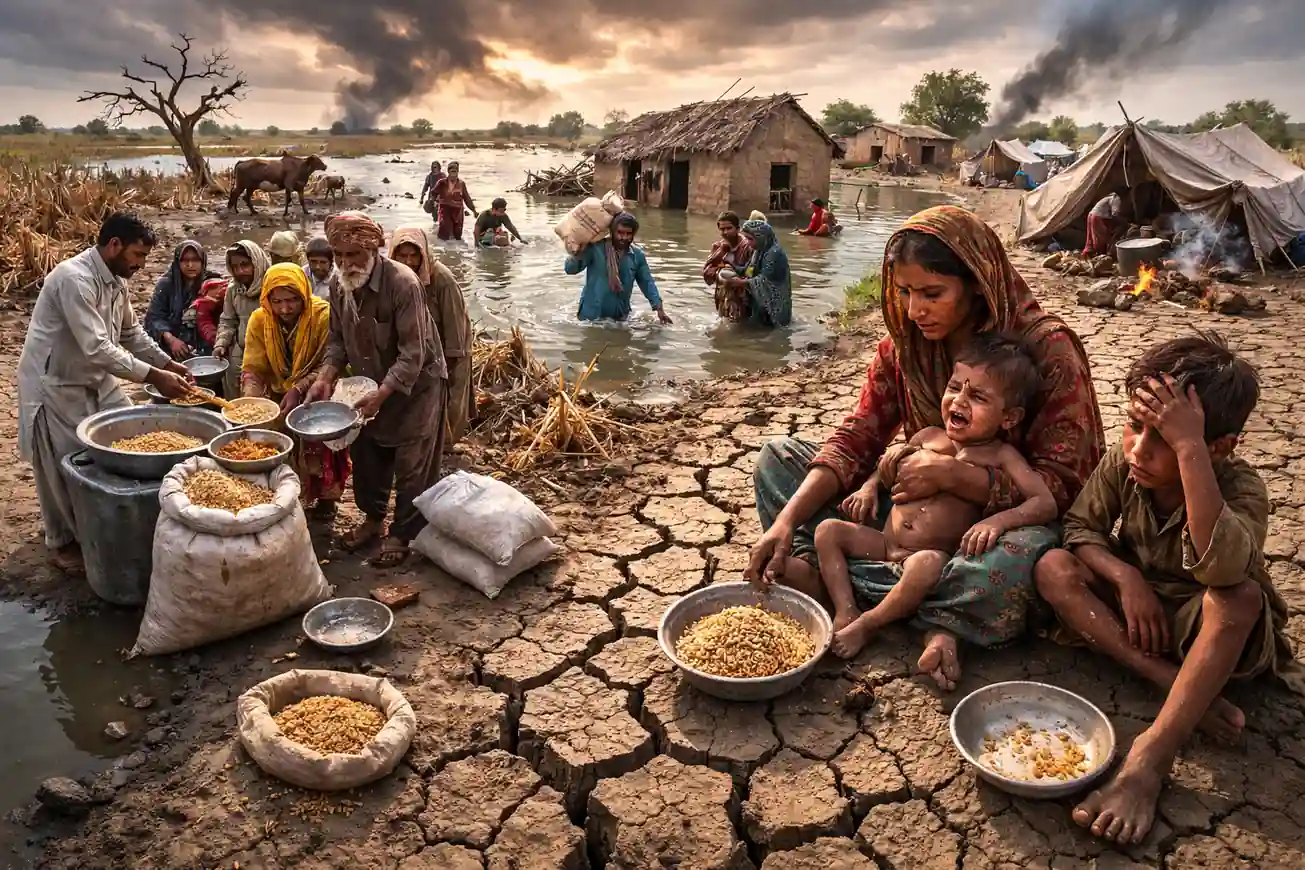

A recent assessment by the United Nations has raised serious concerns about the growing food crisis in Pakistan, warning that millions are struggling to secure enough food after a year marked by devastating floods, persistent drought, and rising violence. According to the latest findings, nearly 7.5 million people are currently facing acute food insecurity and malnutrition, placing vulnerable communities at significant risk.
The report highlights that between December and March 2026, around 1.25 million Pakistanis are expected to fall into emergency levels of hunger. At this stage, families experience major food shortages and alarming levels of malnutrition. Humanitarian agencies stress that immediate life saving assistance is essential to prevent further deterioration and potential loss of life.
The lingering effects of the 2025 monsoon floods, combined with prolonged drought conditions and localized insecurity, have severely weakened agricultural production and pastoral livelihoods. Reduced crop yields, disrupted markets, and shrinking income opportunities have left households increasingly dependent on unstable market supplies. During the recent lean season, limited farm labor opportunities and harsh winter weather further reduced access to food and income.
Rising food prices, declining purchasing power, and growing household debt have intensified the crisis. Wheat flour shortages have become a particular concern, especially in vulnerable rural districts.
The burden is not evenly distributed. Balochistan faces the highest proportional impact, with about 25 percent of its assessed population experiencing high levels of food insecurity. In Sindh, more than three million people are affected. Certain districts such as Musakhel, Zhob, Kachi, Tank, and Torghar show particularly alarming figures.
Looking ahead to April through September 2026, projections suggest a slight improvement, with an estimated 6.7 million people expected to remain in high or worse levels of food insecurity. While seasonal harvests and livestock sales may offer temporary relief, underlying challenges such as high staple prices and climate risks continue to threaten long term stability.