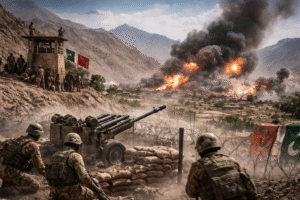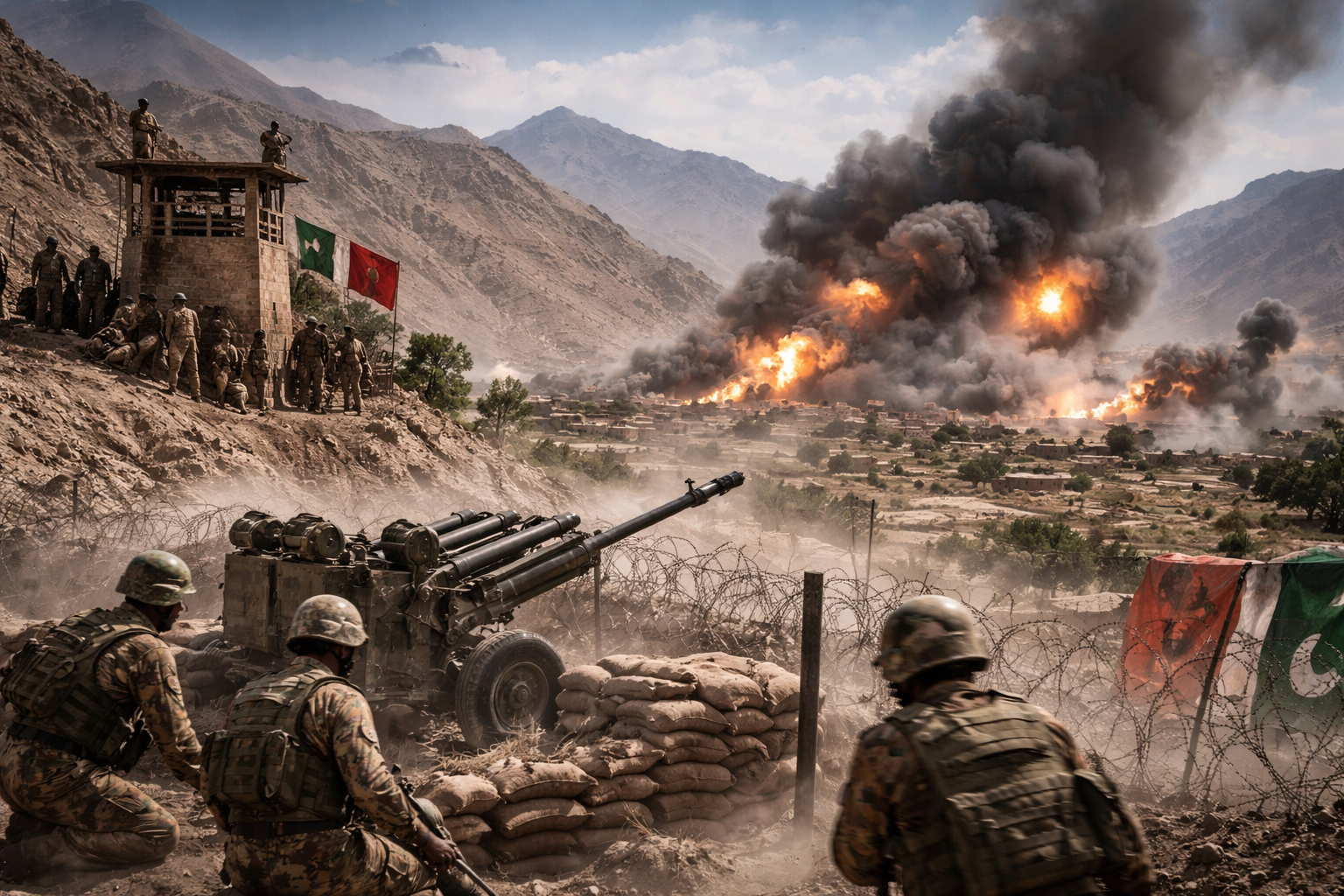

The Pakistani government confirmed a strong response to what it described as unprovoked aggression by the Afghan Taliban, reporting that 133 militants were killed and more than 200 were injured during cross-border operations. Federal Minister for Information Atta Tarar stated that Operation Ghazab lil-Haq was launched to neutralize the threat after Taliban attacks along the border. Security sources added that Pakistani forces destroyed key Taliban positions, leading some Afghan militants to raise white flags in surrender.
China expressed deep concern over the escalation. A foreign ministry spokesperson, Mao Ning, noted that Beijing is actively mediating through diplomatic channels and is willing to play a constructive role in reducing tensions between the two nations.
Russia also urged both Pakistan and Afghanistan to cease attacks immediately and explore diplomatic avenues to resolve their differences. Moscow stated it could offer mediation support if requested by both countries, emphasizing the urgency of dialogue over conflict.
Iran extended an offer to facilitate communication between Islamabad and Kabul. Iranian Foreign Minister Abbas Araghchi highlighted Iran’s readiness to assist in fostering cooperation and understanding between the two neighbors.
Meanwhile, the United Nations stressed the protection of civilians and the adherence to international law. UN Secretary-General Antonio Guterres is closely monitoring the situation and urged both countries to act responsibly.
In addition, Pakistan and Turkey discussed the situation through high-level talks, reaffirming the commitment to regional stability and continuous engagement. Pakistani officials emphasized that the armed forces’ actions under Operation Ghazab lil-
Global powers are urging restraint as tensions along the Pakistan-Afghanistan border sharply escalate. Recent clashes have drawn international attention, with countries like China, Russia, Iran, and organizations such as the United Nations calling for an immediate halt to hostilities and a focus on diplomatic solutions.
The Pakistani government confirmed a strong response to what it described as unprovoked aggression by the Afghan Taliban, reporting that 133 militants were killed and more than 200 were injured during cross-border operations. Federal Minister for Information Atta Tarar stated that Operation Ghazab lil-Haq was launched to neutralize the threat after Taliban attacks along the border. Security sources added that Pakistani forces destroyed key Taliban positions, leading some Afghan militants to raise white flags in surrender.
China expressed deep concern over the escalation. A foreign ministry spokesperson, Mao Ning, noted that Beijing is actively mediating through diplomatic channels and is willing to play a constructive role in reducing tensions between the two nations.
Russia also urged both Pakistan and Afghanistan to cease attacks immediately and explore diplomatic avenues to resolve their differences. Moscow stated it could offer mediation support if requested by both countries, emphasizing the urgency of dialogue over conflict.
Iran extended an offer to facilitate communication between Islamabad and Kabul. Iranian Foreign Minister Abbas Araghchi highlighted Iran’s readiness to assist in fostering cooperation and understanding between the two neighbors.
Meanwhile, the United Nations stressed the protection of civilians and the adherence to international law. UN Secretary-General Antonio Guterres is closely monitoring the situation and urged both countries to act responsibly.
In addition, Pakistan and Turkey discussed the situation through high-level talks, reaffirming the commitment to regional stability and continuous engagement. Pakistani officials emphasized that the armed forces’ actions under Operation Ghazab lil-Haq were necessary to defend sovereignty and maintain peace along the border.
The international community continues to call for restraint, dialogue, and diplomacy as tensions remain high, highlighting the critical need for cooperation and stability in the region.