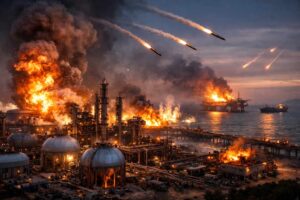

Global oil markets witnessed a fresh surge as oil prices rise amid growing concerns over supply disruptions following Iran’s denial of any talks with the United States. The uncertainty surrounding the situation in the Gulf has once again pushed investors to reassess risks in the energy market.
On Tuesday, Brent crude increased by $1.06, reaching $101 per barrel, while US West Texas Intermediate (WTI) climbed $1.58 to $89.71. This rebound came after a sharp decline of more than 10% the previous day, when hopes of easing tensions briefly calmed the market.
Former US President Donald Trump had earlier suggested that progress was being made in discussions with Iran, claiming both sides had reached “major points of agreement.” However, Iran strongly rejected these claims, calling them an attempt to influence financial markets and create confusion.
The ongoing conflict has significantly impacted the Strait of Hormuz, a critical route that handles nearly one fifth of the world’s oil and gas shipments. Although a few tankers managed to pass through recently, the route remains unstable, keeping traders on edge.
Market analysts believe that even temporary pauses in military action are not enough to restore confidence. The risk of energy supply disruption continues to support higher prices. Experts suggest oil could stabilize between $85 and $110 in the short term, but if tensions persist and the Strait remains restricted, prices could spike dramatically.
In a more extreme scenario, analysts warn that Brent crude could reach as high as $150 per barrel if the situation does not improve by the end of April. Meanwhile, damage to energy infrastructure in Iran has further intensified supply concerns.
To ease shortages, the United States has temporarily relaxed sanctions on some oil shipments. Additionally, the International Energy Agency is actively monitoring the situation and may release strategic reserves if required.
Overall, the global energy market remains highly sensitive, with geopolitical tensions continuing to drive volatility in oil prices.