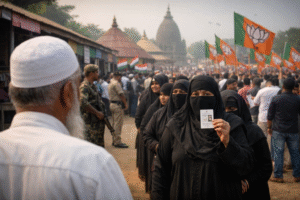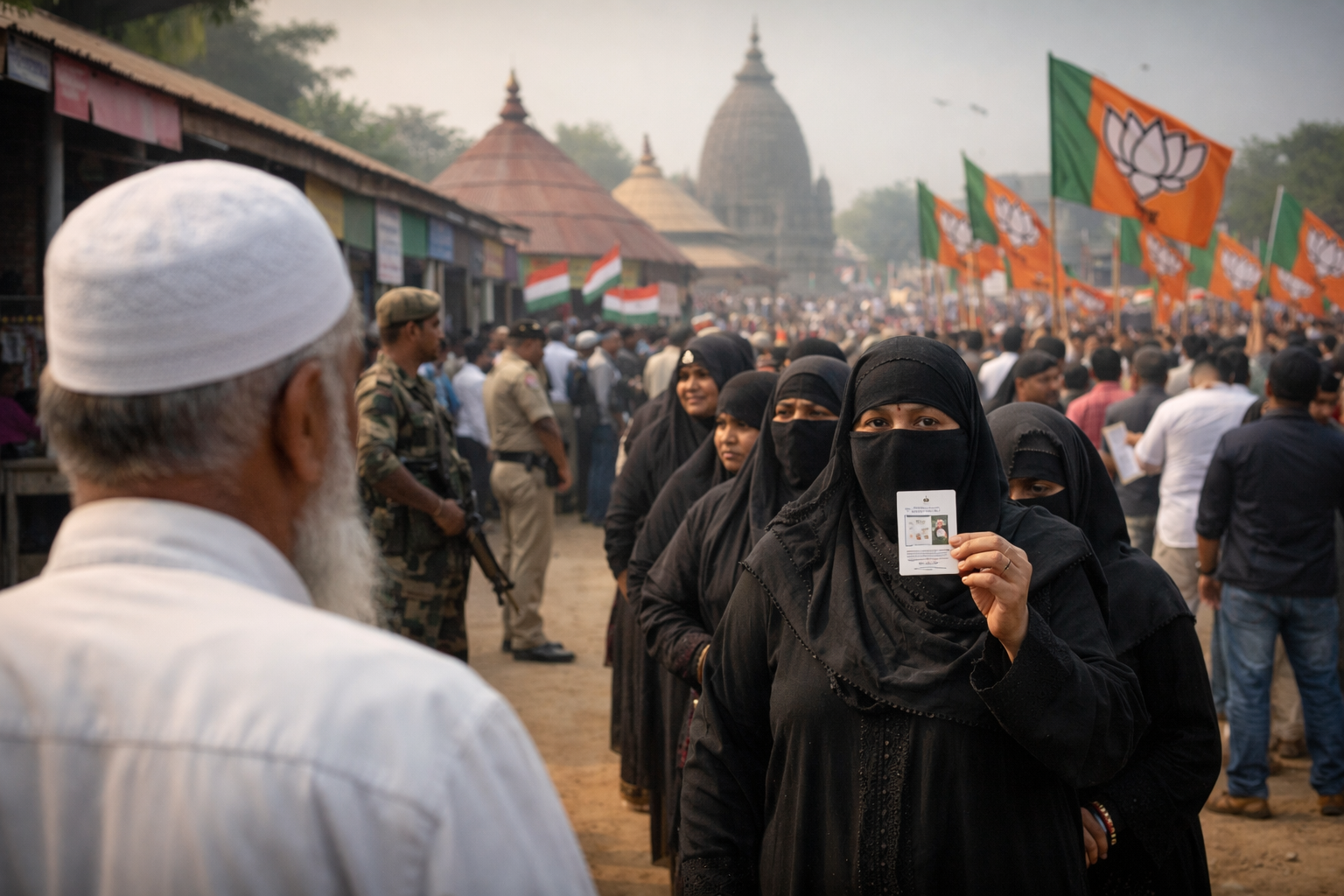

In Assam, India, the upcoming elections on April 9 are overshadowed by concerns about Muslim representation. Once holding sway in nearly 35 constituencies out of the state’s 126 seats, Muslims now find themselves reduced to about 20 constituencies after the 2023 delimitation exercise.
For residents like Islam Uddin, a retired teacher from Katigorah, the change feels deeply unsettling. He has long encouraged his community to vote, believing it strengthens their voice. But with new boundaries merging 40,000 Hindu voters into Katigorah, the constituency has shifted from a balanced demographic to a Hindu-majority stronghold. As a result, major parties have fielded Hindu candidates, leaving Muslims sidelined.
Political analysts describe this as “communal gerrymandering”, a tactic that fragments Muslim voters across Hindu-majority seats (“cracking”), consolidates Muslim pockets into fewer constituencies (“packing”), and merges Hindu populations to secure dominance (“stacking”). The net effect is a crippling of Muslim representation, particularly in regions like Barak Valley, where seats dropped from 15 to 13.
Critics argue that the Election Commission’s guidelines—which emphasize geographical contiguity and fair representation—were violated. For example, Hindu areas from Badarpur were merged across the Barak River into Katigorah, reshaping demographics in favor of the BJP.
The ruling party defends the exercise as a step to protect the rights of indigenous Assamese people, but opposition leaders and activists see it as part of a broader Hindu majoritarian strategy. In constituencies like Barpeta, once a Muslim stronghold, redrawn boundaries now ensure Hindu dominance, leaving many voters feeling voiceless.
With Muslims making up 34 percent of Assam’s population, the reduction in their electoral influence is significant. For many, the delimitation has not just altered maps—it has muted their political voice, raising fears that Assam could become a model for similar exercises across India.