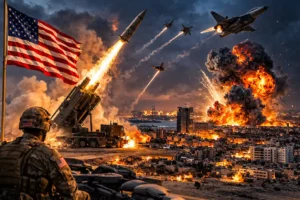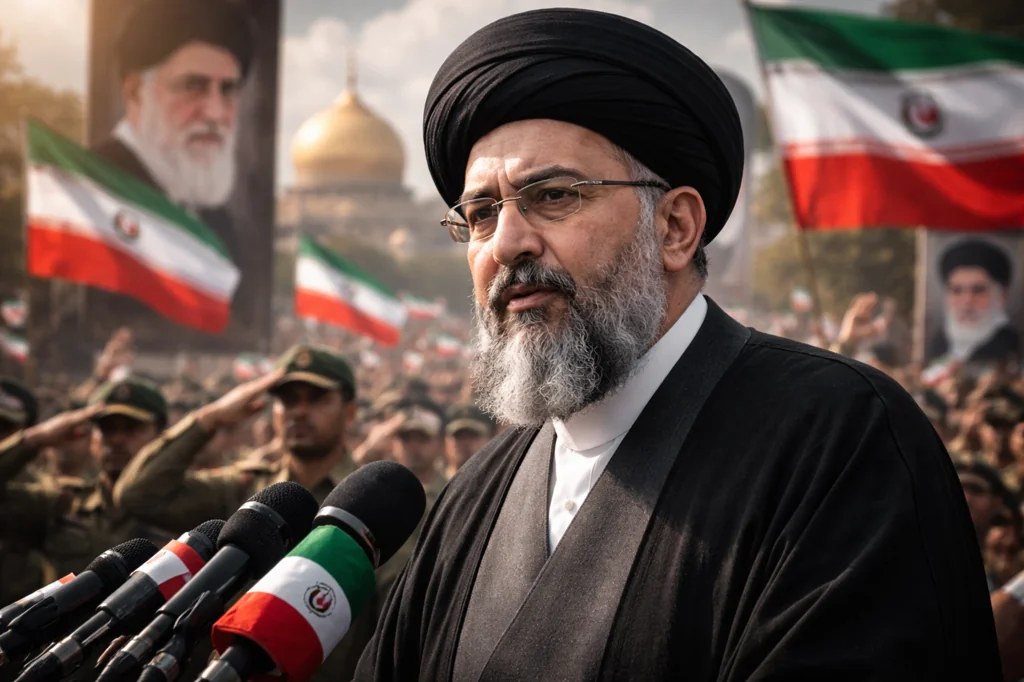

Mojtaba Khamenei has officially been named the new supreme leader of Iran, succeeding his late father Ayatollah Ali Khamenei following his death during the recent conflict involving US and Israeli airstrikes. The appointment was announced shortly after midnight by Iran’s powerful clerical body known as the Assembly of Experts, which is responsible for selecting the country’s top religious and political authority.
The 56 year old cleric has long been considered an influential figure within Iran’s political and security structure, even though he never held a formal government position. Mojtaba Khamenei survived the recent air war that targeted multiple high level Iranian officials and military installations.
Within Iran’s leadership circles, Mojtaba gained prominence over the years as a trusted advisor and close aide to his father. Many insiders described him as a key power broker who helped coordinate relationships between the Islamic Revolutionary Guard Corps (IRGC) and Iran’s political leadership. His strong connections with the security establishment allowed him to build significant influence behind the scenes.
Some analysts say Mojtaba functioned as his father’s “gatekeeper”, controlling access to the supreme leader and playing an important role in major decisions. His support base reportedly includes many members of the younger generation within the Revolutionary Guards, which strengthens his political standing inside Iran.
Born in 1969 in the city of Mashhad, Mojtaba grew up during the revolutionary period that transformed Iran’s political system. As a young man he served during the Iran Iraq war, which lasted from 1980 to 1988. He later pursued religious education in the seminaries of Qom, Iran’s leading centre for Islamic scholarship, where he obtained the clerical rank of Hojjatoleslam.
Despite maintaining a low public profile, Mojtaba has been known to appear at loyalist rallies and political gatherings supporting the Islamic Republic. His leadership comes at a time of regional tension and international pressure, particularly over Iran’s nuclear programme and its broader geopolitical influence.
The position of supreme leader holds enormous authority in Iran. The role oversees major national decisions, including foreign policy, military strategy, and nuclear development. Mojtaba Khamenei now faces the challenge of leading the country during one of the most volatile periods in its recent history.