
Pakistan has strongly reacted to the recent escalation in the Middle East, with Deputy Prime Minister and Foreign Minister Ishaq Dar blaming Israel for worsening tensions by launching strikes on Iran at a critical moment. According to Dar, these actions disrupted ongoing diplomatic efforts aimed at reducing conflict between Iran and the United States.
While addressing the Senate, Dar stated that a major Israeli attack on Tehran, followed by another strike in Jubail, Saudi Arabia, has made the situation more dangerous and sensitive. He emphasized that Pakistan had been actively working behind the scenes to promote peace and dialogue, especially at a time when both sides were preparing for possible negotiations.
Pakistan has taken on a mediator role in the conflict, which began after joint US Israeli military actions on Iran earlier this year. Since then, the situation has intensified, causing a rise in global oil prices and disrupting energy supplies, particularly due to tensions around the Strait of Hormuz.
Dar highlighted that Pakistan immediately condemned the attack on Iran and reached out to Iranian leadership to express support and solidarity. He also maintained continuous contact with key global players, including China, Japan, the United Kingdom, and European countries, to encourage restraint and avoid further escalation.
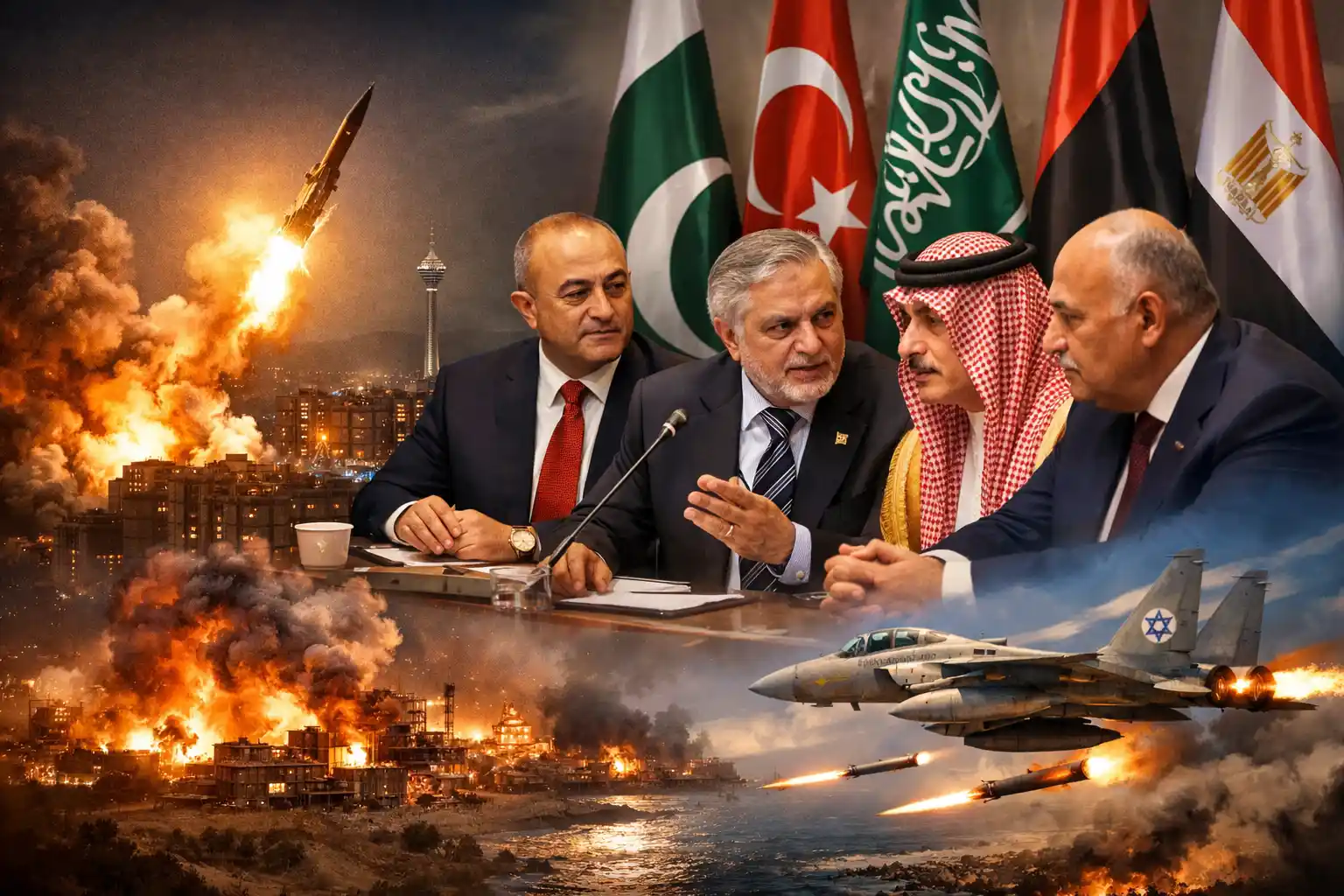
He further revealed that Pakistan participated in a high-level meeting in Riyadh, where multiple countries jointly condemned Israel’s actions. Additionally, a four-nation group consisting of Saudi Arabia, Egypt, Turkiye, and Pakistan has been actively working toward a peaceful resolution.
The Foreign Minister warned that a prolonged conflict could have serious consequences for the global economy, especially for countries like Pakistan that are vulnerable to rising fuel costs. Despite recent setbacks, he expressed hope that ongoing diplomatic efforts would eventually lead to stability and a dignified resolution in the region.