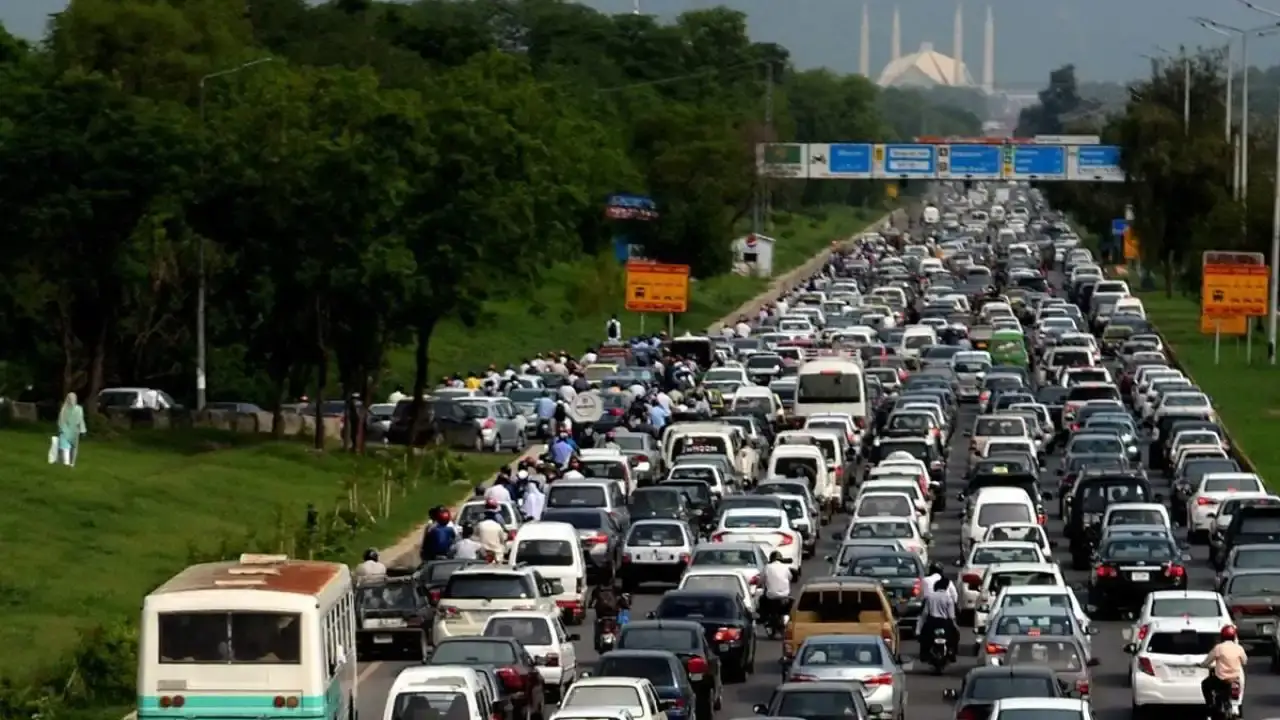

Once known for its serene roads and organized infrastructure, Islamabad is now grappling with a growing traffic crisis that is worsening by the day. Residents across the city are reporting long, hours-long traffic jams on major routes, turning everyday commutes into stressful and time-consuming experiences.
The traffic congestion is disrupting daily activities in numerous ways. Office workers are struggling to get to work on time, students face delays in reaching schools, and families are missing appointments and dealing with higher fuel costs. Many commuters now find themselves leaving home much earlier than before just to ensure they reach their destinations on schedule.
Key roads such as the Srinagar Highway, Islamabad Expressway, and Kashmir Highway are particularly burdened by the heavy traffic. During peak hours, these roads often become massive queues of vehicles crawling at a slow pace, increasing the frustration of drivers and passengers alike.
Citizens are calling on local authorities to take immediate action to resolve the issue. They emphasize the need for improved traffic enforcement, better signal management, and stricter measures against illegal parking and lane violations, all of which contribute to the gridlock.
Urban planners and traffic experts stress that Islamabad requires a long-term, sustainable solution to its traffic problems. Proposals include expanding road capacity, enhancing public transportation systems, and upgrading intersections to facilitate smoother vehicle flow.
As the capital continues to struggle with these daily traffic disruptions, residents are hoping for urgent and effective measures to address the situation. Without swift intervention, the city’s traffic congestion is likely to worsen, further disrupting daily life, reducing productivity, and diminishing the quality of life for its residents.