
Islamabad’s private schools will now operate on a four-day workweek, following new directives issued by the Ministry of Federal Education. The announcement, made by the Private Educational Institutions Regulatory Authority (PEIRA), is part of the government’s broader austerity and fuel conservation measures.
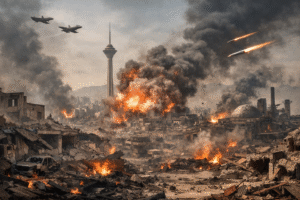
According to the notification, all private educational institutions within the Islamabad Capital Territory will conduct on-campus academic activities from Monday to Thursday, with immediate effect. The decision comes amid rising global oil prices, driven by the ongoing US-Israel conflict with Iran, which has disrupted energy supplies worldwide.
Meanwhile, schools in Punjab will also remain closed on Fridays, applying to both government and private institutions. These schools reopened on April 1 after a 22-day closure, during which classes were conducted online and examinations continued as scheduled. The new schedule sets school timings from 8:00 am to 1:30 pm for regular institutions, while double-shift schools will run from 8:00 am to 12:30 pm for the first shift and 1:00 pm to 5:30 pm for the second.
In Sindh, authorities announced the resumption of physical classes from April 1. Information Minister Sharjeel Inam Memon confirmed that schools, colleges, and universities would restart in-person teaching, replacing online sessions. He added that all institutions would remain closed on Saturdays, while Education Minister Sardar Ali Shah stated that the new academic year would begin with a two-day weekend on Saturday and Sunday.
These changes reflect the government’s attempt to balance academic continuity with energy conservation, ensuring that students continue their education while reducing operational costs. By adopting shorter workweeks, provinces aim to ease the burden of rising fuel prices while maintaining structured learning environments.
The move highlights Pakistan’s adaptability in the face of global challenges, with Islamabad, Punjab, and Sindh implementing policies that prioritize both education and resource management.