
Five members of Iran’s women football team have been granted asylum in Australia after quietly leaving their team hotel during an international tournament. The players sought protection after facing backlash at home for refusing to sing Iran’s national anthem before a match, an act widely interpreted as a symbol of protest against the Iranian government.
The five athletes include team captain Zahra Ghanbari, along with Fatemeh Pasandideh, Mona Hamoudi, Atefeh Ramezanizadeh, and Zahra Sarbali. According to officials, the players slipped away from their hotel on the Gold Coast under the cover of darkness before contacting Australian authorities to request asylum.
Australian Prime Minister Anthony Albanese confirmed that the athletes had been granted humanitarian visas, allowing them to remain in the country. Government officials held private discussions with the players for several days before arranging their relocation to a secure safe house.
The situation began after the Iranian players stood silently during the national anthem before a tournament match against South Korea. The gesture drew international attention and was seen by many observers as a protest against political restrictions in Iran.
Following the incident, Iranian state media criticised the players, with one presenter describing them as “wartime traitors.” Human rights advocates warned that the athletes could face serious consequences if they returned to Iran.
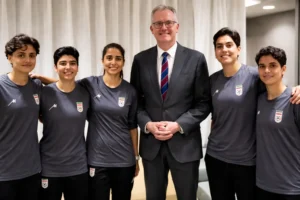
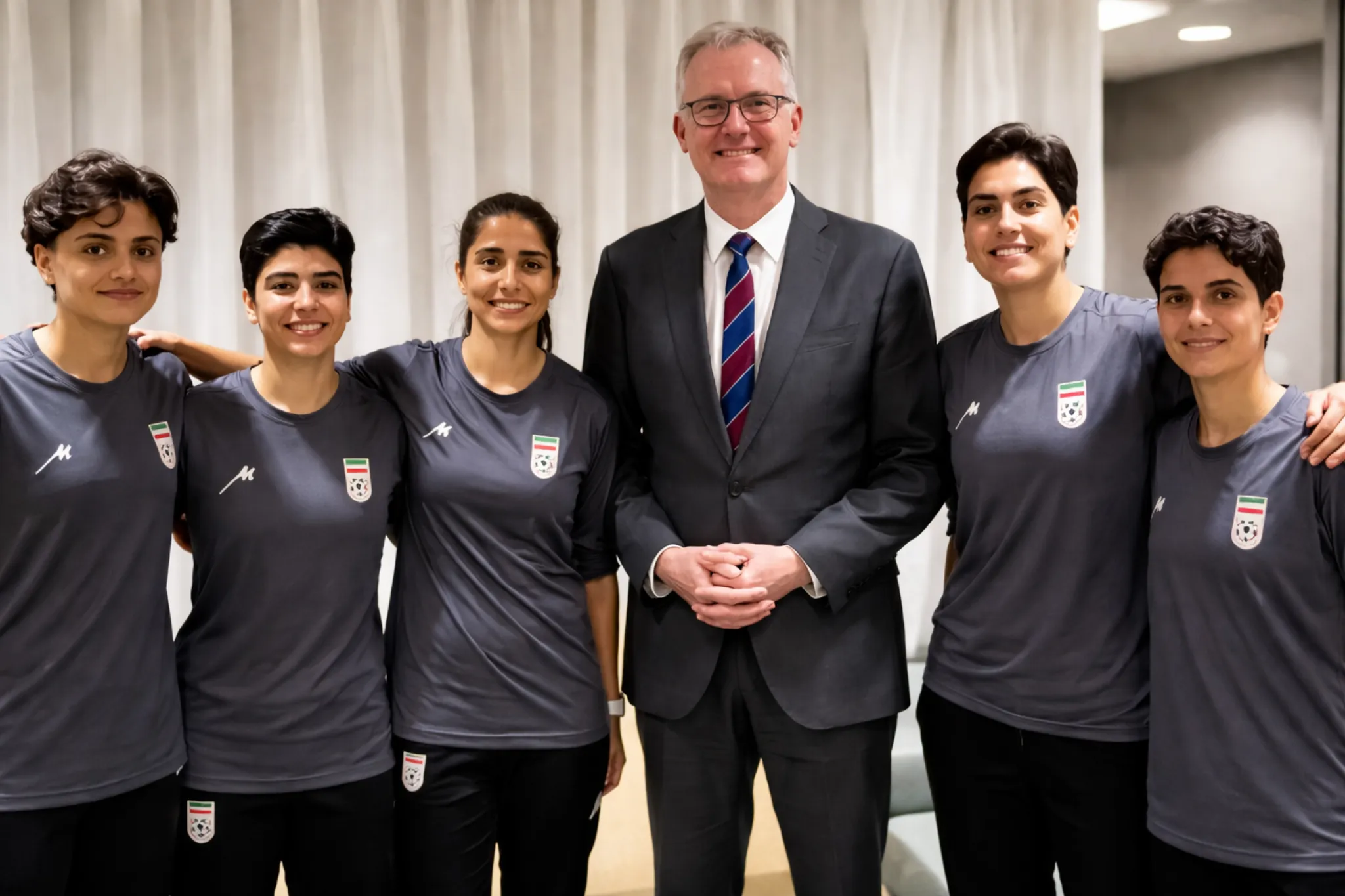
Australian Home Affairs Minister Tony Burke personally met the players to finalise the paperwork granting them protection. Images shared by officials showed the athletes gathered together as they received confirmation that they would be allowed to remain in Australia.
The decision received widespread support from activists, politicians, and public figures. Several international voices urged the Australian government to ensure the players’ safety, arguing that returning them to Iran could place them in danger.
Supporters also gathered outside the Gold Coast stadium, chanting messages of solidarity and urging authorities to protect the players. Demonstrators called on officials to allow the athletes to remain abroad and pursue their careers without fear.
The case of the Iran women asylum request highlights the growing intersection of sports, politics, and human rights, drawing global attention to the pressures faced by athletes who publicly challenge authority in their home countries.