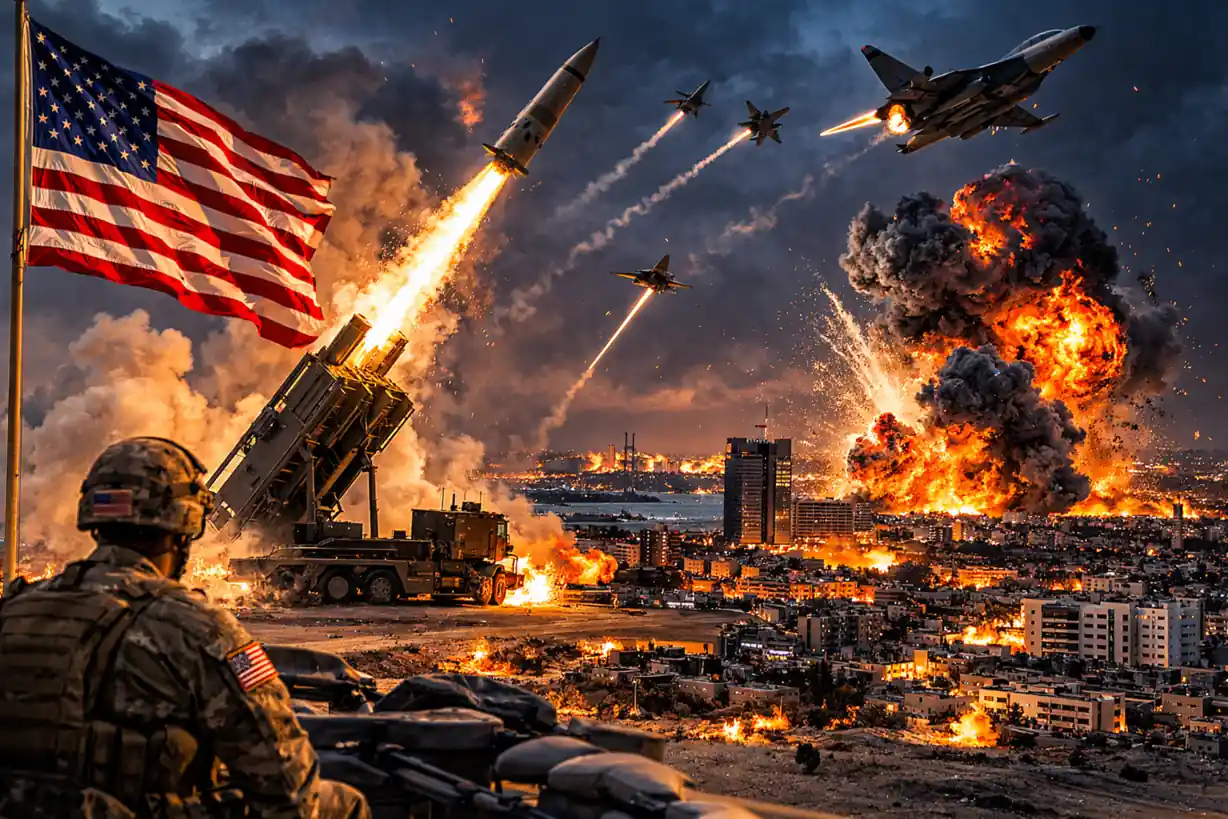

The first week of the Iran war has already placed a heavy financial burden on the United States military, with early estimates showing billions spent on combat operations. According to officials from the Pentagon, the United States spent nearly $6 billion during the first week of fighting, including around $4 billion on munitions and advanced missile interceptors.
During recent discussions with US Congress, defence officials revealed that the spending was necessary to support ongoing military strikes and maintain air defence operations. However, they also warned that additional funding may soon be required to sustain the campaign and rebuild weapons stockpiles that are being used rapidly.
Reports indicate that approximately 4,000 Iranian targets have been hit since the start of the conflict. These targets included missile launchers, naval ships, and air defence systems, all of which were considered key components of Iran’s military capability. Military analysts say these strikes have significantly weakened Tehran’s ability to launch large scale retaliatory attacks.
General Brad Cooper, the head of US Central Command, informed lawmakers that the strikes have already reduced Iran’s ballistic missile launches by nearly 90 percent. He also stated that drone attacks have dropped by about 83 percent, showing that the early phase of the campaign has had a major impact on Iran’s offensive operations.
Despite these losses, officials caution that Iran still retains substantial military power. Intelligence estimates suggest the country still possesses about half of its missile arsenal, meaning the conflict could continue for an extended period if tensions escalate further.
In Washington, both Democrats and Republicans are closely examining the rapid pace of defence spending. Some lawmakers have raised concerns about the heavy use of high cost interceptor missiles, which can cost millions of dollars each. Experts warn that using these systems at such a fast rate could strain the US defence industry and potentially affect military readiness in other regions.
The conflict began on February 28, when US and Israeli forces launched major strikes on Iran, triggering retaliatory missile and drone attacks across the Middle East. The escalation has also sparked global concerns about energy security, particularly as traffic through the Strait of Hormuz, a vital oil shipping route, has sharply declined.