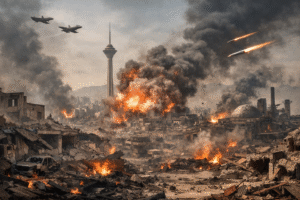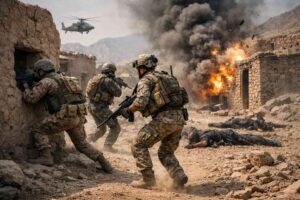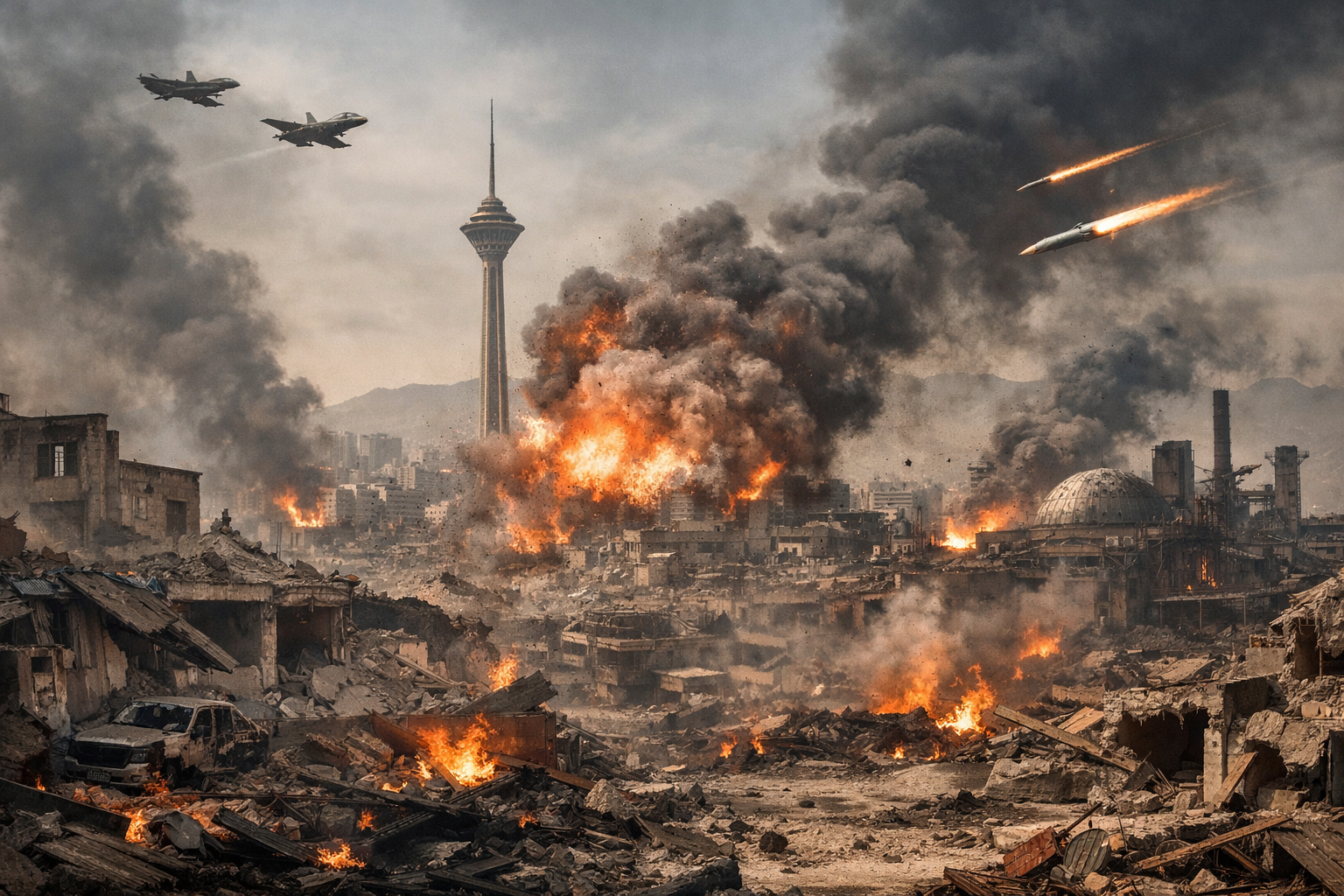

On day 33 of the ongoing Iran war, tensions remain high as US-Israeli attacks continue to strike both civilian and industrial sites across the country. President Donald Trump has stated that Tehran does not need to reach a deal for the conflict to end, suggesting the war could conclude within two to three weeks. However, Iran’s Foreign Minister Abbas Araghchi expressed zero trust in Washington, dismissing any possibility of negotiations.
Reports from Iranian media highlight widespread airstrikes targeting steel plants, pharmaceutical facilities, ports, and even residential complexes in cities such as Isfahan, Shiraz, Karaj, and Bandar Abbas. One of the most significant blows came when US-Israeli forces bombed the Tofigh Daru pharmaceutical units in Tehran, crippling its research and development department and disrupting the national medical supply chain.
In the Strait of Hormuz, a desalination plant on Qeshm Island was destroyed, further straining essential infrastructure. Iranian officials condemned these strikes as criminal attacks on civilian facilities. Meanwhile, analysts argue that Trump’s claim of a quick withdrawal is unrealistic, noting that Iran is likely to maintain control over the waterway, making it difficult for the US to simply walk away.
The human toll continues to rise, with more than 2,000 Iranians killed and thousands of civilian sites—including hospitals, schools, and universities—damaged. International observers warn that targeting civilian infrastructure constitutes war crimes.
Diplomatic efforts are also unfolding. China and Pakistan have proposed a five-point plan for a ceasefire and reopening the Strait of Hormuz, while Qatar and the UAE are engaging in talks to stabilize the region. The Vatican has urged de-escalation, calling for an immediate halt to violence.
Across the Gulf, Kuwait, Bahrain, and Saudi Arabia face drone and missile threats, while in Israel, coordinated attacks by Iran and Hezbollah have disrupted power supplies and triggered alarms in northern cities. Despite these challenges, Israeli leaders insist the war will continue, pressing ahead with operations in Lebanon that have already displaced over 1.2 million people.