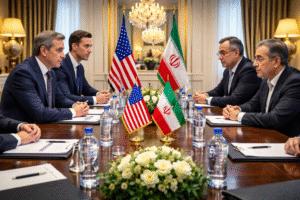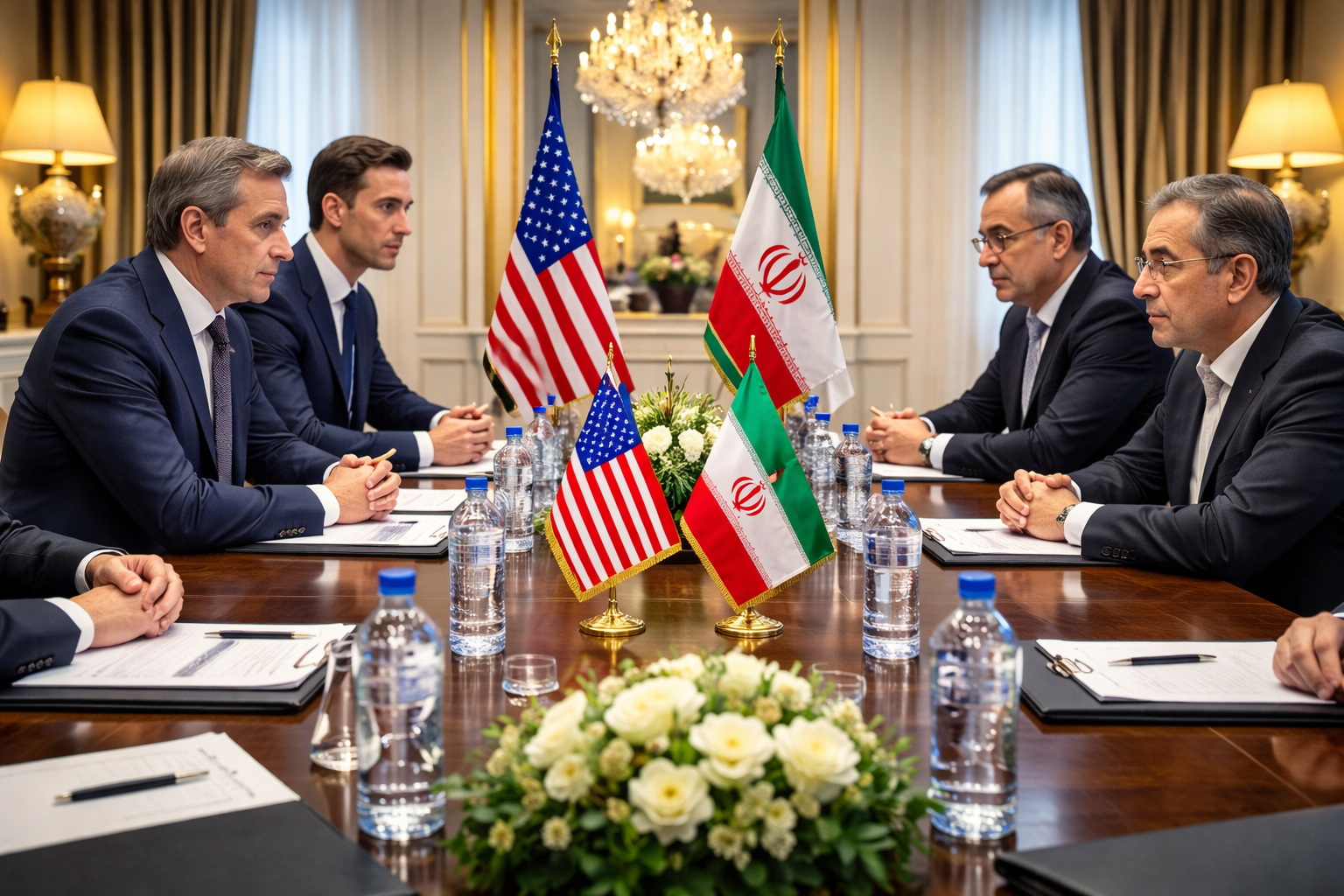

The latest round of Iran US nuclear talks began in Geneva on Tuesday as both sides attempt to address their long standing nuclear dispute. The negotiations are being held indirectly and are mediated by Oman, with American envoys Steve Witkoff and Jared Kushner representing Washington. Iran is represented by Foreign Minister Abbas Araqchi.
US President Donald Trump confirmed he would participate indirectly in the discussions and expressed confidence that Tehran wants an agreement. Speaking aboard Air Force One, Trump warned that failure to reach a deal could lead to serious consequences. He referred to past military action involving B 2 bombers targeting Iranian nuclear facilities, stating that diplomatic efforts could have prevented escalation.
Tensions remain high as the US military presence in the region has significantly increased. American officials have indicated that preparations are underway for possible extended military operations if negotiations collapse. Meanwhile, Iran has launched military drills in the Strait of Hormuz, a crucial oil transit route that plays a vital role in global energy markets.
The dispute centers on allegations by the US and its ally Israel that Iran seeks to develop a nuclear weapon. Tehran strongly denies these claims, insisting its nuclear program is for peaceful energy purposes. However, concerns persist because Iran enriched uranium to levels close to weapons grade purity before recently announcing a halt in enrichment activity.
Washington is also pushing to expand talks beyond nuclear limits to include Iran’s missile program, a demand Tehran has firmly rejected. Iran says it is only willing to negotiate nuclear restrictions in exchange for sanctions relief.
The outcome of these renewed discussions could shape regional stability and global security, as diplomatic efforts continue under the shadow of military readiness and internal unrest within Iran.