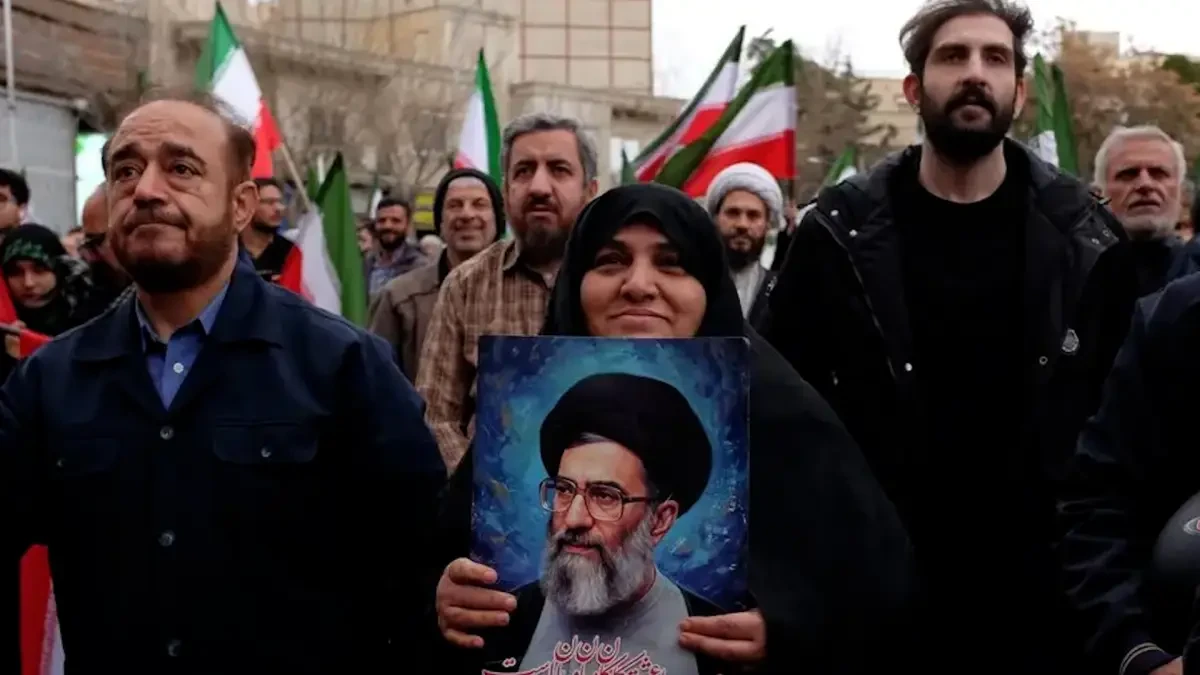

The reported assassination of Ayatollah Ali Khamenei has pushed Iran into one of the most dangerous moments in its modern history, creating political uncertainty, security pressure, and fears of wider regional conflict. While the shock has shaken the nation, regional analysts caution that the Islamic Republic’s power structure was intentionally designed to survive the loss of a single leader.
Experts say Iran’s governing system spreads authority across clerical institutions, military networks, and political bodies, limiting the risk of immediate collapse. According to analysts linked with the Atlantic Council, the removal of one figure could actually strengthen hardline elements rather than weaken them. The focus has now shifted toward the powerful Islamic Revolutionary Guard Corps, widely viewed as the country’s real center of influence.
The Guards now play a decisive role in determining whether Iran adopts a more aggressive security posture or moves toward cautious stability. Some observers believe mid level officials inside the organization may support limited diplomatic flexibility if it helps preserve the system. Others warn that continued military pressure could deepen internal divisions and test loyalty within the ranks.
Politically, Iran faces a complex succession crisis. The constitution assigns leadership selection to the Assembly of Experts, yet wartime conditions may delay the process or lead to a temporary leadership council. Senior political figures such as Ali Larijani and Mohammad Baqer Qalibaf are being discussed as transitional figures capable of maintaining stability while negotiations continue behind closed doors.
Externally, tensions remain high as Israel signals ongoing military operations aimed at weakening Iran’s strategic capabilities. Analysts warn that continued strikes, combined with economic strain and potential public unrest, could determine whether Iran’s leadership system holds firm or enters a deeper political transformation.
For now, Tehran’s main objective is projecting continuity and control, ensuring that command structures remain operational while the country navigates a historic and uncertain transition.