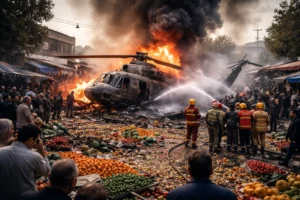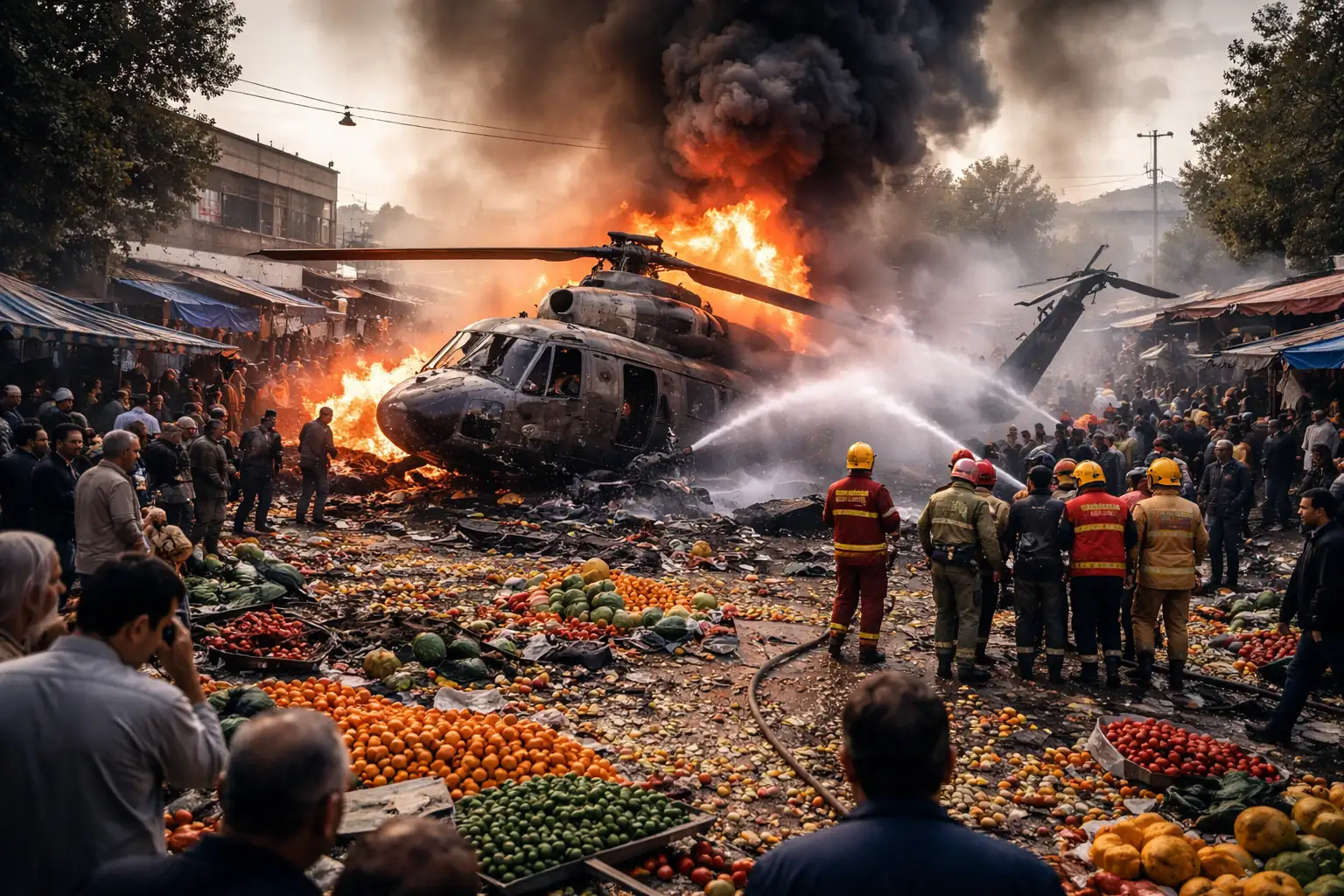

A tragic Iran helicopter crash shocked the nation after a military aircraft plunged into a busy fruit market, killing four people and causing widespread panic among residents. The incident occurred in the city of Dorcheh, located in Isfahan, when an Iranian Army helicopter lost control and crashed directly into a crowded marketplace.
According to official reports, the pilot, co-pilot, and two fruit vendors were killed instantly. Emergency services rushed to the scene, where a fire broke out following the impact. Rescue teams managed to control the flames quickly, preventing further damage to nearby shops and homes. Witnesses described scenes of chaos as locals attempted to help victims before rescue crews arrived.
The state-run news agency IRNA confirmed that the crash was caused by a technical malfunction, highlighting ongoing issues in Iran’s military aviation sector. Authorities stated that investigations are underway to determine the exact cause of the mechanical failure and assess accountability.
This disaster once again draws attention to Iran’s aging aircraft fleet and long-standing aviation safety problems. Due to international sanctions, Iran faces major challenges in acquiring original spare parts, forcing the continued use of outdated equipment. Experts have repeatedly warned that these conditions increase the risk of fatal accidents.
In recent years, the country has experienced multiple air disasters, many involving aircraft purchased decades ago. Just last week, a US-built F-4 fighter jet crashed during a training mission in Hamadan province, killing one pilot. These repeated tragedies reflect a deeper structural problem within Iran’s aviation infrastructure.
The latest Iran helicopter crash has reignited public concern over air safety standards, military equipment maintenance, and the protection of civilian lives. As families mourn the victims, pressure is growing on authorities to invest in modernization, safety reforms, and stronger maintenance systems to prevent future disasters and restore public trust.