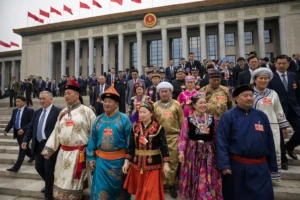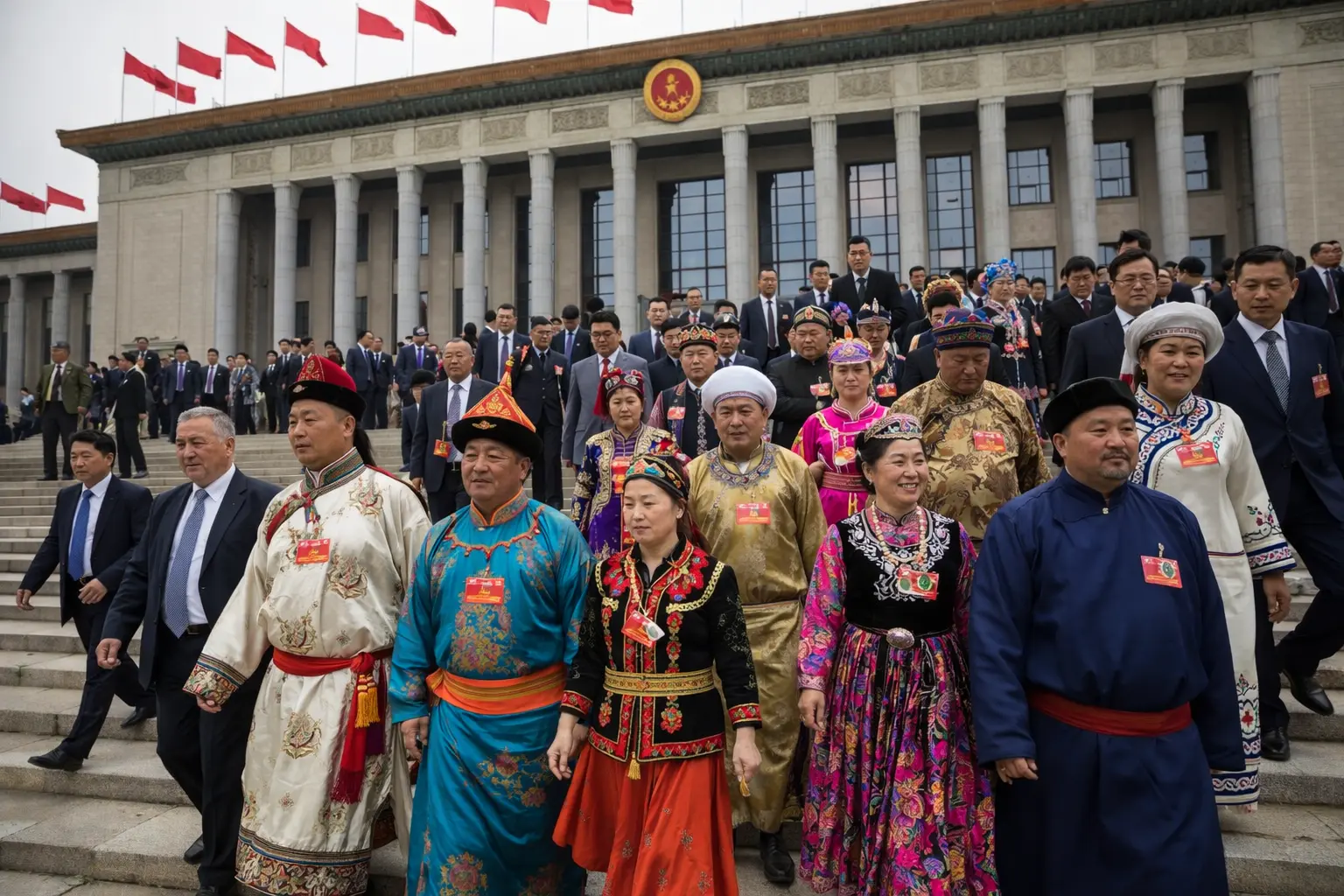

China has introduced a new Ethnic Minority Law aimed at strengthening national unity while promoting Mandarin language as the primary language used in education and government institutions. The legislation, titled Promoting Ethnic Unity and Progress, was approved during the closing session of the National People’s Congress in Beijing.
The law received overwhelming support from lawmakers, with 2,756 votes in favor, three opposing votes, and three abstentions. According to state media reports, the legislation will officially come into force on July 1. Chinese authorities say the new law is designed to encourage a shared national identity among the country’s 55 recognised ethnic minority groups.
China officially recognises 56 ethnic groups, with the Han Chinese majority making up more than 91 percent of the country’s population of approximately 1.4 billion people. Ethnic minority communities such as Uyghurs, Tibetans, Mongols, Hui, and Manchus mainly live in regions that cover nearly half of China’s territory, many of which contain valuable natural resources.
Under the new Ethnic Minority Law, Mandarin language will be promoted as the primary language used in schools, government offices, and official public communication. While minority languages can still be used, Mandarin must receive greater prominence in public displays and official activities.
The legislation also outlines policies designed to increase integration among different communities. These include initiatives related to education, housing, community development, tourism, cultural exchange, and migration policies. Authorities believe such measures will strengthen national cohesion and support the long term development of the Chinese nation.
However, critics argue that the law could accelerate the assimilation of minority cultures and weaken the cultural identities of non Han communities. Some experts believe the policy places stronger pressure on minority populations to align closely with the central government in Beijing.
Chinese officials, however, maintain that the law respects and protects the learning and use of minority languages and traditions. State media has emphasized that the legislation went through a rigorous legislative process with consultations involving lawmakers and representatives from ethnic minority groups.
As China continues to promote national integration, the Ethnic Minority Law is expected to play a major role in shaping the country’s education system, cultural policies, and social governance framework.