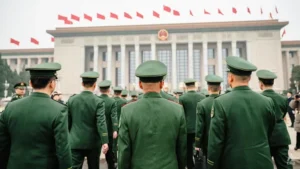

China has announced a 7 percent increase in defence spending for 2026, marking the lowest growth rate in five years but still surpassing the country’s overall economic growth target of 4.5 to 5 percent. The decision comes at a time of rising regional tensions, particularly over Taiwan, and reflects Beijing’s continued focus on military modernization.
At the annual parliamentary meeting, Premier Li Qiang stated that China will strengthen combat readiness and speed up the development of advanced combat capabilities. He emphasized that these measures are designed to safeguard the country’s sovereignty, security, and development interests. President Xi Jinping, who chairs the Central Military Commission, retains ultimate authority over the armed forces.
The newly approved defence budget of 1.91 trillion yuan, equivalent to approximately 277 billion dollars, supports China’s long term goal of modernizing the People’s Liberation Army by 2035. Over recent years, China has introduced advanced missiles, naval ships, submarines, and surveillance systems, signaling a significant upgrade in military strength.
The announcement also follows a major anti corruption crackdown within the military. Several high ranking generals, including Zhang Youxia and He Weidong, have faced investigations or removal. Analysts believe this move aims to tighten oversight of military spending and ensure political loyalty within the armed forces.
Regarding Taiwan, Li reaffirmed that China would oppose any efforts toward Taiwan independence and resist external interference. Taiwan’s government responded with concern, stating that the continued rise in China’s defence budget poses a potential threat to regional stability.
Meanwhile, regional observers note that China now accounts for nearly 44 percent of Asia’s total military spending, highlighting its growing influence in the region. Despite economic challenges at home, Beijing appears committed to balancing economic growth with its expanding national defence ambitions.