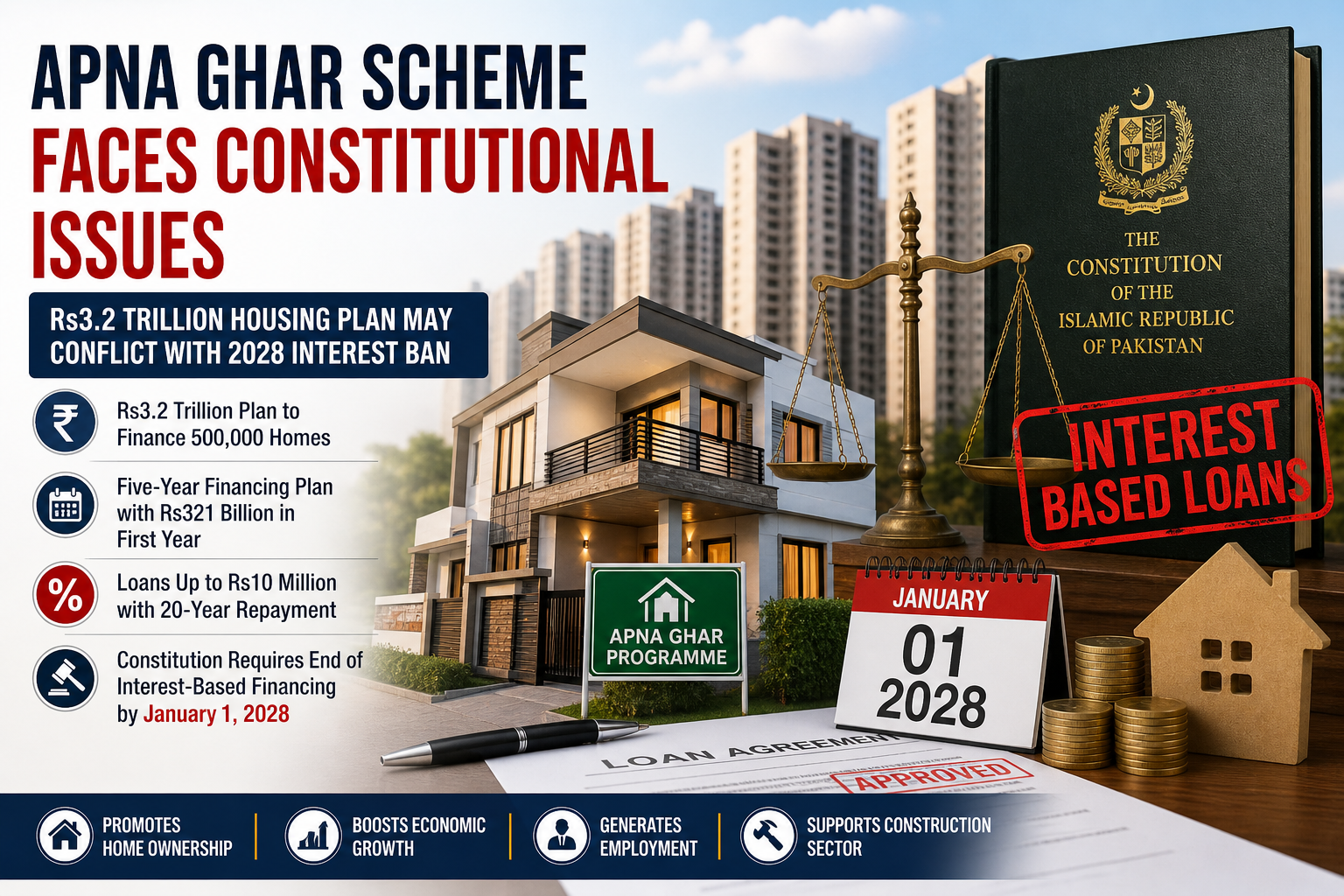

Pakistan’s newly introduced Apna Ghar Programme by Prime Minister Shehbaz Sharif is facing serious concerns over a possible constitutional conflict. The ambitious housing plan, valued at Rs3.2 trillion, aims to support the construction of 500,000 housing units across the country. However, experts and official sources suggest that the structure of the scheme may contradict Pakistan’s constitutional requirement to eliminate interest based financing by January 1, 2028.
The government has planned a five year financing strategy, starting with Rs321 billion in the first year to build 50,000 homes. While the initiative is designed to help low income families and boost economic growth, critics argue that the reliance on interest based loans raises serious legal and religious concerns. Under the current framework, loans will continue to be issued even after the 2028 deadline, which directly challenges the constitutional mandate.
Another major issue lies in the loan repayment structure. Each loan is set for a 20 year repayment period, meaning that borrowers will remain tied to interest payments long after the deadline has passed. Additionally, the scheme offers a fixed 5 percent markup for the first 10 years, followed by market based rates, further extending the role of conventional banking practices.
The programme was launched with the goal of addressing Pakistan’s housing shortage while also generating employment opportunities and stimulating the construction sector. It covers all regions, including provinces as well as Azad Jammu and Kashmir and Gilgit Baltistan. Despite these positive intentions, the lack of a Shariah compliant structure could lead to legal challenges in the future.
Experts believe that unless the scheme is redesigned to align with interest free financial models, it may struggle to meet constitutional requirements. As the 2028 deadline approaches, the pressure to reform such initiatives will only increase.