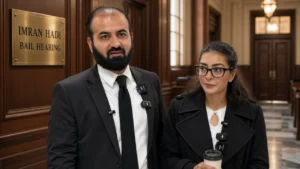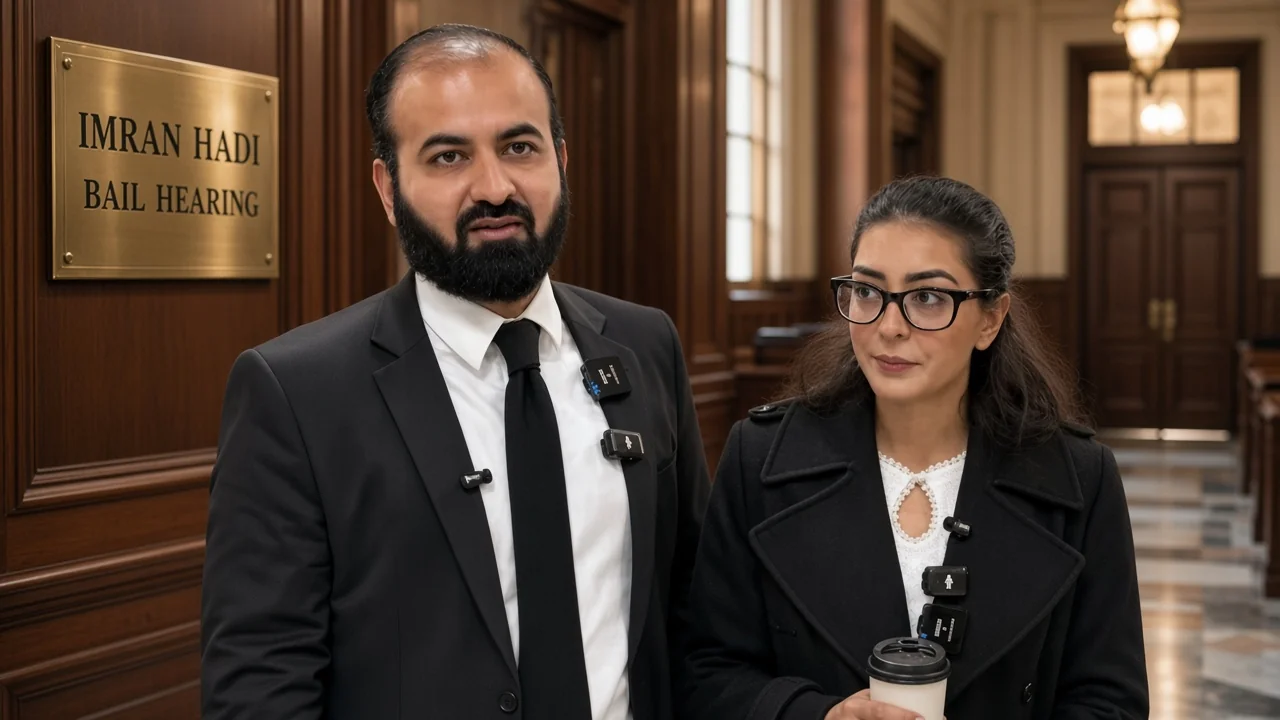

An anti-terrorism court in Islamabad on Monday strongly criticised police officials for the absence of the investigating officer during the bail hearing of human rights lawyer Imaan Mazari and her husband Hadi Ali Chattha.
Judge Abul Hasnat Muhammad Zulqarnain heard the matter related to the couple’s alleged role in a violent protest. Last month the Supreme Court had suspended their sentences in a separate case linked to controversial tweets and granted them bail against surety bonds of Rs200,000 each. However, the couple was rearrested the same day in another case and is currently held at Adiala jail.
During Monday’s proceedings the judge became angry when told that the investigating officer was out of the city. He immediately summoned the deputy superintendent of police in person. Defence counsel Riasat Ali informed the court that he was ready to present detailed arguments.
When the DSP appeared and began speaking in English, the judge ordered him to speak in Urdu. The DSP claimed the investigating officer had gone to Gilgit-Baltistan and produced a printed WhatsApp message as proof. The court rejected the printout and directed the official to produce the original document instead.
Judge Zulqarnain ordered handcuffs to be brought into the courtroom and instructed the security in-charge to keep the DSP present until a decision was made. He issued a clear warning: “I will send you and the SP to jail for six months.” The judge also criticised the complete lack of proper documentary evidence about the officer’s whereabouts.
He further stressed the need for a judicial force that can immediately implement court orders. The hearing was finally adjourned until October 13. The judge also said a separate decision regarding the investigating officer’s absence would be issued later.
The strong remarks from the ATC highlight growing judicial frustration with repeated delays caused by police non-compliance. The case of Imaan Mazari and Hadi Ali Chattha continues to draw public attention as the couple remains behind bars despite earlier relief from the Supreme Court. Court observers note that such warnings from the bench are rare and reflect the seriousness with which the judge views the failure of police officers to appear when required.