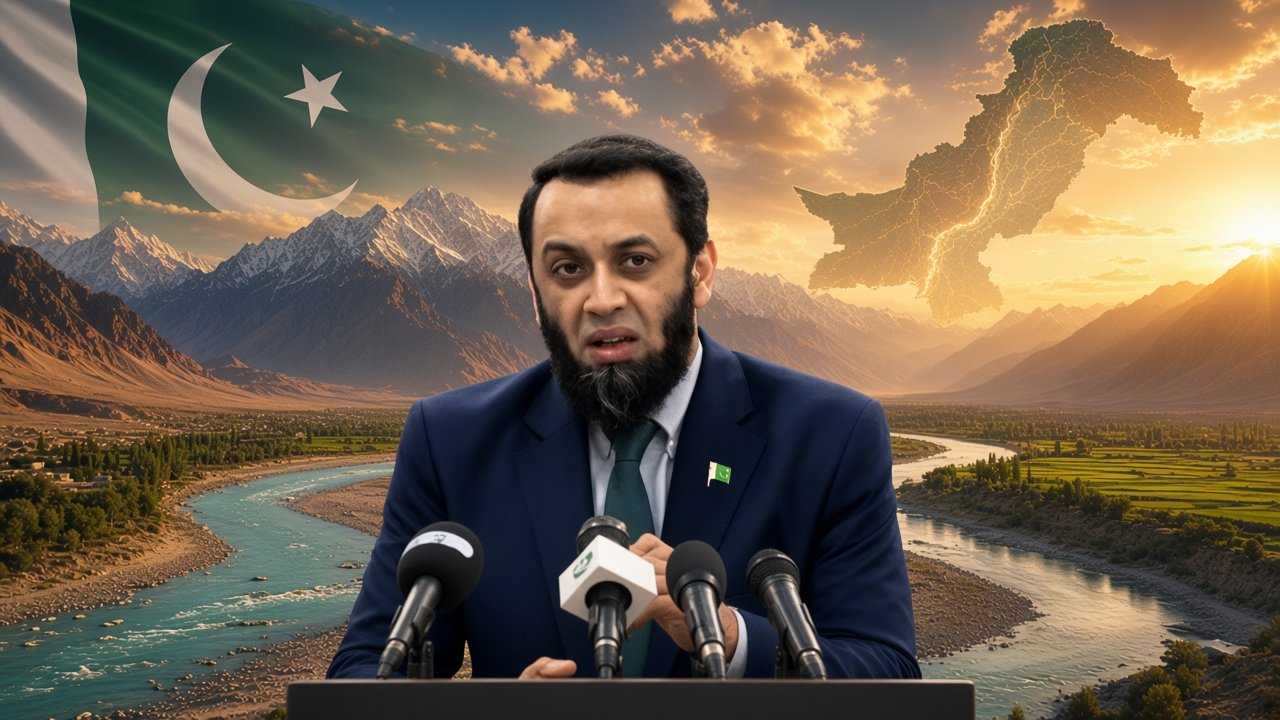

Pakistan has once again made its position clear on the Indus Waters Treaty. Federal Minister for Information and Broadcasting Attaullah Tarar firmly rejected any attempt by India to turn water into a weapon. Speaking at the launch of a special report titled “Weaponising Waters: Historical, Legal, and Strategic Dimensions of IWT Suspension” at the Institute of Strategic Studies in Islamabad, Tarar stressed that Pakistan believes in peace but will never allow its water rights to be compromised.
He said the Indus Waters Treaty remains a vital instrument of regional stability and cannot be changed, cancelled, or placed in abeyance by one side alone. The minister pointed out that the Court of Arbitration has already upheld Pakistan’s legal position, confirming that the treaty cannot be altered through unilateral steps. This ruling strengthens Pakistan’s argument that the agreement stays fully in force.
The remarks come against the backdrop of the ongoing IWT dispute. India had put the treaty in abeyance after the April 2025 attack in Indian Illegally Occupied Jammu and Kashmir that killed 26 people. India blamed Pakistan, an accusation that Islamabad completely rejected. Fighting followed in May before a US-brokered ceasefire brought the situation under control. The Permanent Court of Arbitration in The Hague later ruled that the treaty remains valid and ordered India to suspend related hydro projects.
Tarar explained that Pakistan has handled the matter through diplomacy. The country has engaged the international community and presented its case at every relevant forum. He recalled that Prime Minister Shehbaz Sharif, while addressing the 81st United Nations General Assembly, called the Indus Waters Treaty the lifeblood of the people and the region. The prime minister also warned that any effort to seize Pakistan’s water rights would be treated as an act of war.
The minister added that Pakistan’s stance has received support from several countries. Any move to weaponise water or create controversy around the treaty is legally, diplomatically and morally unjustifiable. Tarar urged the world community to recognise the dangers of allowing a state to unilaterally hold a binding water treaty in abeyance. Such a precedent could weaken global rules on shared rivers and harm other nations that depend on similar agreements.
Pakistan, he said, will continue its international efforts and defend its vital national interests strictly according to international law. The message is simple and firm: peace remains the goal, but water rights will not be surrendered.