
Two oil slicks have been spotted in Iranian waters in the Gulf, raising fresh worries about environmental harm as tensions between Iran and the United States continue. Satellite images and video checked by Reuters show the new patches of oil close to two Iranian islands. At the same time, a much larger spill is already spreading off the coast of Oman.
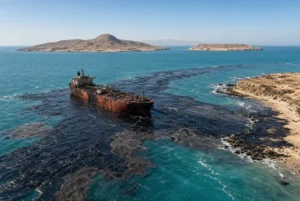
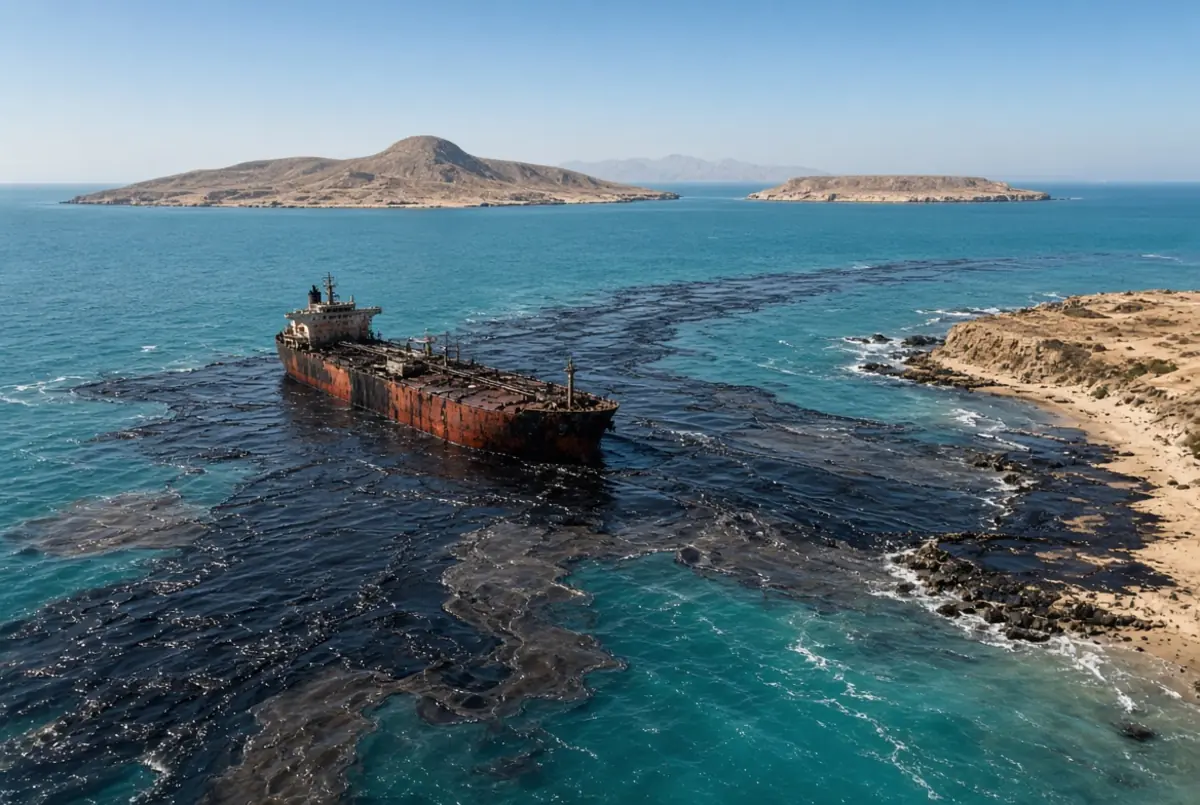
The Caroline Bezengi, a damaged and half-sunk tanker, is leaking Russian crude oil in a protected marine area outside the Strait of Hormuz. Estimates put the size of that slick at around 2,000 square kilometres. This incident is not connected to the recent conflict, but it has already created a serious environmental threat.
Inside the Gulf, one slick appeared near the southern tip of Qeshm Island, the large dolphin-shaped island close to Iran’s coast. Images from Copernicus Sentinel-2 satellites captured the scene. Experts say darker parts of the slick look like heavy fuel oil, while a lighter sheen stretches for about 160 kilometres. Video from 11 August shows a dark, bubbling liquid washing onto the beaches of Suza on Qeshm Island, standing out sharply against the turquoise water.
John Amos, CEO of SkyTruth, called it the biggest spill he has seen in recent months and described it as a major incident. A second slick was detected near the smaller Sirri Island, about 100 kilometres southwest of Qeshm, where Iran has offshore oil and gas facilities. The Qeshm images are from 10 August and the Sirri images from 13 August.
Maritime analysts believe the Qeshm slick came from the Minoan Pioneer, a Liberia-flagged dry bulk carrier. The ship was hit by an unknown projectile near Oman’s coast on 3 August in what sources say was a suspected Iranian attack. One seafarer went missing. Iranian officials have also pointed to a foreign bulk carrier as the likely source of the pollution reaching Qeshm Island.
Access to the sites remains difficult. A tugboat sent to help the Minoan Pioneer could not get close because of permission issues with Iranian authorities. Experts warn that the longer oil stays in the water, the more it spreads and damages ecosystems and coastlines. The ongoing conflict is making assessment and clean-up work much harder.