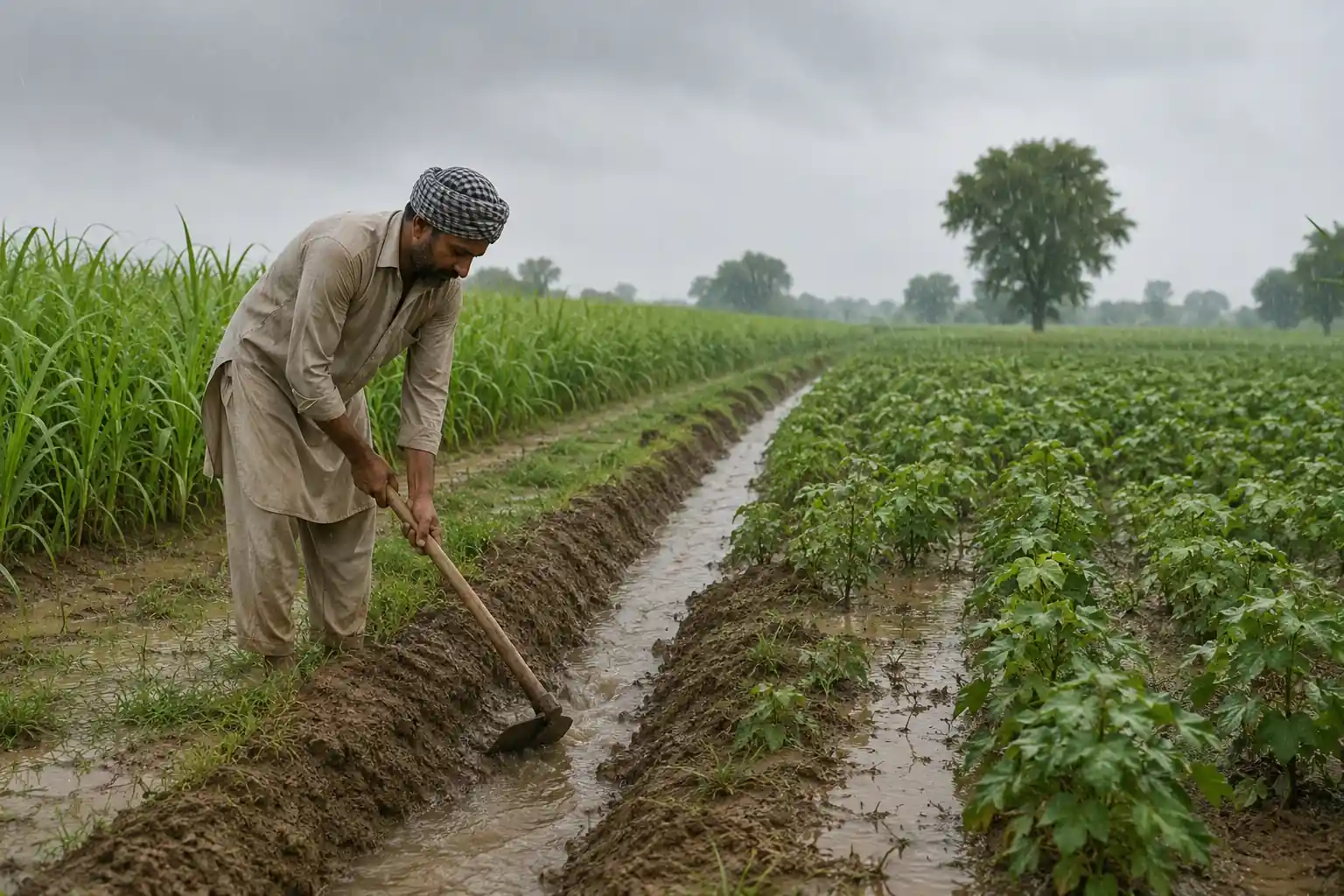

The Punjab Agriculture Department has advised farmers to take timely precautions to protect their crops during the ongoing monsoon season. Heavy rainfall can benefit some crops, but prolonged waterlogging may seriously affect sensitive crops such as cotton and vegetables. Officials have urged growers to remain alert and follow recommended farming practices to reduce crop losses.
According to agricultural experts, cotton plants are especially vulnerable to standing water. If rainwater remains in cotton fields for more than 48 hours, the plants may weaken, suffer root damage, or even die. Vegetable crops are also highly sensitive to excessive moisture, making quick drainage essential after heavy rainfall.
The department explained that sugarcane, rice, and fodder crops can tolerate excess water much better than cotton and vegetables. Farmers are encouraged to divert surplus rainwater from vulnerable fields into nearby sugarcane, rice, or fodder fields whenever possible. This simple step can help protect valuable crops while making better use of excess rainwater.
If neighboring fields are unavailable, farmers should immediately create drainage channels or small trenches to remove stagnant water. Officials also noted that crops cultivated on raised beds are generally safer during heavy rains because water drains away more efficiently, reducing the risk of root damage.
After rainfall, cotton growers may apply plant growth regulators if necessary. However, the Agriculture Department strongly recommends consulting local Agriculture Extension Department experts before using any growth regulator or crop treatment. Professional guidance helps farmers avoid unnecessary costs while ensuring healthy crop development.
Farmers have also been advised to keep track of weather forecasts through television, radio, and other reliable sources. Monitoring weather conditions allows them to plan irrigation schedules more effectively and respond quickly to changing weather patterns.
The department further warned that the monsoon season encourages rapid weed growth, which competes with crops for nutrients and creates favorable conditions for harmful insect pests. Increased humidity also raises the risk of sap sucking insects attacking crops. Farmers should regularly inspect their fields and seek assistance from the Agriculture Department’s Extension and Pest Warning teams for effective pest management and timely control measures.