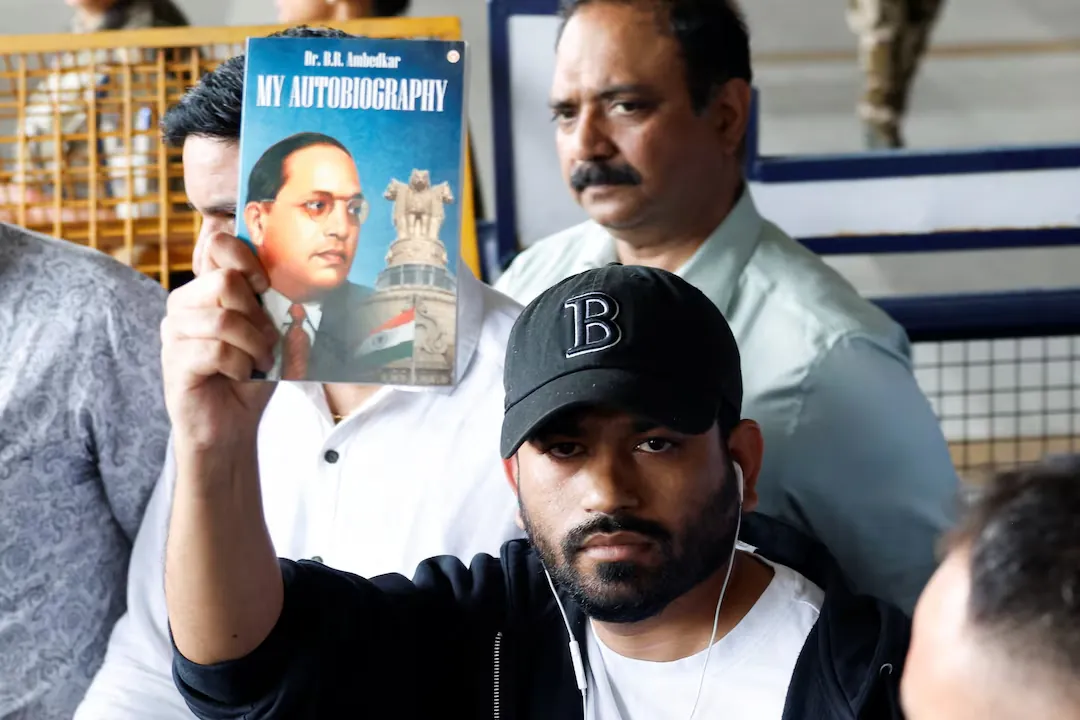

Abhijeet Dipke, the founder of the Cockroach Janta Party (CJP), arrived in New Delhi to lead a major protest against the government of Prime Minister Narendra Modi. The demonstration marks the first time the viral youth movement has shifted from social media activism to a large public gathering, attracting significant national attention.
Dipke, who has been living in the United States for the past two years, said that his family and friends were concerned that he could face arrest upon returning to India. Despite those concerns, he traveled to the capital to support the movement and participate in the planned protest.
Large numbers of police officers were deployed around Jantar Mantar, where authorities installed barricades and restricted access to several nearby roads to manage the gathering. Protesters chanted slogans and demanded the resignation of Education Minister Dharmendra Pradhan, raising concerns over education policies and examination issues affecting students across the country.
The Cockroach Janta Party has gained remarkable popularity on social media, collecting nearly 22 million Instagram followers within a short period after its launch. The movement has become one of the most visible online platforms expressing dissatisfaction among young people, particularly regarding youth unemployment, recurring examination paper leaks, and limited career opportunities.
The organization has also faced challenges after its X account was blocked in India, a decision that the group has legally challenged in a Delhi court. Government officials have criticized the movement, while supporters argue that it represents the voices of millions of young Indians seeking better opportunities and reforms.
Political analysts believe the growing influence of the movement has started to affect the public image of the government, even after recent electoral successes. India has a massive youth population, and creating enough quality jobs remains one of the country’s biggest economic challenges. Many educated young people continue to struggle with unemployment or low paying positions that do not match their qualifications, making youth related issues a central topic in the ongoing public debate.